Table of Contents
- What Is a Framed Photo Collage?
- 15 Framed Photo Collage Ideas
- How to Make a Framed Photo Collage
- How Many Photos Should You Put in a Collage?
- How to Choose the Right Frame for a Photo Collage
- How to Arrange a Photo Collage on a Wall
- Framed Photo Collage Ideas by Room
- How to Choose Photos That Look Good Together
- Common Photo Collage Mistakes to Avoid
- Framed Photo Collage vs Gallery Wall
- How to Preserve Your Framed Photo Collage
- Frequently Asked Questions
- How to make a 10 pic collage?
- How do you make a framed photo collage?
- What are some unique ideas for framing pictures?
- What are some cool collage ideas?
- How many photos should be in a wall collage?
- What size frames are best for a photo collage?
- How much space should be between collage frames?
- Can you mix different frame sizes in one collage?
- What type of frame is best for family photos?
Your phone probably holds hundreds of family memories. Yet most of them never leave the screen. A well-planned framed photo collage changes that. It turns ordinary snapshots into personal wall art that can make a room feel warmer, more lived-in, and genuinely yours.
Whether you live in a Dubai apartment, an Abu Dhabi villa, or a modern Sharjah home, the right display can transform an empty wall. You don’t need an enormous collection of photographs either. With a thoughtful theme, suitable frames, and a balanced layout, even ten pictures can create a striking focal point.
The trick is not simply putting photographs together. You need to think about scale, spacing, colors, lighting, and the character of the room. That’s where good planning makes all the difference.
What Is a Framed Photo Collage?
A framed photo collage is a planned display that brings several photographs together within one frame or across multiple photo frames. Unlike randomly hanging pictures, a collage uses a clear theme, repeated design element, or deliberate collage layout to make separate images feel connected. A gallery can also combine photographs with artwork and decorative pieces.
The beauty lies in its flexibility. You can create a neat grid for a minimalist apartment or use different frame sizes for a relaxed family display. You can also build a timeline from wedding photographs, children’s milestones, or travel memories. Think of the wall as a blank page and each photograph as part of the story.
15 Framed Photo Collage Ideas
A great wall display doesn’t have to follow one decorating rule. Your photographs, wall size, furniture, and personal taste should guide the design. The ideas below cover clean layouts, emotional displays, modern arrangements, and more playful options. Some work beautifully in compact apartments, while others suit large villa walls.
1. Classic Grid Photo Collage
A classic grid remains one of the safest framed photo collage ideas because it looks organised without feeling boring. Use matching frames and keep the gaps consistent. Four, six, nine, or twelve photographs can work well. Black frames suit modern interiors, while natural wood creates a softer family feel.
2. Family Photo Timeline Wall
Turn your family history into a visual journey. Start with an important early memory and move forward through weddings, birthdays, holidays, new homes, and children’s milestones. A family photo collage wall works especially well along hallways or staircases because the viewer naturally moves through the story from one photograph to the next.
3. Asymmetrical Gallery Wall
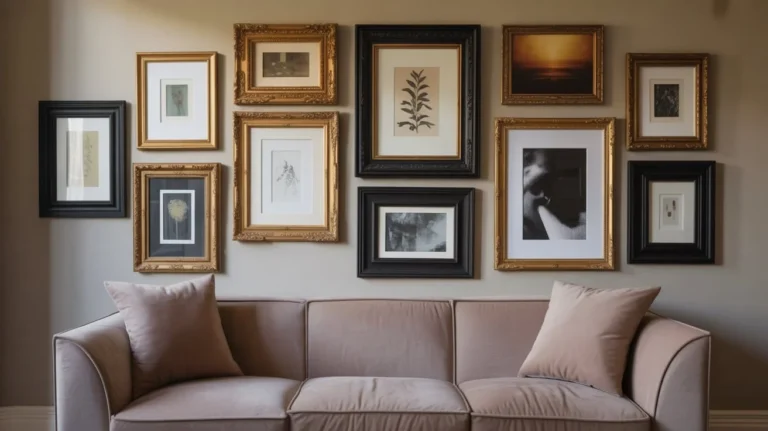
If perfect rows feel too formal, try an asymmetrical arrangement. Mix portrait and landscape photographs with different frame sizes while keeping one element consistent. That might be the frame color, mat style, or spacing. Start with one strong anchor image, then build around it.
4. Heart-Shaped Photo Collage
Some memories deserve a little more emotion. A heart-shaped arrangement can turn wedding photographs, family portraits, or anniversary pictures into a meaningful feature. The important part is maintaining the shape clearly. Place your strongest photograph near the center and use smaller images around it to create a balanced outline.
5. Black-and-White Framed Photo Wall
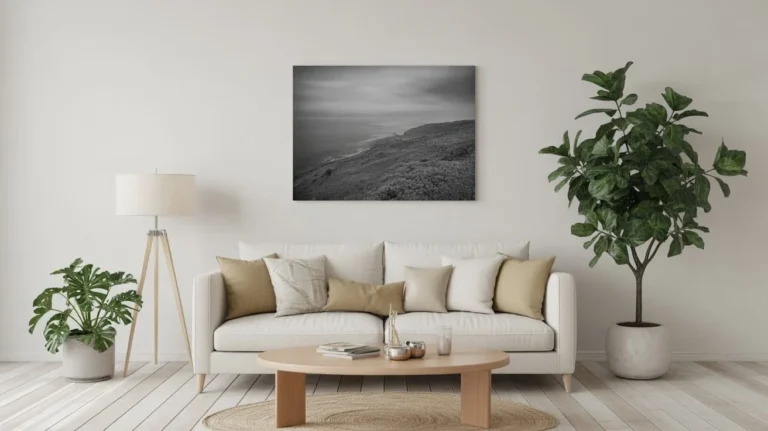
Black-and-white photographs instantly create a calmer and more timeless appearance. They work particularly well with black, white, or slim metallic frames. Try this approach with wedding portraits, old family photographs, or professional-looking black-and-white photography. Keeping the image treatment consistent helps different photographs feel like part of one collection.
6. Living Room Feature Wall Collage
Your living room often gives you the best opportunity for a statement display. A large wall above the sofa can hold a wide arrangement of framed photos without making the room feel crowded. Choose photographs with a shared color mood, then match the frame finish with nearby furniture or decorative details.
7. Staircase Photo Timeline
A staircase offers a natural path for telling a story. Arrange photographs so the display follows the direction of the stairs rather than forcing every frame into a horizontal line. Family milestones work especially well here. Before drilling, measure the wall and test the complete arrangement first to avoid awkward gaps.
8. Travel Memory Collage
Turn your travel photographs into a collection of places you’ve actually experienced. You can group photographs from one trip or combine several destinations using similar colors and frame styles. Add small captions with destination names or dates if you want more context. This approach gives a plain wall personality without making it feel overly formal.
9. Wedding and Anniversary Photo Collage
One wedding photograph rarely tells the whole story. A better collection might include getting ready, the ceremony, couple portraits, family moments, the reception, and candid photographs. Choose images with different compositions so the display has movement. Consistent editing and matching frames can then bring the entire collection together.
10. Kids’ Photo Collage Wall
Children change quickly, which makes their photographs especially meaningful. Create a display around yearly portraits, birthdays, school memories, hobbies, holidays, or family moments. Keep the design playful without overcrowding the room. For younger children, place frames securely and avoid positioning heavy glass frames where they can easily reach them.
11. Mixed-Size Frame Collage
Different frame sizes can make a wall feel more dynamic. Start with one larger photograph as your visual anchor, then surround it with medium and small frames. The arrangement should still have a pattern. Repeating one frame color or mat style gives the display structure even when the photographs vary considerably.
12. Floating Shelf Photo Display
Floating shelves offer a flexible alternative to permanently mounting every frame. You can layer large and small photo frames together and change the photographs whenever your style changes. This works well for renters or anyone who likes seasonal decorating. Keep the shelf visually balanced so the arrangement doesn’t become cluttered.
13. Polaroid-Style Framed Collage
Polaroid-style photographs bring a relaxed, nostalgic mood to a room. The white border creates breathing space around each image and makes casual photographs feel intentional. Try this style with travel memories, family snapshots, or photographs from everyday life. It works particularly well in bedrooms, studies, creative spaces, and informal family areas.
14. Photo + Artwork Gallery Wall
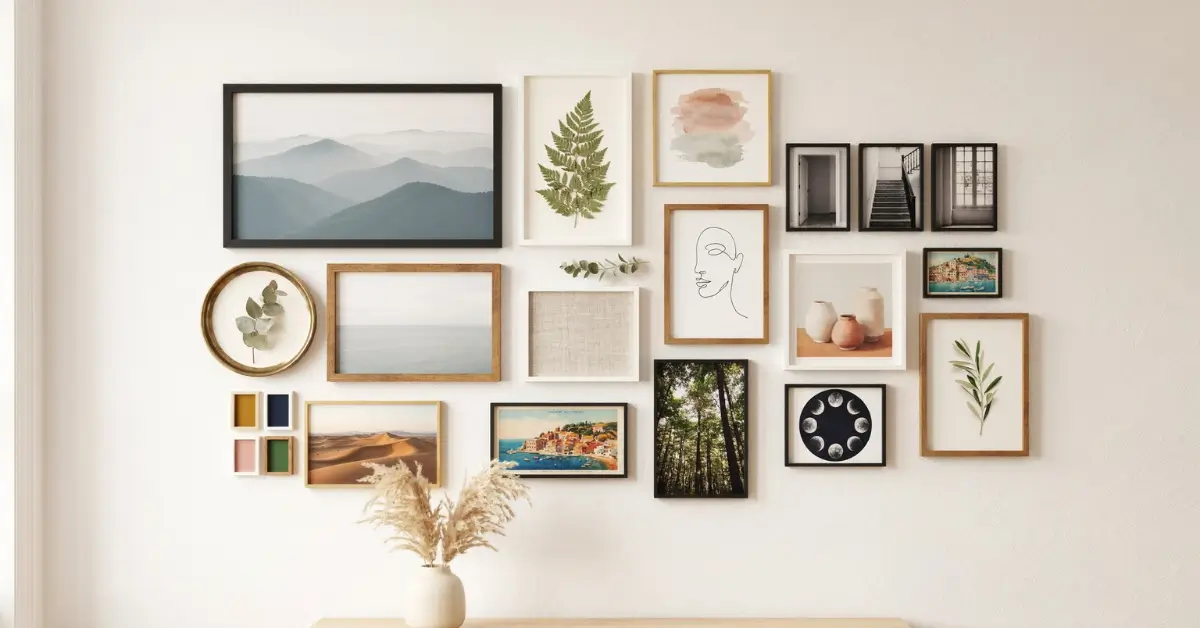
Your display doesn’t need to contain photographs alone. Combine family images with small artworks, illustrations, typography, or meaningful objects. The trick is finding a visual connection between them. Similar frame colors, repeated tones, or a shared theme can turn different pieces into one cohesive gallery wall rather than a collection of unrelated objects.
15. Custom Shape Photo Collage
When a standard rectangle feels predictable, consider a custom shape. You could arrange photographs into a heart, circle, initial, map, or geometric pattern. A custom photo collage frame can also solve awkward wall dimensions where ready-made frames don’t fit. This option works especially well for statement walls and meaningful gifts.
Create Your Custom Photo Collage
Turn your favourite memories into beautiful wall art. Contact ArtPlus today for custom photo printing and professional framing in the UAE.
Contact ArtPlusHow to Make a Framed Photo Collage
Creating a polished display becomes much easier when you treat it as a small design project. Don’t start by putting holes in the wall. First choose your photographs, decide on a theme, select your frames, test the layout, and only then install everything. A little preparation can save hours of rearranging later.
Choose Your Photos
Start with more photographs than you expect to use. This gives you room to remove weak or repetitive images. Look for sharp faces, useful variety, and moments that actually mean something to you. A strong collage usually mixes close portraits with wider scenes rather than repeating the same composition.
Choose a Theme
A theme gives your collection a clear identity. You might choose family memories, travel, weddings, children, pets, or important milestones. You can also build around a visual theme such as black-and-white photography or warm neutral tones. The theme doesn’t need to be obvious to visitors, but it should guide your choices.
Select Your Frame Style
Frame style changes the personality of the entire display. Natural wood feels warm and relaxed, while black frames create stronger contrast. White frames feel lighter and cleaner. Metal frames can suit contemporary spaces. If your wall has unusual dimensions, custom frames can give you much better control.
Decide on the Layout
Choose the arrangement before ordering everything. A grid gives you order, while an asymmetrical layout feels more relaxed. A timeline creates a story. A heart shape adds emotion. If you’re unsure, place the frames on the floor and photograph the arrangement from above. This simple trick makes editing much easier.
Plan the Spacing
Spacing can make or break a collage. Frames that sit too close together look crowded, while huge gaps can make the collection feel disconnected. Start with a consistent gap and adjust it according to frame size and wall scale. Your goal is visual breathing room rather than mathematical perfection.
Print and Frame the Photos
Good photographs deserve good printing. Check the original file before enlarging it, especially for large frames. Avoid relying on low-quality screenshots or heavily compressed social-media downloads. Professional printing can also help keep colors consistent across different photographs. Matting and glazing can add another layer of protection and visual depth.
Arrange Before Hanging
Before making holes, create a full-size mock-up. You can place the frames on the floor or cut paper shapes matching their dimensions and tape them to the wall. IKEA recommends laying framed pieces out before installation, while other framing guides also recommend testing the arrangement first.
How Many Photos Should You Put in a Collage?
There is no magic number that works for every wall. A small bedside display might need four photographs, while a large living-room feature could comfortably hold twelve or more. What matters most is the relationship between image size, frame size, wall area, and viewing distance. Ten photographs can be enough for a beautiful display when the arrangement has breathing room.
| Collage size | Suitable photo count | Best use |
| Small | 3–6 | Bedroom, shelf, hallway |
| Medium | 6–12 | Living room, office |
| Large | 12–20+ | Feature wall, staircase |
| Statement | 20+ | Large villa wall or gallery display |
For a ten-photo collage, try five photographs across two rows or one larger central image surrounded by nine smaller photographs. The second option feels more dynamic, while the grid looks cleaner and more structured.
How to Choose the Right Frame for a Photo Collage
Choosing a frame isn’t only about matching the photograph. You also need to consider the wall, furniture, lighting, room style, and size of the entire arrangement. A good frame should support the photograph rather than compete with it. Think of it as the border around a story, not the story itself.
Wood Frames
Wood frames add warmth and texture to home decor. They work beautifully with family portraits, travel photographs, and natural interior styles. Light wood can keep a bright room feeling airy, while darker wood creates a richer appearance. They are particularly useful when you want the collage to feel welcoming rather than formal.
Black Frames
Black frames provide strong definition around photographs. They work especially well with monochrome images, modern furniture, and neutral walls. A complete black-frame grid can look crisp and architectural. If your room already contains black details, repeating that color in the collage can make the entire space feel more coordinated.
White Frames
White frames create a softer appearance and can make a collage feel lighter. They suit bright rooms, neutral interiors, children’s spaces, and photographs with pastel colors. On a white wall, however, the frame may visually disappear. A contrasting mat or photograph border can help define each piece.
Metal Frames
Metal frames offer a sleek choice for contemporary interiors. They can work particularly well in home offices, modern apartments, and spaces with glass, steel, or minimalist furniture. Slim profiles keep the display refined. Choose a finish that complements existing hardware rather than introducing another unrelated metallic tone.
Custom Frames
Custom framing becomes valuable when standard sizes don’t fit your wall or photographs. It allows you to control the frame dimensions, mat opening, finish, glazing, and overall arrangement. For large statement displays, this control can prevent awkward gaps and make the final personalized wall art look deliberately designed.
How to Arrange a Photo Collage on a Wall
Start by measuring the actual usable wall rather than guessing from a photograph. Consider doors, windows, switches, furniture, and nearby artwork. Then find the visual center and build outward. For a mixed arrangement, create an invisible outer boundary so the collage still feels like one composition.
A useful trick is to photograph the proposed layout before installation. Walk away for a few minutes, then look at the image again. Your phone screen often reveals uneven spacing or a frame that feels too dominant. It’s a surprisingly simple way to catch problems before they become wall repairs.
Framed Photo Collage Ideas by Room
The same photographs can look completely different depending on where you display them. Room size, furniture scale, natural light, and viewing distance all affect the ideal arrangement. Instead of copying a design you saw online, start with the character of your own room. Then choose a layout that supports it.
Living Room
The living room usually benefits from a larger display. A wide arrangement above a sofa can become the room’s main feature. Family photographs, travel memories, and wedding collections all work well. Keep the collage proportional to the furniture below it so the wall doesn’t feel visually top-heavy.
Bedroom
Bedrooms usually suit calmer displays. Consider wedding photographs, couple portraits, monochrome images, or a small family collection. Avoid packing every available photograph into the space. A restrained arrangement can feel more relaxing and still carry plenty of emotional value. Soft frame finishes can also complement neutral bedroom interiors.
Kids’ Room
A child’s room gives you permission to use more color and playful photographs. Create a yearly timeline or combine school memories with family portraits. Keep the display at a safe height and secure each frame properly. For very young children, lightweight options can reduce the risk associated with heavier glass frames.
Hallway
Hallways are ideal for smaller photographs because viewers usually stand closer to the wall. A timeline arrangement can turn an otherwise forgotten passage into a personal memory route. Keep the frames relatively consistent so the display doesn’t make a narrow hallway feel visually crowded.
Home Office
A home office benefits from clean, focused arrangements. A neat grid can display family photographs without distracting from work. Travel memories can also add personality without turning the room into a full gallery. Black, white, or slim metal frames often work well with modern desks and shelving.
Majlis
A majlis deserves a more considered arrangement because the space often has a strong visual identity. Symmetrical layouts, neutral frames, larger photographs, and restrained color palettes can complement the room without competing with furniture. Family portraits or meaningful architectural and travel photographs can add personality while maintaining a refined atmosphere.
Create Your Custom Photo Collage
Turn your favourite memories into beautiful wall art. Contact ArtPlus today for custom photo printing and professional framing in the UAE.
Contact ArtPlusHow to Choose Photos That Look Good Together
Photographs don’t need identical colors to work together. They need a visual relationship. Start by checking lighting, skin tones, backgrounds, and dominant colors. A bright beach photograph can sit beside a darker indoor portrait if the frames and overall composition create balance. The goal is harmony, not perfect uniformity.
Image quality also matters more as the print becomes larger. A photograph that looks sharp on a phone may reveal softness when enlarged. That’s why you should inspect the original file before ordering a large print. Resolution, cropping, and the intended viewing distance all matter more than simply chasing a single DPI number.
A useful test is to spread your selected photographs across the floor. Look for repeated colors, similar lighting, and different compositions. If every image shows the same person facing the camera in the same pose, the collection may feel flat. Add a landscape, candid moment, detail shot, or wider scene to create rhythm.
Common Photo Collage Mistakes to Avoid
The biggest mistake is treating every photograph as equally important. A strong display needs hierarchy. One or two images can act as anchors while smaller photographs support them. Another common problem is inconsistent spacing. Even a beautiful collection can look unfinished when the gaps between frames change without purpose.
Low-quality photographs also deserve attention. Don’t enlarge a blurry image simply because the memory matters. Instead, consider a smaller frame or explore professional restoration when appropriate. Finally, think about the wall itself. A collage that looks excellent in isolation can feel cramped when it competes with a television, furniture, windows, or other decorative pieces.
Framed Photo Collage vs Gallery Wall
The terms sound similar, but they aren’t always interchangeable. A framed photo collage usually keeps photographs as the main focus. A gallery wall has more freedom and can combine photographs, artwork, typography, mirrors, and decorative objects. Both can look excellent when the arrangement has a clear visual system.
| Feature | Framed Photo Collage | Gallery Wall |
| Main focus | Photographs | Photos and artwork |
| Style | Coordinated | More eclectic |
| Frame approach | Often matching | Can be mixed |
| Layout | Usually planned | More flexible |
| Best for | Personal memories | Decorative storytelling |
| Visual feel | Cohesive | Expressive |
If your main goal is to preserve family memories, a collage may be the better choice. If you want a decorative feature wall with more artistic freedom, a gallery wall gives you more room to experiment.
How to Preserve Your Framed Photo Collage
A beautiful print still needs protection. Direct sunlight can accelerate fading, while unsuitable materials can contribute to long-term damage. Conservation guidance recommends keeping photographs away from direct sunlight and using protective glazing where appropriate. UV-filtering glass or acrylic can help reduce exposure, while suitable archival materials provide another layer of protection.
This matters particularly in bright UAE interiors. A wall that receives strong sunlight for several hours each day may not be the best location for treasured photographs. Choose a less exposed wall when possible. Clean the frame gently, avoid abrasive products, and keep your original high-resolution files backed up separately.
“A photograph becomes more valuable with time because the memory attached to it becomes harder to replace.”
That is why preservation deserves the same attention as the initial design.
Create Your Custom Photo Collage
Turn your favourite memories into beautiful wall art. Contact ArtPlus today for custom photo printing and professional framing in the UAE.
Contact ArtPlusFrequently Asked Questions
How to make a 10 pic collage?
A ten-picture collage can use two rows of five for a clean grid or one large photograph surrounded by nine smaller images. Choose one layout based on your wall shape. Before printing, make sure the photographs have similar visual quality and enough variety to keep the display interesting.
How do you make a framed photo collage?
Start by selecting your photographs and theme. Then choose frame styles, decide on the layout, measure the wall, plan the spacing, print the photographs, and test the arrangement before hanging. Creating a full mock-up first can prevent uneven spacing and unnecessary holes.
What are some unique ideas for framing pictures?
Try a heart-shaped display, staircase timeline, Polaroid-style arrangement, mixed-size gallery, travel collection, or photo-and-art combination. You can also create a custom shape around initials, a meaningful map, or another design connected to your family story.
What are some cool collage ideas?
Modern options include asymmetric layouts, monochrome collections, floating shelves, geometric arrangements, and large statement collages. For something more personal, combine photographs from one meaningful period instead of simply choosing your most recent pictures.
How many photos should be in a wall collage?
The number depends on the wall and frame sizes. Small displays may need four to six photographs, while larger feature walls can hold twelve or more. The important thing is leaving enough visual breathing room between images so the collection doesn’t become cluttered.
What size frames are best for a photo collage?
There is no single best size. Small frames suit narrow walls and shelves, while larger frames work better above sofas and on spacious feature walls. Mixing sizes can also create interest, provided you maintain some consistency through color, spacing, or frame style.
How much space should be between collage frames?
A consistent gap usually creates the cleanest result. However, the ideal distance changes with frame size and wall scale. Smaller frames generally need tighter spacing, while large frames can tolerate more breathing room. Always test the arrangement visually before fixing the final positions.
Can you mix different frame sizes in one collage?
Yes. In fact, mixed sizes can create a more natural and dynamic display. Start with one larger anchor photograph and build around it with smaller frames. Keep one element consistent, such as frame color, mat style, or overall spacing, to stop the arrangement from looking random.
What type of frame is best for family photos?
Wood frames create warmth, black frames offer strong contrast, white frames feel light, and metal frames suit contemporary interiors. The best option depends on your room and photographs. If the wall has unusual dimensions, custom framing can give you more control over the final result.