Table of Contents
- What Are Business Card Finishes?
- Why Your Business Card Finish Matters
- Business Card Finishes Comparison Table
- Different Types of Business Card Finishes
- Matte vs Gloss vs Soft Touch vs Spot UV vs Foil
- Which Business Card Finish Is Best for Your Industry?
- Which Finish Should You Choose? (Decision Tree)
- Can You Combine Multiple Business Card Finishes?
- How to Choose the Right Business Card Finish
- Common Mistakes When Choosing Business Card Finishes
- Final Thoughts
- Frequently Asked Questions
- What is the best finish for a business card?
- What are the different types of business card finishes?
- What are the different printing options for business cards?
- How can I make my business card stand out?
- Which business card finish lasts the longest?
- Is matte better than gloss?
- Can I write on glossy business cards?
- Does Spot UV scratch easily?
- Is foil expensive?
- Which finish looks most premium?
- Can Spot UV and foil be combined?
- What finish do luxury brands use?
- Which finish is best for photographers?
- Which finish is eco-friendly?
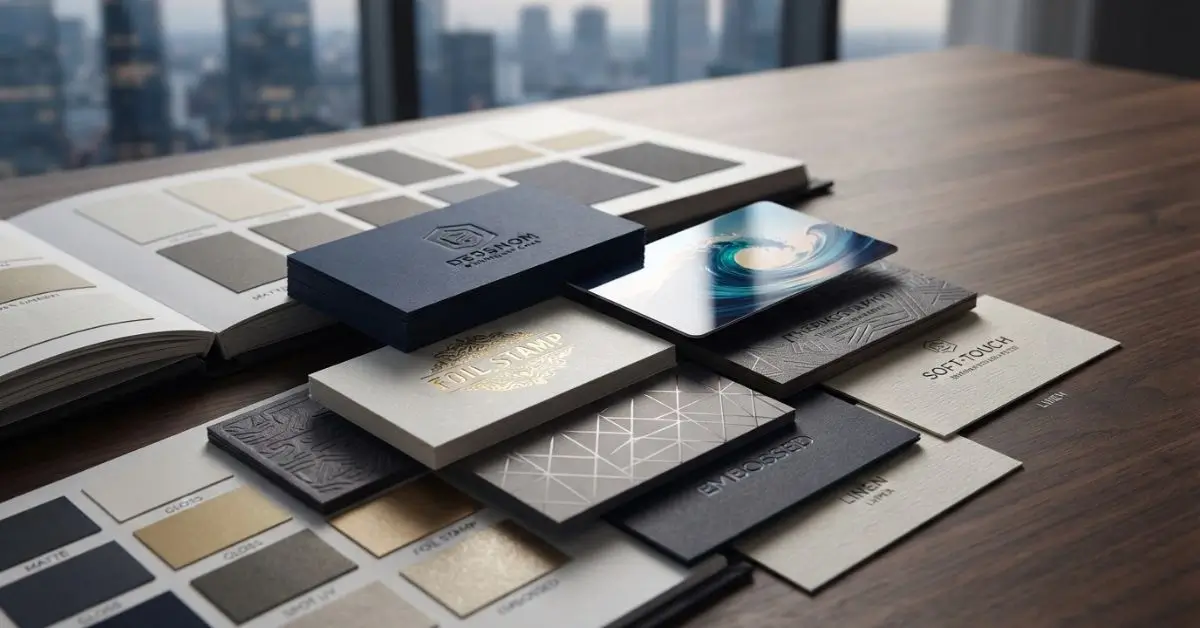
A business card finish is a coating, lamination, or special effect applied to the card’s surface. It affects appearance, texture, durability, and writing ability. The best finish depends on your brand image, industry, and budget. Matte is professional and writable, gloss is vibrant and colorful, soft touch feels luxurious, spot UV creates contrast, and foil adds premium elegance.
I’ve helped countless businesses in Dubai choose the right finishes for their business cards. The difference between a card that gets kept and one that gets tossed often comes down to the finish. This guide covers every finishing option, from matte and gloss to foil, spot UV, embossing, and soft touch, so you can make a confident choice.
What Are Business Card Finishes?
A business card finish refers to any coating, lamination, or special effect applied to the card’s surface after printing. It affects the card’s texture, durability, appearance, and how it feels in someone’s hand.
Key terms explained:
- Finish: The surface treatment applied to the card (e.g., matte, gloss, soft touch)
- Coating: A liquid layer applied to the card’s surface (e.g., UV coating, aqueous coating)
- Lamination: A thin plastic film applied to the card for extra durability and protection
Many people confuse these terms, but understanding the difference helps you choose the right option.
| Term | Definition | Example |
| Finish | Surface treatment | Matte, gloss, soft touch |
| Coating | Liquid layer | UV coating, aqueous coating |
| Lamination | Plastic film | Matte lamination, gloss lamination |
For a complete guide to paper weights and materials, see our business card paper types guide.
At ArtPlus, we offer a wide range of business card finishing options, from premium coatings to luxury effects, ensuring your cards make a lasting impression. For a complete overview of design, paper, and ordering, see our business card printing in Dubai guide.
Why Your Business Card Finish Matters
The finish you choose affects every aspect of your business card:
- First impression: The finish is the first thing people notice when they touch your card
- Brand perception: Premium finishes communicate quality and attention to detail
- Durability: Proper finishing protects your card from daily wear
- Feel: The tactile experience influences how people remember your brand
- Readability: Some finishes improve text clarity; others can reduce it
- Writing ability: Certain finishes allow handwritten notes; others don’t
- Premium appearance: Luxury finishes elevate your brand’s image
- Customer experience: A well-finished card creates a positive memory
Business Card Finishes Comparison Table
| Finish | Look. | Feel | Durability | Writable | Best For |
| Matte | Soft, elegant | Smooth, non-reflective | Good | Yes. | Corporate, professional |
| Gloss | Bright, shiny | Smooth, reflective | Good | No | Creative, colourful |
| Soft Touch | Velvet-like | Silky, luxurious | Very Good | Limited | Luxury brands |
| Spot UV | Glossy highlights | Raised texture | Very Good | No | Premium logos |
| Foil | Metallic shine | Smooth | Excellent | No | Luxury, high-end |
| Embossed | Raised design | Textured, tactile | Excellent | No | Premium branding |
| Debossed | Indented design | Textured, tactile | Excellent | No | Elegant branding |
| Uncoated | Natural | Textured, paper-like feel | Moderate | Yes. | Minimalist, eco-friendly |
Ready to Create Business Cards with Premium Finishes?
Matte, gloss, soft touch, spot UV, foil, and more. Free design consultation and UAE delivery.
Get a Business Card QuoteDifferent Types of Business Card Finishes
Matte Business Cards
What is a matte finish? A matte finish is a non-reflective coating that creates a smooth, elegant appearance. It reduces glare and improves readability.
Advantages:
- Professional, sophisticated appearance
- Elegant colours without shine
- Easy to write on with pen or marker
- Less glare under bright lights
- Fingerprint resistant
- Comfortable to hold
Disadvantages:
- Less vibrant colour intensity than gloss
- Shows fingerprints less but can still smudge
Best industries: lawyers, finance, consultants, healthcare, corporate, and real estate.
Glossy Business Cards
What is gloss finish? A gloss finish is a shiny, reflective coating that enhances colours and creates a vibrant, eye-catching appearance.
Advantages:
- Bright, vibrant colours
- High contrast and sharpness
- Photo-quality reproduction
- Scratch protection
- Eye-catching and memorable
Disadvantages:
- High glare under bright lights
- Difficult to write on (ink smudges)
- Shows fingerprints easily
Best industries: photography, restaurants, fashion, retail, and creative agencies.
Soft Touch Business Cards
What is soft touch lamination? Soft touch is a specialised coating that creates a velvety, silky texture. It feels luxurious and premium.
Benefits:
- Luxurious, velvety texture
- Premium branding impression
- Enhanced customer experience
- Comfortable to hold
- Professional appearance
Pros: Exceptional feel, premium appearance, comfortable.
Cons: Higher cost, limited writing ability.
Best industries: luxury brands, high-end retail, hotels, spas, and premium services.
Spot UV Business Cards
What is Spot UV? Spot UV is a selective glossy coating applied to specific areas of the card, creating contrast between matte and glossy surfaces.
Benefits:
- Makes logos and design elements shine
- Creates contrast and depth
- Adds texture and dimension
- Premium, luxury effect
Design tips:
- Apply to logos or key design elements
- Keep it subtle, less is more
- Use on dark backgrounds for maximum contrast
When NOT to use Spot UV: Over large areas (loses impact), on text-heavy cards (reduces readability).
Foil Business Cards
What is foil printing? Foil printing (hot foil stamping) applies metallic foil to the card using heat and pressure, creating a shiny, premium effect.
Types of foil:
- Gold
- Silver
- Rose Gold
- Copper
- Black
- Holographic
Benefits:
- Luxurious, premium appearance
- High-end branding
- Memorable and elegant
- Eye-catching and distinctive
Drawbacks: Higher cost, limited to specific design elements.
Embossed and Debossed Business Cards
Embossed: The design is raised above the card surface, creating a tactile, three-dimensional effect.
Debossed: The design is pressed into the card surface, creating an indented effect.
Best use cases: logos, initials, premium branding, and high-end cards.
Uncoated Business Cards
What is uncoated paper? Uncoated cardstock has no surface coating, creating a natural, textured paper feel.
Advantages:
- Natural, organic appearance
- Writable surface (perfect for handwritten notes)
- Eco-friendly and minimalist
- Comfortable texture
Popular for: Appointment cards, thank-you notes, minimalist brands, and eco-conscious businesses.
Matte vs Gloss vs Soft Touch vs Spot UV vs Foil
| Feature | Matte | Gloss | Soft Touch | Spot UV | Foil |
| Appearance | Soft, elegant | Bright, shiny | Velvet-like | Contrasted | Metallic shine |
| Texture | Smooth | Smooth | Silky | Raised/glossy | Smooth |
| Durability | Good | Good | Very Good | Very Good | Excellent |
| Writable | Yes | No | Limited | No | No |
| Luxury feel | Medium | Low-Medium | High | High | Very High |
| Best For | Corporate | Creative | Luxury | Premium logos | High-end brands |
For high‑end options combining multiple premium finishes, explore our premium business cards in Dubai guide.
Which Business Card Finish Is Best for Your Industry?
| Industry | Recommended Finish | Why |
| Corporate / Finance | Matte | Professional, writable, elegant |
| Real Estate | Matte or Soft Touch | Premium, memorable |
| Healthcare | Matte | Clean, writable, professional |
| Luxury Brands | Soft Touch or Foil | Premium, high-end feel |
| Retail | Gloss or Spot UV | Eye-catching, vibrant |
| Restaurants | Gloss or Matte | Depends on brand style |
| Creative Agencies | Gloss or Spot UV | Showcases design work |
| Salons / Spas | Soft Touch or Matte | Luxurious, elegant |
| Photography | Gloss | Best for colour reproduction |
Which Finish Should You Choose? (Decision Tree)
- If you want a professional, writable card → Choose Matte
- If you want a luxury, high-end feel → Choose Soft Touch
- If you want maximum attention and contrast → Choose Spot UV
- If you want premium, elegant branding → Choose Foil
- If you want bright, colourful cards → Choose Gloss
Can You Combine Multiple Business Card Finishes?
Yes, combining finishes creates a truly premium, memorable card.
Popular combinations:
- Soft Touch + Spot UV – Velvet feel with glossy logo highlights
- Matte + Gold Foil – Elegant contrast of matte and metallic
- Foil + Emboss – Raised metallic design for maximum impact
- Gloss + Spot UV – Extra shine where it matters most
These combinations are expensive but create unforgettable cards.
How to Choose the Right Business Card Finish
- Consider your budget: Some finishes (foil, soft touch, embossing) cost more
- Think about your brand image: Luxury brands need premium finishes
- Know your target audience: Corporate clients expect professional cards
- Look at your design: Some designs work better with certain finishes
- Consider your logo: Foil and Spot UV work well for logos
- Check paper thickness: Thicker paper supports more finishing options
- Think about writing requirements: Do you need to write on the card?
- Consider usage frequency: Heavily handled cards need durable finishes
Common Mistakes When Choosing Business Card Finishes
| Mistake | Why It’s a Problem | Better Choice |
| Too much foil | Looks tacky, overwhelming | Use foil sparingly on key elements. |
| Gloss on text-heavy cards | Glare makes text hard to read. | Choose matte for readability. |
| Using Spot UV incorrectly | Loses impact, looks random | Use on logos or key design elements |
| Ignoring brand identity | Cards don’t match the brand. | Match finish to brand personality. |
| Wrong paper stock | Finish doesn’t adhere properly. | Check compatibility with cardstock. |
| Poor contrast | Text becomes unreadable. | Ensure sufficient contrast. |
Final Thoughts
Choosing the right business card finishing options is essential for creating a card that reflects your brand, impresses your customers, and stands out from the competition. Whether you choose matte for professionalism, gloss for vibrancy, soft touch for luxury, spot UV for contrast, or foil for elegance, your finish should always match your brand identity and industry expectations. Refer to our complete business card printing guide for expert tips on design, paper, and ordering.
At ArtPlus, we offer professional business card finishing services, from premium coatings to luxury effects, ensuring your cards leave a lasting impression.
Ready to Create Business Cards with Premium Finishes?
Matte, gloss, soft touch, spot UV, foil, and more. Free design consultation and UAE delivery.
Get a Business Card QuoteFrequently Asked Questions
What is the best finish for a business card?
The best finish depends on your brand and industry. Matte is best for professional, writable cards. Soft touch is best for luxury. Gloss is best for vibrant colors. Spot UV is best for premium contrast.
What are the different types of business card finishes?
The main finishes are matte, gloss, soft touch, spot UV, foil, embossed, debossed, and uncoated. Each offers different appearance, texture, and durability.
What are the different printing options for business cards?
Printing options include digital printing, offset printing, and letterpress. Finishing options include coatings, lamination, foiling, and embossing.
How can I make my business card stand out?
Use premium finishes like soft touch, foil, spot UV, or embossing. Combine finishes for a unique effect. Choose a high GSM paper for a premium feel.
Which business card finish lasts the longest?
Foil, embossing, and lamination offer the best durability. These finishes protect the card from daily wear and maintain their appearance.
Is matte better than gloss?
It depends on your needs. Matte is better for writable, professional cards. Gloss is better for vibrant, colourful designs. Choose based on your brand.
Can I write on glossy business cards?
Writing on glossy cards is difficult because ink smudges. Choose matte or uncoated paper if handwritten notes are important.
Does Spot UV scratch easily?
Spot UV is durable but can scratch with heavy handling. It’s best for cards that won’t be handled excessively.
Is foil expensive?
Foil printing is more expensive than standard finishes but creates a premium, luxury effect that justifies the cost for high-end brands.
Which finish looks most premium?
Soft touch and foil are considered the most premium finishes. Combining multiple finishes creates an even more exclusive feel.
Can Spot UV and foil be combined?
Yes. Combining Spot UV and foil creates a stunning, high-end effect that is both tactile and visually striking.
What finish do luxury brands use?
Luxury brands often use soft touch, foil, embossing, or a combination of these finishes for maximum premium appeal.
Which finish is best for photographers?
Gloss is best for photographers because it enhances colour reproduction and image sharpness.
Which finish is eco-friendly?
Uncoated paper and recycled cardstock are the most eco-friendly options. Some matte finishes also use water-based coatings.