Table of Contents
- Why Paper Quality Matters for Business Cards
- What Type of Paper Is Used for Business Cards?
- Business Card Paper Types (Detailed Guide)
- Business Card Thickness Explained (GSM Guide)
- Which Paper Finish Should You Choose?
- Which Material Is Best for Business Cards?
- Common Mistakes When Choosing Business Card Paper
- Business Card Printing Tips for Better Results
- Conclusion
- Frequently Asked Questions
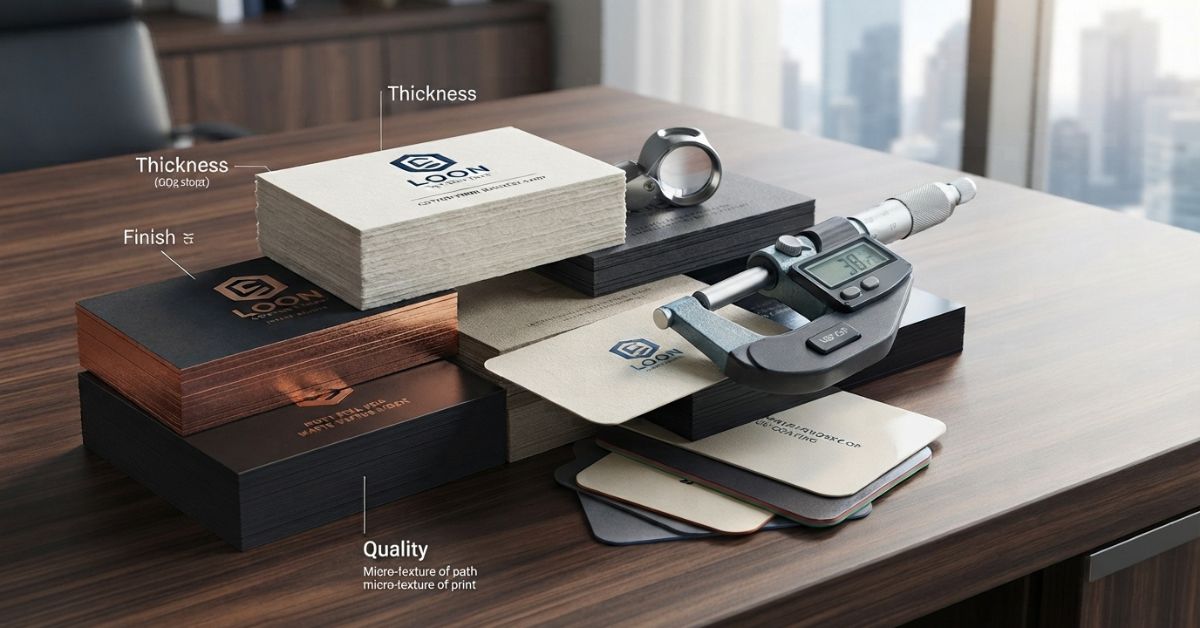
The best business card paper types balance thickness, finish, and durability. 350 GSM cardstock with a matte finish is the standard for most professionals, while luxury brands often choose 400 GSM with soft-touch or textured finishes. Your choice should reflect your brand identity, industry, and how the card will be used.
I’ve helped countless businesses in Dubai choose the right paper for their business cards. The difference between a card that gets kept and one that gets thrown away often comes down to the paper quality. This guide covers everything you need to know about business card paper types, GSM ratings, finishes, and how to choose the perfect card for your brand.
Why Paper Quality Matters for Business Cards
The quality of your business card says a lot about your business before anyone reads your contact details. A flimsy card often feels inexpensive, while a well-made card printed on premium cardstock immediately creates confidence. Customers naturally associate a heavier paper weight with quality because it feels stronger, lasts longer, and reflects careful attention to detail.
A premium card also improves brand identity, making your company appear established and reliable. Whether you work in real estate, finance, hospitality, or creative services, choosing the best business card paper types helps strengthen your professional image from the very first handshake.
Good paper also improves technical printing results. High-quality materials support better color reproduction, sharper text, smoother finishes, and more accurate CMYK printing. They reduce ink bleeding and maintain excellent crisp printing even after frequent handling.
At ArtPlus, we understand the importance of paper quality. Our business card printing services offer premium materials, expert finishing, and professional guidance—ensuring your cards represent your brand with confidence. For a complete overview of design principles, finishing options, and ordering, see our business card printing in Dubai guide.
| Paper Quality | Customer Perception | Typical Use |
| Standard Paper | Basic | Temporary cards |
| Premium Cardstock | Professional | Company cards |
| Luxury Paper | Premium | Executive branding |
| Specialty Materials | Exclusive | High-end brands |
What Type of Paper Is Used for Business Cards?
There isn’t one perfect answer because the best business card paper types depend on your business goals, budget, and audience. A law firm may prefer elegant matte business cards, while a photography studio often chooses glossy business cards to showcase vibrant images. Luxury brands frequently invest in textured cards, linen cardstock, or cotton paper, while eco-conscious companies may choose recycled cardstock or kraft cardstock to support sustainable branding.
Professional printers generally recommend business card cardstock between 350 GSM and 400 GSM because it offers excellent cardstock thickness, impressive durability, and a premium feel without becoming impractical. Combined with the correct coating, lamination, and finishing techniques, these materials create professional business cards that communicate quality from the moment someone holds them.
| Business Need | Recommended Paper |
| Corporate Offices | Matte finish on premium cardstock |
| Luxury Brands | 400 GSM with soft-touch finish |
| Creative Studios | Glossy finish with spot UV |
| Eco-Friendly Companies | Recycled cardstock or kraft cardstock |
| Hotels & Consultants | Linen cardstock or cotton paper |
| Membership Programs | PVC business cards |
Business Card Paper Types (Detailed Guide)
Choosing the right business card paper types is just as important as selecting the right design. Every material has its own texture, appearance, and purpose.
Cardstock
The most popular material for business cards is cardstock, a thick paper specially manufactured for premium printing applications. Unlike ordinary office paper, heavy cardstock offers greater paper weight, better cardstock thickness, and significantly improved strength. Most professional printing services use coated cardstock because it produces sharper text, excellent print quality, and outstanding color accuracy.
Matte Paper
Matte business cards remain one of the most popular options for companies seeking a clean and sophisticated appearance. A matte finish reduces glare, improves readability, and creates a soft surface that feels comfortable to hold. Because the finish has a practical writable surface, many consultants, lawyers, and financial advisors prefer it for appointment notes or personal messages.
Glossy Paper
Glossy business cards provide exceptional visual impact for designs with colourful photographs or bold graphics. The reflective glossy finish enhances vibrant colors, improves image sharpness, and produces striking marketing materials. Creative agencies, photographers, and fashion brands often prefer glossy cards because they maximise visual presentation.
Uncoated Paper
Uncoated cardstock offers a natural appearance with a simple yet professional feel. Without surface coating, the paper absorbs ink differently, producing softer colours and an authentic texture. Businesses looking for minimalist branding or a handmade aesthetic often choose this material because it supports writing with pens and markers.
Textured (Linen) Paper
Textured cards like linen cardstock stand out because of their elegant woven appearance. The delicate textured paper surface creates depth that customers can both see and feel. Hotels, luxury retailers, and interior designers frequently select textured cards because they communicate craftsmanship and attention to detail.
Recycled Paper
Many businesses now choose recycled cardstock because sustainability has become an important part of modern branding. Unlike traditional materials, recycled paper demonstrates environmental responsibility without sacrificing quality. Kraft cardstock has become especially popular because of its natural brown colour and organic appearance.
PVC / Plastic Business Cards
For maximum durability, many organizations invest in PVC business cards. These waterproof business cards resist moisture, bending, tearing, and everyday wear, making them ideal for gyms, membership clubs, hotels, and healthcare providers.
| Business Card Paper Type | Appearance | Durability | Writable | Best For |
| Coated Cardstock | Premium | Excellent | Limited | Corporate businesses |
| Matte Finish | Elegant | Excellent | Yes. | Consultants & professionals |
| Glossy Finish | Vibrant | Excellent | No | Creative industries |
| Uncoated Cardstock | Natural | Good | Yes. | Minimalist brands |
| Linen Cardstock | Luxury | Excellent | Limited | Hotels & executive brands |
| Recycled Cardstock | Eco-friendly | Good | Yes. | Sustainable businesses |
| PVC Business Cards | Modern | Outstanding | No | Membership & loyalty programs |
Ready to Print Premium Business Cards That Make an Impression?
350 GSM, 400 GSM, matte, glossy, soft touch – expert finishing. Free design consultation and UAE delivery.
Get a Business Card QuoteBusiness Card Thickness Explained (GSM Guide)
When people compare business card paper types, they often focus on colour or finish first. However, the GSM rating is just as important because it determines the paper weight, strength, and overall feel of your card.
GSM stands for grams per square meter, which measures how much a sheet of paper weighs. A higher number usually means thicker paper. In the UAE, professional printers usually recommend 350 GSM or 400 GSM because they offer an excellent balance of quality, durability, and value.
| GSM | Feel | Best For | Premium Level |
| 250 GSM | Light | Promotional cards | ★★☆☆☆ |
| 300 GSM | Professional | Startups & SMEs | ★★★☆☆ |
| 350 GSM | Premium | Most businesses | ★★★★☆ |
| 400 GSM | Luxury | Executive brands | ★★★★★ |
| 450+ GSM | Ultra Premium | High-end branding | ★★★★★+ |
Is 250 GSM Good for Business Cards?
250 GSM is thicker than regular office paper, but it feels relatively light for a professional business card. Businesses usually select this option when producing temporary promotional cards or distributing thousands of cards at exhibitions. It reduces printing costs, yet it lacks the premium feel customers expect. If your goal is strong branding and lasting impact, thicker paper is a much better investment.
300 GSM
300 GSM is considered the entry point for quality business card cardstock. It provides noticeable strength while remaining affordable for startups and small businesses.
350 GSM
Across Dubai and the UAE, 350 GSM is widely recognised as the standard business card thickness. It feels solid in the hand and creates an excellent first impression without becoming too bulky. Most printing professionals recommend this thickness because it combines affordability with a premium appearance.
400 GSM
Businesses that want a stronger luxury image often upgrade to 400 GSM. This premium thickness gives the card extra rigidity, making it feel more substantial during networking events and client meetings. It is commonly paired with soft-touch finish, velvet lamination, gold foil, silver foil, and spot UV.
450+ GSM
For companies that want to make an unforgettable statement, 450 GSM and above offer the ultimate premium experience. These thick business cards often include multiple finishing techniques such as embossed business cards, debossed business cards, or luxury lamination.
What GSM Paper Is Used for Business Cards?
Most professional printers recommend 350 GSM as the standard thickness for everyday business use. It combines excellent durability, premium feel, and affordability. Companies wanting stronger premium branding often select 400 GSM or even 450 GSM for high-end executive business cards.
Which Paper Finish Should You Choose?
Choosing the right finish is just as important as selecting the correct thickness. The finish determines how your business card paper types look, feel, and perform after printing.
| Finish | Appearance | Writable | Best For |
| Matte Finish | Smooth & Elegant | Yes. | Corporate brands |
| Glossy Finish | Bright & Reflective | No | Creative businesses |
| Soft Touch Finish | Velvet-like | Limited | Luxury branding |
| Spot UV | Raised glossy areas | No | Premium logos |
| Silk Lamination | Smooth & Professional | Limited | Executive cards |
| Uncoated | Natural | Yes. | Handmade brands |
For a detailed guide to spot UV, foiling, embossing, and other premium techniques, see our business card finishing options guide.
A matte finish creates a clean and refined appearance that suits consultants, accountants, and law firms. It reduces reflections and makes text easier to read.
A glossy finish adds shine that makes photographs and colourful artwork stand out. Restaurants, photographers, and fashion brands often choose this finish.
A soft-touch finish gives cards a silky texture that immediately feels luxurious. It is one of the most popular options for luxury business cards.
Spot UV is commonly applied over logos or selected design elements to create contrast between glossy and matte surfaces.
Silk lamination provides a smooth surface somewhere between matte and glossy, protecting the card from daily wear.
Which Material Is Best for Business Cards?
The ideal business card paper types depend on more than appearance. Your industry, budget, marketing goals, and customer expectations all influence the right choice.
| Business Goal | Recommended Choice |
| Affordable quality | 300 GSM cardstock |
| Everyday professional use | 350 GSM with matte finish |
| Luxury presentation | 400 GSM with soft touch finish |
| Eco-friendly branding | Recycled cardstock or kraft cardstock |
| Membership or loyalty cards | PVC business cards |
| Creative portfolio | Glossy finish with spot UV |
Businesses in finance, real estate, and consulting usually benefit from matte business cards printed on 350 GSM or 400 GSM premium cardstock. Creative agencies and photographers often prefer glossy business cards to showcase colourful portfolios. Luxury retailers and hotels frequently choose textured cards or linen cardstock enhanced with gold foil or embossing.
“The best business card paper is the one that supports your brand, fits your budget, and leaves a positive memory every time someone receives it.”
Common Mistakes When Choosing Business Card Paper
| Mistake | Why It Matters | Better Choice |
| Choosing thin paper | Feels cheap | 350 GSM or 400 GSM |
| RGB artwork | Poor color reproduction | CMYK printing |
| No bleed area | Design may be cut | Add 3 mm bleed. |
| Ignoring safe margin | Text gets trimmed. | Keep content inside margins. |
| Too much information | Difficult to read | Keep the layout simple. |
| Wrong finish | Poor user experience | Match finish with business purpose. |
Business Card Printing Tips for Better Results
| Printing Element | Best Practice |
| Resolution | 300 DPI for high-resolution printing |
| Colour Mode | CMYK |
| Printing Method | Digital printing for small runs, offset printing for bulk orders |
| Artwork | Use print-ready artwork. |
| Bleed | 3 mm bleed area |
| Safety | Leave a safe margin. |
| Premium Finish | Add foil stamping, spot UV, or silk lamination. |
For a complete step‑by‑step guide to creating print‑ready files, see our business card print design guide.
“Before printing hundreds of cards, always request a physical sample. A printed sample lets you check the paper, colours, finish, and overall feel in real life.”
“The difference between a card that gets kept and one that gets tossed is often the paper quality.”
“A business card isn’t just contact details—it’s a physical representation of your brand’s quality and attention to detail.”
Conclusion
Choosing the best business card paper types is about much more than selecting a thick sheet of paper. The right combination of paper weight, finish, and printing method shapes how customers perceive your business from the very first meeting. A carefully produced card reflects professionalism, attention to detail, and confidence in your brand.
Whether you prefer elegant matte business cards, eye-catching glossy business cards, luxurious textured cards, or sustainable recycled cardstock, your choice should always support your company’s image and long-term marketing goals.
If you’re planning business card printing in Dubai, work with an experienced printing company that understands premium materials and modern printing techniques. Professional advice on business card cardstock, GSM, finishing options, and premium printing ensures you receive long-lasting cards with an outstanding professional appearance. Refer to our complete business card printing guide for expert tips on design, finishing, and ordering.
Ready to create business cards that make a lasting impression? Explore our business card printing services for premium quality and expert finishing.
Ready to Print Premium Business Cards That Make an Impression?
350 GSM, 400 GSM, matte, glossy, soft touch – expert finishing. Free design consultation and UAE delivery.
Get a Business Card QuoteFrequently Asked Questions
What type of paper is used for business cards?
The most common business card paper types are cardstock (350 GSM), matte paper, glossy paper, linen cardstock, and recycled cardstock. Premium options include cotton paper and PVC for durability.
Is 250 GSM good for business cards?
250 GSM is suitable for temporary or promotional cards but lacks the premium feel of thicker paper. For professional business cards, 350 GSM or higher is recommended.
Which material is best for business cards?
The best material depends on your business. 350 GSM cardstock is the standard for most professionals. Luxury brands often choose 400 GSM with soft-touch or linen finishes. Eco-friendly businesses prefer recycled cardstock.
What GSM paper is used for business cards?
Most professional printers recommend 350 GSM as the standard thickness. Premium cards often use 400 GSM, while ultra-luxury cards can go up to 450 GSM or higher.
Is matte or glossy better for business cards?
Matte is better for a writable, professional finish. Glossy is better for vibrant colours and creative businesses. Choose based on your needs.
Can I write on glossy business cards?
Writing on a glossy finish is not recommended because ink often smudges. Choose matte or uncoated paper for handwritten notes.