Table of Contents
- Is Acrylic Better Than Glass for Photo Frames and Prints?
- What Is UV Printing on Acrylic?
- Advantages of Acrylic Over Glass for Photo Display
- Disadvantages of Acrylic Prints (Honest Talk)
- Acrylic vs Glass Photo Prints: Quick Comparison Table
- What Is the Best Type of Print for Photos?
- Real‑World Example: A Client’s Living Room
- Anti‑Glare Properties for Better Viewing
- Common Uses Where Acrylic Outshines Glass
- Maintenance Tips for Acrylic Prints
- Conclusion
- FAQ
- Is acrylic better than glass for photo frames?
- What is the difference between an acrylic print and glass print?
- What is the best type of print for photos?
- What are the disadvantages of acrylic prints?
- How do the acrylic vs glass photo prints compare in price?
- Are acrylic prints good for high‑traffic areas?
Acrylic is better than glass for photo prints in almost every way: lighter, safer, more affordable, and with built‑in UV protection. Glass offers a harder surface but breaks easily and costs more.
I’ve framed hundreds of photos for clients, and the question always comes up: “Should I print on acrylic or glass?” After years of seeing both in real homes and galleries, I have a clear answer. This guide breaks down the differences honestly, so you can pick what’s right for your space.
Is Acrylic Better Than Glass for Photo Frames and Prints?
Is acrylic better than glass for photo frames? For most situations, yes. Acrylic is shatter‑resistant, much lighter, and naturally blocks UV rays. Glass is heavier, fragile, and often needs extra UV coatings. The only time glass wins is if you absolutely need a harder, scratch‑resistant surface and don’t mind the weight.
For vibrant, durable acrylic photo printing in Dubai, professional services use UV‑cured inks on premium sheets.
What Is UV Printing on Acrylic?
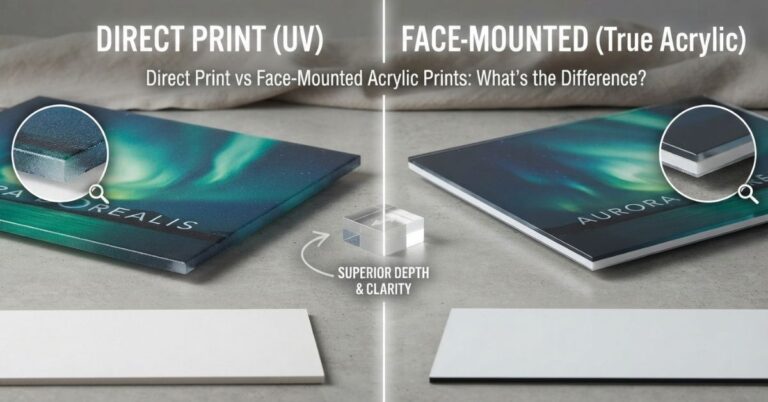
UV printing is a digital method that uses ultraviolet light to cure ink instantly onto an acrylic sheet. The ink bonds directly to the surface, creating a vibrant, glossy finish. No drying time. If you’re new to the medium, start with our complete guide on what acrylic prints are and how they’re made. No smudging. The result is a durable, photo-quality print that looks like it’s floating under glass—but it is the glass.
What is the difference between an acrylic print and glass print? An acrylic print is a UV‑printed image directly on the acrylic sheet. A glass print is typically a photo mounted behind a glass panel. Acrylic prints are lighter, safer, and have built-in UV protection.
Advantages of Acrylic Over Glass for Photo Display
Let’s get specific. Here’s why acrylic wins for most people.
1. Safety – Shatter-Resistant
Drop a glass print, and you’re cleaning up sharp shards. Drop an acrylic print, and it bounces. Shatter-resistant photo prints are a game-changer for homes with kids, pets, or high‑traffic areas.
2. Weight – Easy to Hang
Acrylic is about half the weight of glass. A large 24″ x 36″ acrylic print weighs just a few pounds. The same size in glass? Heavy enough to need two people and reinforced anchors.
Lightweight wall art for easy hanging means you can rearrange your walls without hiring help.
3. Built‑in UV Protection
UV protection for photo prints is critical if you hang art near windows. Acrylic naturally blocks up to 98% of UV rays. Glass? Unless you pay extra for UV‑coated glass, it lets fading rays through.
4. Cost – More Affordable
Acrylic vs glass photo prints price: Acrylic is typically 30–50% cheaper than glass for the same size. You get a premium look without the premium price tag.
5. Versatility – Custom Shapes and Mounts
Acrylic can be laser‑cut into circles, hexagons, or custom outlines. Glass is limited to rectangles. Acrylic also works with standoffs, block mounts, and face‑mounting.
Disadvantages of Acrylic Prints (Honest Talk)
What are the disadvantages of acrylic prints? Two main things:
- Scratch‑prone: Acrylic scratches more easily than glass if you use abrasive cleaners. But UV‑cured ink adds a protective layer, and proper cleaning (microfiber cloth only) prevents issues.
- Static dust: Acrylic can attract dust due to static charge. A quick wipe with an antistatic cloth solves it.
Glass is harder and doesn’t scratch as easily. But that’s about the only advantage.
Acrylic vs Glass Photo Prints: Quick Comparison Table
| Feature | Acrylic Prints | Glass Prints |
| Weight | Lightweight | Heavy |
| Safety | Shatter‑resistant | Breaks into sharp shards |
| UV protection | Built‑in (98%) | None unless coated |
| Cost | More affordable | More expensive |
| Scratch resistance | Moderate (care needed) | High |
| Custom shapes | Yes (laser‑cut) | Limited |
| Best for | Homes, galleries, high‑traffic areas | Formal displays, low‑traffic areas |
What Is the Best Type of Print for Photos?
What is the best type of print for photos? It depends on where you hang it.
- For a busy family living room: Acrylic. Lightweight, safe, and vibrant.
- For a formal study or low‑traffic gallery: Glass works, but acrylic is still excellent.
- For outdoor or covered patios: Acrylic with UV coating. Glass can overheat and crack.
- For budget‑conscious projects: Acrylic every time.
Photos on glass look elegant but come with risks. Acrylic vs glass photo prints cost favors acrylic, and durability favors acrylic too.
Real‑World Example: A Client’s Living Room
A client in Dubai wanted a large family photo above her sofa. She was worried about her toddler throwing toys. Glass would have been a disaster waiting to happen. We printed on acrylic with UV‑cured ink. Two years later, the print still looks brand new. No scratches. No fading. And zero safety scares.
Anti‑Glare Properties for Better Viewing
Many acrylic prints come with an anti-glare acrylic coating that reduces reflections. Glass, especially non‑coated, can turn into a mirror in bright rooms. For spaces with large windows or track lighting, anti‑glare acrylic is the smarter choice.
Common Uses Where Acrylic Outshines Glass
- Kids’ rooms and play areas: Shatter‑resistant peace of mind.
- Rental apartments: Lightweight and easy to move.
- Offices and retail spaces: Durable and professional.
- Covered patios: UV‑resistant and weather‑tolerant.
Maintenance Tips for Acrylic Prints
- Clean with a microfiber cloth and mild soap (no ammonia).
- Avoid paper towels – they can scratch.
- Dust regularly to prevent static buildup.
For a full cleaning routine that prevents scratches and keeps your prints looking new, follow our guide on how to care for acrylic prints.
Conclusion
Acrylic photo prints with UV printing are preferred over glass because they are lighter, safer, more affordable, and naturally UV‑protective. Glass offers a harder surface but breaks easily and costs more. For homes with kids, busy hallways, or anyone who wants vibrant, long‑lasting wall art without the weight or worry—acrylic is the clear winner.
Ready to transform your favorite photo into a modern masterpiece? Explore printing on acrylic in Dubai with custom sizes and standoff mounting
FAQ
Is acrylic better than glass for photo frames?
For most homes, yes. Acrylic is lighter, safer, and blocks UV rays naturally. Glass is only better if you need a harder, more scratch‑resistant surface.
What is the difference between an acrylic print and glass print?
An acrylic print has the image UV‑printed directly onto the acrylic. A glass print is usually a photo mounted behind a glass panel. Acrylic prints are lighter and shatter‑resistant.
What is the best type of print for photos?
For vibrant color, durability, and safety—acrylic. For a traditional, heavy, formal look—glass. Acrylic is better for most modern homes.
What are the disadvantages of acrylic prints?
They scratch more easily than glass if cleaned improperly, and they can attract dust due to static. Use a microfiber cloth and antistatic cleaner.
How do the acrylic vs glass photo prints compare in price?
Acrylic is typically 30–50% cheaper than glass for the same size, while offering similar or better visual quality.
Are acrylic prints good for high‑traffic areas?
Yes. They are shatter‑resistant, lightweight, and durable. That’s why many hotels and retail spaces choose acrylic over glass.