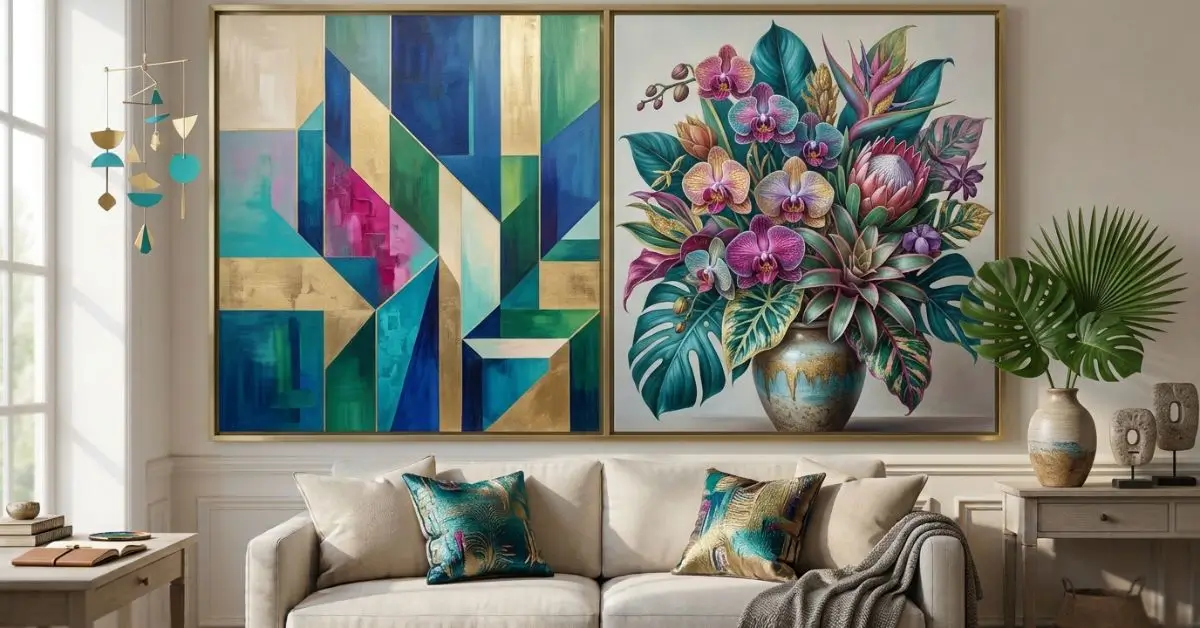
When exploring different artwork styles, two terms that often create confusion are abstract art and contemporary art. They are sometimes used interchangeably, but they do not describe the same thing. Understanding abstract art vs contemporary art requires looking at how each category is defined, what makes its artwork distinctive, and how artists use different techniques to communicate ideas.
The main difference is that abstract art describes an artistic approach that moves away from realistic representation, while contemporary art refers broadly to artwork created by artists in the present period. This means a painting can be both abstract and contemporary at the same time.
For example, an artist creating a non-representational painting with expressive colours and geometric shapes today is producing contemporary abstract art. On the other hand, a realistic portrait created by a living artist can also be contemporary art, even though it is not abstract.
Both categories include a wide range of styles, techniques, materials, and creative ideas. Let’s explore their differences, similarities, examples, and how they overlap.
1. What Is Abstract Art?
Abstract art is an artistic approach that uses colours, shapes, lines, patterns, and textures rather than depending entirely on realistic representations of objects, people, or landscapes.
Some abstract artworks retain recognisable elements of their subjects, while others move further away from reality and focus entirely on visual expression.
The purpose is often to communicate emotions, explore relationships between visual elements, or encourage viewers to interpret the composition in their own way.
Key characteristics of abstract art:
- Uses shapes, colours, lines, and textures.
- May avoid realistic representations.
- Focuses on composition and visual expression.
- Can feature geometric or organic forms.
- Allows different personal interpretations.
Popular approaches include geometric abstraction, Abstract Expressionism, minimalist abstraction, and colour field painting.
For example, a painting made from overlapping circles, contrasting colours, and expressive brushstrokes can be abstract without representing a specific object or scene.
2. What Is Contemporary Art?
Contemporary art refers broadly to art created by artists working in the present period. It reflects current ideas, experiences, cultures, technologies, and social developments.
Unlike abstract art, contemporary art is not defined by one particular visual style. It can include realistic paintings, photography, sculpture, digital artwork, installations, mixed media, and abstract compositions.
Contemporary artists may explore themes such as identity, technology, environmental issues, society, personal experiences, and everyday life.
Key characteristics of contemporary art:
- Created by artists in the current period.
- Includes different artistic styles and mediums.
- Often explores present-day ideas and experiences.
- Can combine traditional and experimental techniques.
- May include paintings, photography, sculpture, and digital media.
For example, a realistic painting of a modern city, a digital artwork exploring technology, and an abstract composition created today can all be considered contemporary art.
3. Abstract Art vs Contemporary Art: Key Differences
The most important distinction is that abstract art describes how artwork represents or interprets subjects, while contemporary art describes the period and broader context in which artwork is created.
Here is a simple comparison:
| Feature | Abstract Art | Contemporary Art |
| Definition | An artistic approach focused on non-realistic or simplified visual expression | Art created by artists in the present period |
| Main focus | Shapes, colours, lines, patterns, and visual expression | Current ideas, experiences, cultures, and creative approaches |
| Representation | May avoid realistic subjects | Can be realistic, abstract, or conceptual |
| Techniques | Geometric forms, expressive brushwork, colour fields and textures | Painting, sculpture, photography, digital media and mixed media |
| Themes | Emotion, form, movement, colour and interpretation | Society, identity, technology, culture and personal experiences |
| Artistic styles | Geometric abstraction, minimalism and Abstract Expressionism | Realism, abstraction, conceptual art, digital art and more |
One important point is that these categories are not mutually exclusive. Contemporary art can include abstract paintings, but not all contemporary art is abstract.
4. Abstract Art vs Contemporary Art Examples
Looking at practical examples makes the difference easier to understand.
Example 1: A Geometric Abstract Painting
Imagine a painting featuring circles, rectangles, straight lines, and blocks of contrasting colours without representing any recognisable object.
This is an example of abstract art because its composition focuses on shapes, colour relationships, and visual structure rather than realistic representation.
If an artist creates this painting today, it can also be classified as contemporary art.
Example 2: A Realistic City Painting
Consider a detailed painting showing modern buildings, streets, vehicles, and people.
The artwork represents recognisable subjects, so it is not necessarily abstract. However, if created by an artist working today, it can be classified as contemporary art.
Example 3: A Digital Abstract Composition
Imagine a digital composition using flowing shapes, layered colours, and experimental textures.
It uses an abstract visual approach and, if created in the present period, also belongs to contemporary art.
These examples demonstrate why the two categories can overlap.
5. Abstract Art vs Realism: Understanding the Difference
Abstract art and realism represent two different approaches to artistic expression.
Realism aims to depict recognisable subjects in a way that reflects their visible appearance. Abstract art, in contrast, may simplify, distort, reinterpret, or completely move away from realistic representation.
For example, a realistic painting might show a detailed landscape with accurately represented trees, mountains, and buildings. An abstract interpretation of the same landscape might use flowing lines, layered colours, and geometric forms to communicate its atmosphere rather than its exact appearance.
Neither approach is inherently better. Both offer different ways to interpret and communicate visual experiences.
6. What Is the Relationship Between Contemporary and Abstract Art?
Abstract art and contemporary art often overlap because contemporary artists continue to experiment with abstract styles and techniques.
A contemporary abstract artist may combine traditional painting methods with digital tools, mixed media, unusual materials, or experimental compositions.
Contemporary abstract artwork can include:
- Large geometric compositions.
- Minimalist paintings with limited colours.
- Expressive artwork featuring energetic brushstrokes.
- Digital abstract designs.
- Textured compositions using multiple materials.
This relationship demonstrates that abstract art is not limited to a specific historical period. Artists continue to explore abstraction as part of contemporary creative practice.
7. Famous Abstract and Contemporary Artists
Several influential artists have helped shape abstract art and the wider development of contemporary artistic expression.
| Artist | Known for | Artistic contribution |
| Wassily Kandinsky | Abstract painting | Expressive use of colour, shapes, and movement |
| Piet Mondrian | Geometric abstraction | Structured compositions and primary colours |
| Jackson Pollock | Abstract Expressionism | Drip painting and spontaneous techniques |
| Mark Rothko | Colour field painting | Large areas of layered colour |
| Yayoi Kusama | Contemporary art | Repeated patterns, installations, and immersive environments |
| Gerhard Richter | Contemporary art | Diverse approaches to painting, abstraction, and representation |
These artists demonstrate that abstract approaches and contemporary artistic practices can intersect in different ways.
8. How to Choose Between Abstract and Contemporary Artwork
If you are selecting artwork for your home, office, or commercial space, the choice depends on your preferred visual style and the atmosphere you want to create.
Choose abstract artwork if you appreciate:
- Expressive colours and shapes.
- Non-representational compositions.
- Geometric patterns and visual movement.
- Artwork that encourages personal interpretation.
Explore contemporary artwork if you prefer:
- A wide variety of modern artistic styles.
- Realistic and abstract compositions.
- Experimental materials and techniques.
- Artwork inspired by current ideas and creative approaches.
You do not necessarily need to choose between the two. Contemporary abstract paintings can combine the visual freedom of abstraction with the creative approaches of present-day artists.
For artwork that complements modern interiors, consider the relationship between the painting’s colours, composition, size, and surrounding furniture.
9. Explore Abstract and Contemporary Artwork at ArtPlus
Abstract and contemporary art offer different but complementary ways to explore creativity and artistic expression. Whether you appreciate structured geometric compositions, expressive colour combinations, or experimental contemporary designs, both categories provide a wide range of visual possibilities.
Explore the ArtPlus Abstract Art Collection to discover different abstract compositions and artistic styles. You can also browse the ArtPlus Artworks Collection to explore additional artwork themes and creative inspiration.
Frequently Asked Questions
Is abstract art the same as contemporary art?
No. Abstract art describes an artistic approach that moves away from realistic representation, while contemporary art refers to artwork created in the present period. Contemporary artwork can be abstract, realistic, or experimental.
What is the difference between abstract art and contemporary art examples?
A geometric painting using shapes and colours is an example of abstract art. A realistic portrait, digital installation, or abstract painting created by an artist today can all be examples of contemporary art.
Can contemporary art be abstract?
Yes. Contemporary artists frequently use abstract styles, including geometric abstraction, colour field painting, minimalism, and expressive brushwork.
What is the difference between contemporary art and modern art?
Modern art generally refers to artistic movements from approximately the late nineteenth century through much of the twentieth century. Contemporary art refers broadly to art created in the present period. The two terms describe different historical contexts.
Is abstract art better than realism?
Neither is objectively better. Abstract art focuses on visual expression, forms, and interpretation, while realism aims to represent recognisable subjects. The preference depends on the viewer and the purpose of the artwork.
Final Thoughts
Understanding abstract art vs contemporary art becomes easier when you recognise that the two terms describe different aspects of artistic expression. Abstract art is an approach that explores shapes, colours, textures, and forms beyond realistic representation. Contemporary art refers to the wider body of artwork created in the present period.
The two categories can overlap, allowing contemporary artists to experiment with abstract compositions, traditional painting techniques, and new creative technologies.
Whether you prefer abstract paintings, realistic artwork, or experimental contemporary compositions, understanding these differences can help you appreciate art and choose pieces that suit your interests and surroundings.