Table of Contents
- Why Modern Interior Projects Use Digitally Printed Ceramic Tiles
- How Digital Tile Printing Improves Design Flexibility
- Improving Visual Consistency Across Large Interior Spaces
- How Custom Printed Ceramic Tiles Support Brand Identity
- Why Digital Printed Tiles Work Better in the UAE Climate
- Improving Durability in High‑Traffic Interior Areas
- How Decorative Ceramic Wall Tiles Enhance Luxury Spaces
- Digital Printed Tiles vs Traditional Interior Finishes
- How Designers Use High‑Resolution Ceramic Printing in Modern Projects
- Best Interior Spaces for Digitally Printed Ceramic Tiles
- Conclusion
- FAQ
Digital printed ceramic tiles transform interior design by allowing any image, pattern, or artwork to become a permanent, waterproof wall or floor surface. They offer unlimited design flexibility, perfect colour matching, and durability that outperforms paint, wallpaper, or traditional tiles—especially in high‑traffic areas and challenging climates like the UAE.
I’ve seen projects where a designer’s vision was nearly impossible with stock tiles. Digital printing changed that. Now you can print a company logo across a reception floor, turn a family photo into a bathroom mural, or match tile colours exactly to a fabric swatch. This guide explains how digital printed ceramic tiles improve interior design projects—from flexibility to durability to brand storytelling.
Why Modern Interior Projects Use Digitally Printed Ceramic Tiles
Interior designers choose digitally printed ceramic tiles because they solve three common problems:
- Limited stock designs: No more compromising with catalogue patterns.
- Inconsistent colours: Digital printing ensures every tile matches perfectly.
- Durability concerns: UV‑cured inks are scratch, stain, and fade-resistant.
For professional digital tile printing in the UAE, choose a studio that offers color-matched, high-resolution UV printing on any ceramic surface.
Unlike wallpaper that peels or paint that scuffs, printed ceramic tiles are permanent. They work in bathrooms, kitchens, lobbies, and even outdoor covered areas.
How Digital Tile Printing Improves Design Flexibility
Traditional tile manufacturing forces you to choose from existing patterns and limited colour palettes. Digital printing removes those boundaries.
What you can do now:
- Print any high‑resolution image – photo, illustration, or digital art.
- Match any Pantone or RGB colour exactly.
- Scale a pattern from 1 cm to 1 m without losing quality.
- Combine multiple designs in one layout.
To see what’s possible with custom prints, browse the latest ceramic tile design trends for luxury interiors in the UAE.
“I worked on a penthouse where the client wanted a marble look that didn’t exist in any showroom. We photographed a marble slab, cleaned up the image, and printed it onto ceramic tiles. The result was indistinguishable from real stone—at half the cost and zero maintenance.”
Upgrade Your Next Project with Custom Digital Printed Tiles
Unlimited design flexibility, perfect colour matching, and durable surfaces that last. Let our team help you create seamless feature walls, branded reception areas, or luxury bathrooms.
Request a Designer QuoteImproving Visual Consistency Across Large Interior Spaces
One of the biggest challenges with traditional tiles is colour variation between batches. Digital printing eliminates this. Every tile in your project is printed from the same digital file, using the same colour profile. Seamless murals across dozens of tiles become simple.
For large‑format projects – hotel corridors, office lobbies, or villa courtyards – this consistency is critical. No more “this batch looks slightly different” complaints.
How Custom-Printed Ceramic Tiles Support Brand Identity
For commercial interiors, custom printed ceramic tiles for interiors are a branding powerhouse.
- Hotel lobbies: Print the hotel logo or a signature pattern into a feature wall.
- Retail stores: Use brand colours and motifs on floor tiles.
- Corporate offices: Embed mission statements or abstract brand elements into reception floors.
- Restaurants: Subtle logo integration into wall tiles behind seating.
The durability means the branding stays sharp for years, even under heavy foot traffic.
Why Digital Printed Tiles Work Better in the UAE Climate
The UAE’s heat, humidity, and strong sunlight destroy many interior finishes. Digital printed ceramic tiles are different:
- Heat resistance: No warping or discolouration, even in direct sun.
- UV stability: Inks are UV‑cured and resist fading for 20+ years.
- Moisture protection: Fully waterproof, perfect for bathrooms and kitchens.
- Easy cleaning: Just wipe with a damp cloth.
For projects from Dubai Marina apartments to Abu Dhabi villas, printed tiles outperform paint, wallpaper, and even some natural stones. For exterior applications, see how outdoor printed ceramic tiles perform in the UAE heat and humidity.
Improving Durability in High‑Traffic Interior Areas
Durable interior tile surfaces are essential for:
- Hotel lobbies (hundreds of guests daily)
- Airport lounges (luggage wheels, foot traffic)
- Retail stores (shopping trolleys, spills)
- Corporate offices (rolling chairs, constant cleaning)
Digital printed ceramic tiles have a hardness rating of 7 on the Mohs scale (almost as hard as quartz). They resist scratches, stains, and impact. Even with daily mopping, the print will not fade.
How Decorative Ceramic Wall Tiles Enhance Luxury Spaces
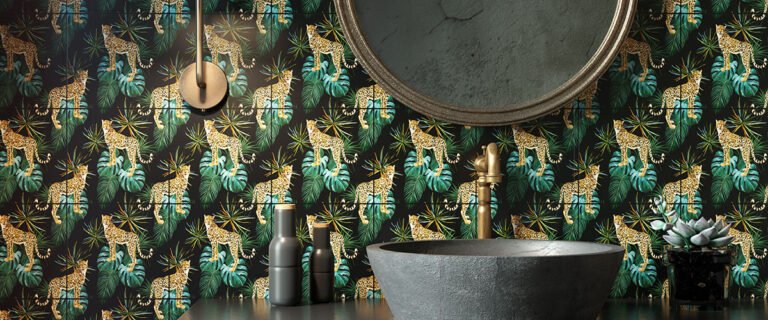
Decorative ceramic wall tiles add texture, colour, and personality to luxury interiors. Digital printing allows the following:
- Photo‑realistic murals: A forest scene or ocean view that covers an entire wall.
- Metallic effects: Gold, copper, or bronze finishes that catch light.
- 3D illusions: Printed patterns that look like recessed panels or curves.
- Artistic expressions: Reproductions of famous paintings or original digital art.
Luxury doesn’t mean expensive materials anymore. It means a custom design that fits your space perfectly.
Digital Printed Tiles vs Traditional Interior Finishes
| Feature | Digital Printed Ceramic Tiles | Wallpaper | Paint | Natural Stone |
| Customisation | Unlimited | Pattern limited | Colour only | Very limited |
| Durability | 20+ years | 3–7 years | 2–5 years | 50+ years (with sealing) |
| Water resistance | Excellent | Poor | Moderate | Good (sealed) |
| Maintenance | Wipe clean | Gentle cleaning | Repainting needed | Sealing required |
| Cost (mid‑range) | Moderate | Low | Low | High |
For most interior projects, printed ceramic tiles offer the best balance of customisation and long‑term value.
How Designers Use High‑Resolution Ceramic Printing in Modern Projects
High‑resolution ceramic printing (up to 1200 DPI) allows designers to:
- Replicate rare marbles, woods, or stones without the environmental cost.
- Create seamless floor‑to‑ceiling murals from high‑end photography.
- Integrate QR codes or NFC tags into tiles for interactive experiences.
- Produce small batches for boutique projects without minimum orders.
I recently worked with a designer who needed only 12 tiles for a luxury bathroom feature wall. Digital printing made it economical – no tooling fees, no waste.
Best Interior Spaces for Digitally Printed Ceramic Tiles
Based on real project experience, here’s where they perform best:
| Space | Why It Works | Example |
| Kitchen backsplash | Heat‑resistant, easy to clean | Recipe text + vegetable illustrations |
| Bathroom wall | Waterproof, mold-resistant | Coastal watercolour mural |
| Hotel reception | Durable, brandable | Logo + geometric pattern |
| Office lobby | Professional, low‑maintenance | Abstract brand colours |
| Retail floor | Scratch‑resistant, easy to clean | Terrazzo‑look with logo inlays |
| Restaurant feature wall | Stain‑resistant, wipeable | Vintage menu art |
Conclusion
Digitally printed ceramic tiles improve interior design projects by removing creative limits while adding durability. You can print any image, match any colour, and create seamless murals that last for decades. They outperform paint, wallpaper, and even natural stone in high‑traffic or humid environments. For your next project – residential or commercial – consider what’s possible when the tile itself becomes the canvas. Explore custom ceramic tile printing in Dubai to turn your design ideas into permanent, durable wall and floor art.
Upgrade Your Next Project with Custom Digital Printed Tiles
Unlimited design flexibility, perfect colour matching, and durable surfaces that last. Let our team help you create seamless feature walls, branded reception areas, or luxury bathrooms.
Request a Designer QuoteFAQ
Are digital printed ceramic tiles durable?
Yes. UV‑cured inks are scratch‑, stain‑, and fade‑resistant, lasting 20+ years indoors.
Can I print any image on a ceramic tile?
Yes, as long as it’s high resolution (300 DPI at final size). Photos, logos, patterns, and digital art all work.
Are digitally printed tiles suitable for bathroom floors?
Yes, but choose a matte finish (gloss can be slippery) and ensure the tile is rated for floor use.
How do I clean printed ceramic tiles?
Wipe with a damp cloth and mild soap. Avoid abrasive scrubbers.
Do digital printed tiles cost more than traditional tiles?
They can be comparable to premium stock tiles, especially for custom designs. For small batches, digital is often cheaper because there’s no minimum order.
How long does custom tile printing take?
Typically, 5–10 business days for design proof, printing, and delivery.