
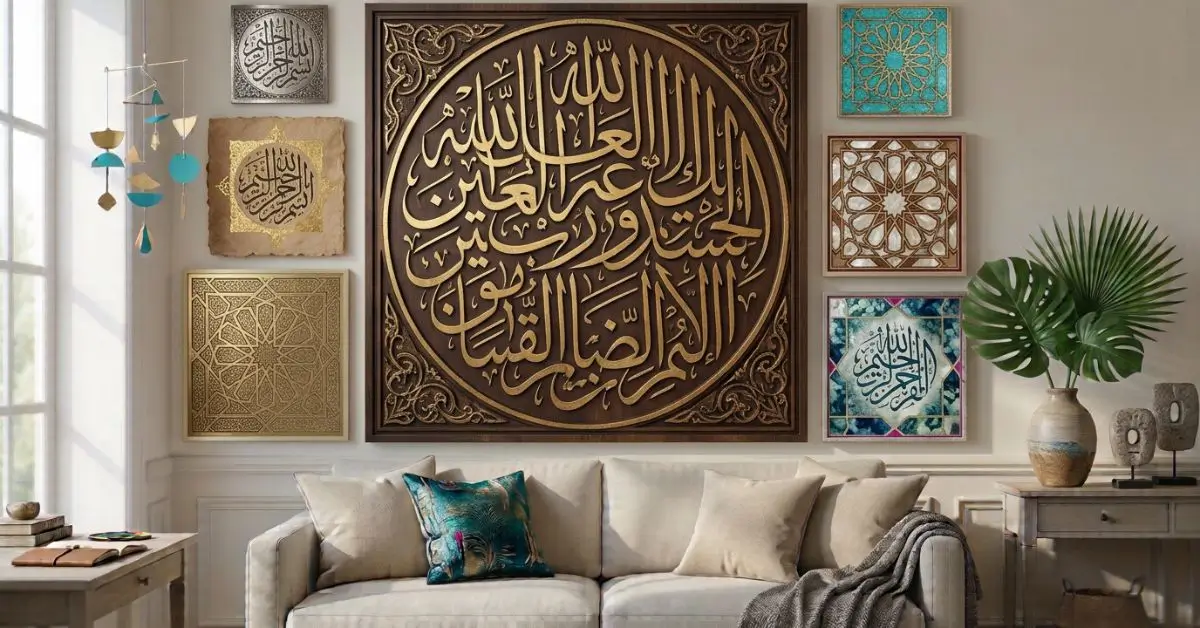
Islamic wall art is a beautiful way to introduce artistic expression, cultural character and meaningful design into modern interiors. From elegant Arabic calligraphy to intricate geometric patterns, Islamic artwork offers different styles that can complement contemporary homes, traditional spaces and commercial interiors.
Whether you are decorating a living room, bedroom, hallway, majlis or office, the right artwork can create an attractive focal point without making the space feel overcrowded. You can choose a large calligraphic composition, a minimalist framed print, a detailed geometric design or a combination of different artistic styles.
The best approach is to consider your interior style, available wall space, colour palette and the type of artwork you want to display. Islamic wall art does not need to look traditional to suit a modern home. Carefully selected designs, balanced compositions and suitable frames can create a display that feels both timeless and contemporary.
Here are nine Islamic wall art ideas to help you choose artwork for different spaces and interior styles.
1. Create a Focal Point with Arabic Calligraphy Wall Art
Arabic calligraphy is one of the most recognisable forms of Islamic artistic expression. It transforms Arabic lettering into visual compositions through the use of flowing lines, proportions, curves and carefully arranged forms.
A large calligraphic artwork can become the main focal point of a living room, entrance or majlis. You can choose a design with bold lettering for a strong visual presence or a more delicate composition for a subtle appearance.
When selecting Arabic calligraphy wall art, consider:
- The script and overall composition.
- The size of the artwork in relation to the wall.
- The colours used in the lettering and background.
- Whether the design suits the surrounding furniture and décor.
If the artwork contains religious text, check the wording and its presentation carefully before purchasing or displaying it. The meaning and accuracy of the calligraphy should be as important as its visual appearance.
2. Add Elegance with Islamic Geometric Patterns
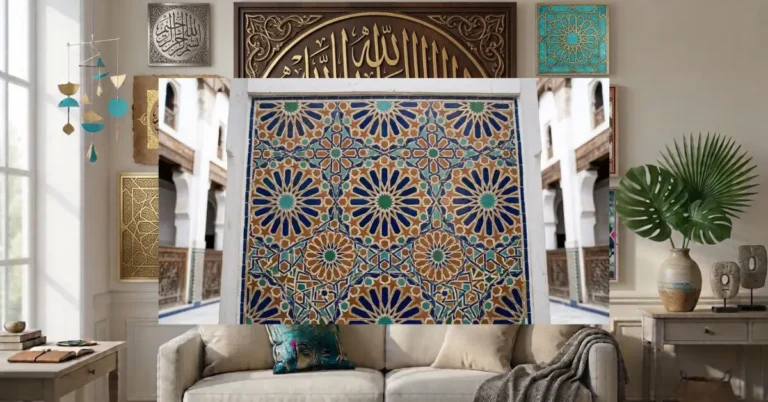
Islamic geometric artwork uses repeating shapes, symmetrical arrangements and intricate patterns to create visually balanced designs. These patterns can introduce detail and structure without relying on large amounts of colour or decorative elements.
You can use geometric designs as standalone wall prints or combine them with calligraphic artwork. Neutral shades such as beige, white, grey and soft gold can create a subtle appearance, while blue, green and contrasting tones can make the design more prominent.
Explore Islamic geometric patterns if you prefer decorative artwork with structured lines, repeated shapes and symmetrical compositions.
These designs can work particularly well in contemporary living rooms, hallways, offices and other spaces where you want to introduce visual interest without overwhelming the interior.
3. Choose Minimalist Islamic Artwork for Contemporary Spaces
Minimalist Islamic artwork is suitable for interiors where simplicity and open space are important. Instead of detailed compositions, these designs often use limited colours, clean lines and carefully positioned elements.
For example, a simple calligraphic design on a white or neutral background can complement modern furniture and understated décor.
Consider these ideas:
- Black Arabic lettering on a light background.
- A single calligraphic composition with generous empty space.
- Minimal geometric patterns in neutral colours.
- Simple framed prints with thin borders.
Minimalist designs can be especially effective in bedrooms, reading areas and modern offices. They introduce artistic character while maintaining a clean and organised appearance.
4. Use Islamic Wall Art to Enhance Your Living Room
The living room is often one of the most visible areas of a home, making it a suitable place for a carefully selected artwork display.
A large Islamic artwork above a sofa can create a visual centre for the room. Alternatively, two or three coordinated prints can create a balanced arrangement across a wider wall.
For a successful display:
- Measure the wall before selecting artwork.
- Choose a size that relates to the furniture below it.
- Coordinate the artwork colours with cushions, rugs or other decorative elements.
- Avoid placing too many detailed designs close together.
- Consider the viewing distance and available lighting.
For additional inspiration, explore Islamic wall art display ideas for different arrangements, framing choices and placement options.
5. Introduce Islamic Artwork into Your Bedroom
Bedroom artwork should complement the atmosphere of the space. Designs with softer colours, simple compositions and balanced details can work well in areas intended for relaxation.
Consider placing a small calligraphic print above a bedside table or selecting a larger artwork for a suitable wall opposite the bed.
Neutral calligraphy, subtle geometric patterns and understated decorative designs can all complement contemporary bedroom interiors.
Choose artwork that works with the existing colour scheme rather than introducing too many competing colours. A coordinated design can make the room feel more complete without creating unnecessary visual distraction.
6. Decorate Your Majlis with Traditional and Contemporary Designs
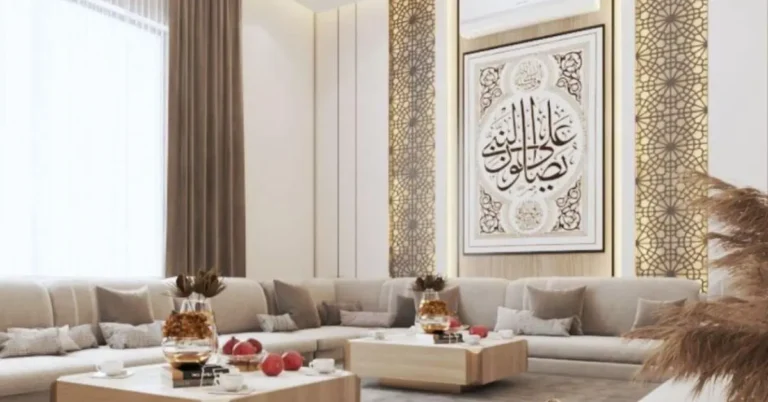
A majlis is an important gathering space where artwork can contribute to the overall interior atmosphere. Islamic calligraphy, decorative patterns and detailed compositions can complement both traditional and contemporary majlis designs.
For a traditional interior, consider elaborate calligraphic artwork, rich colours and decorative framing. For a modern majlis, minimalist calligraphy or geometric compositions may offer a more understated finish.
You can also combine a central artwork with smaller decorative pieces, provided the overall arrangement remains balanced.
Consider the wall dimensions, seating arrangement and existing architectural details before selecting the artwork.
7. Combine Calligraphy and Geometric Artwork
You do not have to choose between calligraphy and geometric designs. Combining the two can create a more varied display while maintaining a connection through Islamic artistic traditions.
For example, you could place one calligraphic artwork in the centre and use smaller geometric prints on either side. Another approach is to select artwork that incorporates lettering and geometric decoration within the same composition.
The key is to create a visual relationship between the pieces. Repeat a colour, frame style or design element to make the arrangement feel connected.
For more inspiration, explore the types of Islamic calligraphy and consider how different scripts can complement decorative patterns.
8. Select the Right Frames and Printing Materials
The frame and printing material can influence the final appearance of Islamic wall art. Your choice should depend on the artwork, display location and interior style.
Here are some options to consider:
Canvas printing: Canvas can provide an art-inspired presentation and is suitable for many decorative compositions. It can work well for large calligraphic designs and statement pieces.
Acrylic printing: Acrylic offers a smooth, contemporary presentation that can suit modern interiors and colourful artwork.
Fine art printing: Fine art printing is worth considering when detail, colour reproduction and presentation are important to the artwork.
For framed designs, consider black, white, natural wood or metallic finishes. Matching every frame is not essential, but maintaining a consistent visual element can help create a coordinated display.
You can explore canvas printing services in Dubai, acrylic printing services and fine art printing services at ArtPlus when considering suitable presentation options for your artwork.
9. Explore Islamic Artwork for Modern Interior Design
Islamic artwork can complement modern interiors when its colours, scale and composition are selected thoughtfully. You can introduce it through a single statement piece, a coordinated collection or smaller decorative prints.
For example, a neutral calligraphic design can complement a minimalist interior, while a colourful geometric composition may work better in a space with simpler furniture and understated walls.
The aim is to create a connection between the artwork and the surrounding décor rather than making every decorative element compete for attention.
Explore Islamic art in modern interior design for more ideas on combining traditional artistic influences with contemporary furniture, colours and materials.
You can also browse the ArtPlus Islamic Art Collection to discover calligraphic artwork and decorative designs for different interior settings.
How to Choose the Right Islamic Wall Art for Your Home
Before selecting artwork, consider these practical factors:
- Wall dimensions: Measure the available space and choose artwork that fits its proportions.
- Interior colours: Select designs that complement your walls, furniture and decorative elements.
- Artistic style: Decide whether you prefer calligraphy, geometric patterns, minimalist designs or detailed compositions.
- Display location: Consider the room, viewing distance, lighting and surrounding furniture.
- Material and finish: Choose a suitable printing and framing option for the artwork and intended setting.
Taking time to consider these details can help you select artwork that feels appropriate for your space and remains visually appealing over time.
Conclusion
Islamic wall art offers many ways to bring artistic expression and cultural character into modern homes. From Arabic calligraphy and geometric patterns to minimalist prints and coordinated displays, there are options for different rooms and interior styles.
Focus on artwork size, colour coordination, framing and placement before making your selection. A thoughtfully chosen design can complement your interior while creating a distinctive focal point.
Explore the ArtPlus Islamic Art Collection to discover artwork inspired by Arabic calligraphy and Islamic artistic traditions.
Looking for artwork printing options in Dubai? Contact ArtPlus to discuss your design, material and printing requirements.
Frequently Asked Questions
What are the best Islamic wall art ideas for modern homes?
Arabic calligraphy, minimalist Islamic designs, geometric patterns and coordinated framed prints are popular options. The best choice depends on your interior style, available wall space and personal preferences.
Where should Islamic wall art be placed in a home?
Islamic artwork can be displayed in living rooms, bedrooms, hallways, entrances and majlis areas. Choose a location where the artwork is visible and complements the surrounding interior.
Can Islamic calligraphy wall art suit modern interiors?
Yes. Minimalist calligraphy, neutral colour combinations and simple frames can complement modern interiors. The artwork should be selected according to the room’s colours, furniture and overall design.
What colours work well for Islamic wall art?
Neutral shades, black and white, blue, green and gold can all work well. Choose colours that complement the existing interior rather than relying on one fixed palette.
Is canvas suitable for Islamic wall art?
Canvas is one option for displaying Islamic artwork. Acrylic and fine art printing are also worth considering, depending on the design, desired appearance and display location.

Pingback: 6 Types of Islamic Calligraphy: Kufic, Naskh & Thuluth
Pingback: Islamic Geometric Patterns: Meaning, Types & Design
Pingback: How to Choose Arabic Calligraphy Wall Art for Your Home