
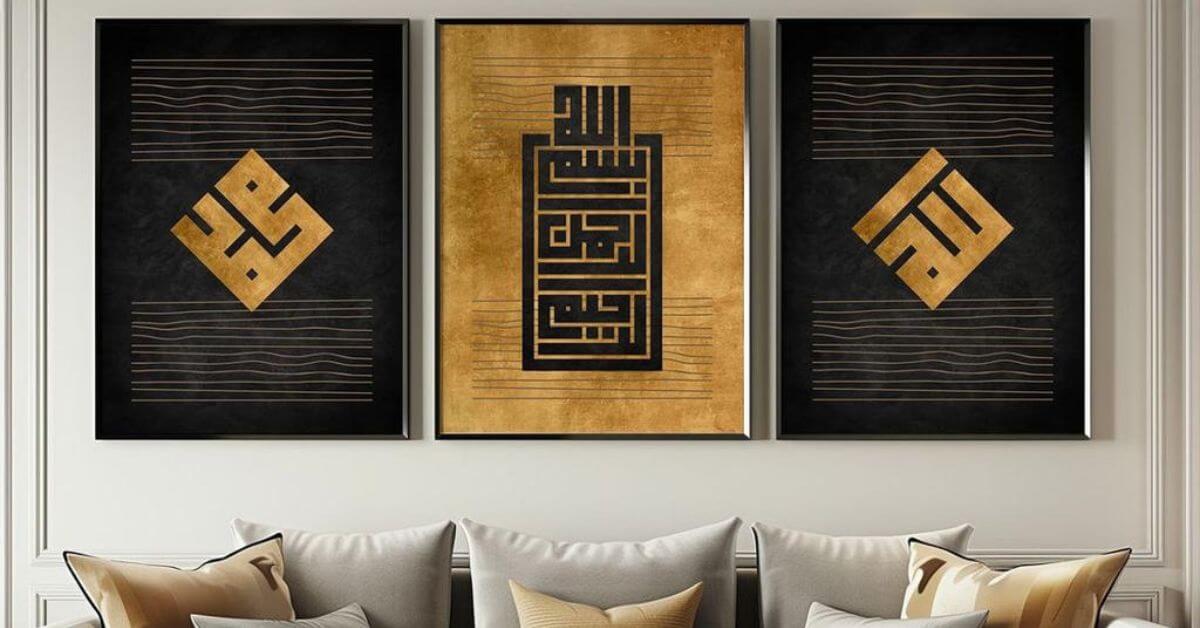
Islamic wall art can add meaning, character and visual balance to living rooms and offices. From Arabic calligraphy and geometric patterns to elegant framed prints, the right artwork can turn an empty wall into a thoughtful focal point. The key is choosing a design that suits the room, arranging it at the right scale and displaying it with care.
Whether you prefer traditional Islamic artwork or modern designs, a well-planned display can complement your furniture, colours and overall interior style. Here are practical Islamic wall art display ideas to help you create a balanced arrangement.
1. Create a Statement Wall Above the Sofa
The wall behind the sofa is often one of the most visible areas in a living room. A large piece of Islamic calligraphy or geometric artwork can make this space feel complete.
Consider a wide canvas, a framed Arabic calligraphy design or a multi-panel composition. The artwork should relate to the width of the sofa rather than appearing too small or extending too far beyond the furniture.
A useful starting point is to choose artwork around two-thirds of the sofa’s width, then adjust according to the wall and surrounding furniture. Leave enough space between the sofa and frame so the arrangement feels connected without looking crowded.
2. Use a Three-Piece Islamic Wall Art Arrangement
A three-piece arrangement is a practical option for wider walls. You can use three related calligraphy designs, matching geometric patterns or sections of one continuous composition.
For a coordinated display:
- Choose artwork with a consistent colour palette.
- Keep the frames similar in style and finish.
- Leave equal spacing between each piece.
- Align the frames along a shared centre line.
- Check the complete arrangement before drilling or mounting.
A symmetrical layout can suit formal living rooms, while slightly varied artwork can create a more relaxed contemporary look. Make sure the pieces work together as one display rather than competing for attention.
3. Choose Modern Islamic Wall Art for Minimalist Interiors
Modern interiors often feature neutral colours, clean furniture and uncluttered surfaces. Islamic artwork can complement this style when the design is simple and the display has enough breathing room.
Consider black Arabic lettering on a light background, understated geometric patterns or a single framed composition with a clean border. Metallic details can also work as accents when they complement existing lamps, handles or furniture finishes.
If the room already has patterned rugs, curtains or cushions, choose simpler wall art. This helps maintain visual balance and prevents the space from feeling too busy.
For additional inspiration, explore Islamic art in modern interior design and see how traditional artistic elements can work with contemporary furniture.
4. Display Arabic Calligraphy as a Focal Point
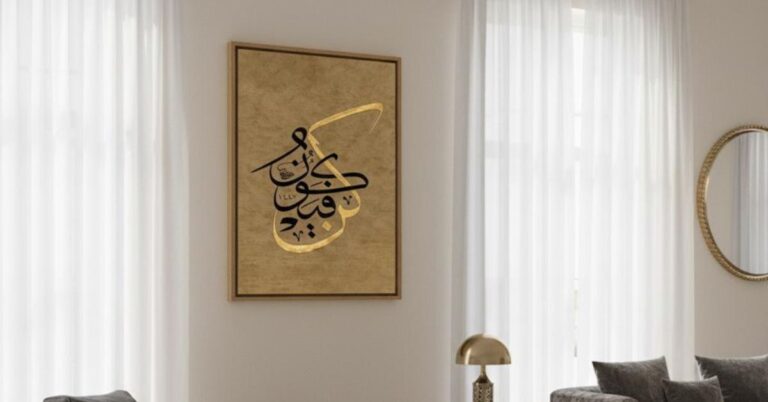
Arabic calligraphy can make a wall display visually distinctive. The script, composition and meaning all contribute to the final appearance, so choose artwork carefully rather than selecting a design based only on its colours.
Kufic calligraphy can suit structured, modern arrangements, while Thuluth and Diwani styles may create more flowing decorative compositions. If you are unsure which style fits your room, explore the different types of Islamic calligraphy before deciding.
For a living room, a single statement piece can work well above a sofa or console. In an office, a smaller framed design may suit the wall behind a desk or a side wall visible from the seating area.
If the artwork contains Quranic text or sacred phrases, verify the wording and translation and consider its placement respectfully.
5. Bring Geometric Patterns into Your Wall Decor
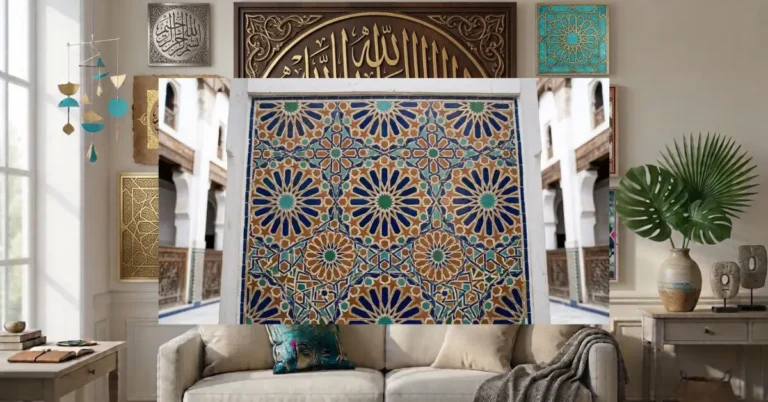
Islamic geometric artwork offers an alternative to calligraphy. Repeating stars, polygons and interlocking shapes can introduce structure and detail without relying on written text.
You can display geometric patterns as:
- A large framed print on a feature wall
- A pair of matching panels
- A decorative arrangement beside calligraphy
- A subtle artwork above a console
- A series of smaller prints in a coordinated gallery wall
For a balanced result, allow one design to lead. If you choose a detailed geometric statement piece, keep nearby artwork and furniture relatively simple. You can explore Islamic geometric patterns for ideas on shapes, symmetry and traditional design influences.
6. Plan a Respectful and Practical Display
The placement of Islamic artwork deserves attention, especially when it contains Quranic verses or the names of Allah. Choose a clean, dignified location where the artwork can be viewed and maintained properly.
Avoid placing sacred text where it may be exposed to dirt, damage or careless handling. Some people prefer to keep such pieces above normal eye level or away from areas where they may be knocked. Religious guidance on displaying Quranic verses as decoration differs, so consult a trusted scholar if you are uncertain.
Practical considerations matter too. Keep artwork away from direct sunlight for extended periods where possible, and avoid positions where doors, furniture or daily activity could damage the frame.
7. Choose the Right Frame and Printing Material
The frame and surface finish can change the overall appearance of your wall art. Choose an option that supports the design and suits the room’s lighting and furniture.
Canvas: Canvas provides a textured, art-like finish and can suit a large living-room statement piece.
Acrylic: Acrylic offers a smooth, contemporary appearance and can complement minimalist interiors.
Fine art paper: This option can reproduce detailed lettering and subtle colour variations. A suitable frame can complete the presentation.
Framed artwork: A frame creates a defined border and can help protect the print. Choose a finish that complements the room, such as black, natural wood or a restrained metallic tone.
Before ordering, confirm the final dimensions, print quality and framing requirements. You can compare canvas printing services in Dubai, acrylic printing services and fine art printing services when selecting a suitable finish.
8. Add Islamic Wall Art to Your Home Office
Islamic wall art can also work in offices, studies and professional spaces. A carefully selected piece can add personality without distracting from the work environment.
Consider a framed geometric design on a side wall, a modest calligraphy print behind the desk or a coordinated pair of artworks in a reception area. Choose colours that complement the furniture and keep the overall arrangement uncluttered.
For a shared or client-facing office, select artwork that is appropriate for the setting and easy to maintain. Make sure the text is legible at the viewing distance and that the mounting is secure.
9. Explore Islamic Wall Art Ideas for Different Rooms
The best display depends on the room’s size, layout and purpose.
Living room: Use a statement piece above the sofa or a coordinated three-piece arrangement. Explore Islamic wall art ideas for more styles and decorative inspiration.
Majlis: Consider calligraphy, geometric designs or framed artwork that complements traditional seating and textiles.
Bedroom: Choose a calm composition and colours that work with the bedding and wall finish. Avoid overcrowding the space.
Entrance or hallway: A framed piece can create a welcoming display. Ensure there is enough space around it and that it is securely mounted.
Office: Use a simple, well-proportioned design that complements the professional setting.
For more advice on selecting artwork according to lettering, size and placement, read Arabic calligraphy wall art.
Create a Balanced Islamic Wall Art Display
A successful Islamic wall art display combines meaningful artwork with suitable sizing, thoughtful placement and a finish that complements the room. Whether you choose one large calligraphy piece, a three-panel arrangement or modern geometric prints, give the design enough space to stand out.
Explore the ArtPlus Islamic Art Collection for inspiration and consider which artwork and printing finish will suit your living room or office.
Looking for Islamic artwork for your space? Contact ArtPlus to discuss your requirements.
Frequently Asked Questions
What is the best Islamic wall art for a living room?
The best choice depends on your interior style and available wall space. Arabic calligraphy, geometric artwork and framed Islamic designs can all work well. Choose a size and colour palette that complement the sofa, wall and surrounding furniture.
How should I arrange Islamic wall art in a living room?
You can use one large statement piece, a three-piece arrangement or a coordinated gallery wall. Keep the spacing consistent, align the artwork carefully and make sure the overall display is proportionate to the furniture.
Can modern Islamic wall art suit a minimalist living room?
Yes. Simple calligraphy, understated geometric patterns and neutral colour combinations can complement minimalist interiors. Avoid overcrowding the wall and let the artwork remain the main decorative feature.

Pingback: 9 Beautiful Islamic Wall Art Ideas for Modern Homes
Pingback: How to Choose Arabic Calligraphy Wall Art for Your Home