
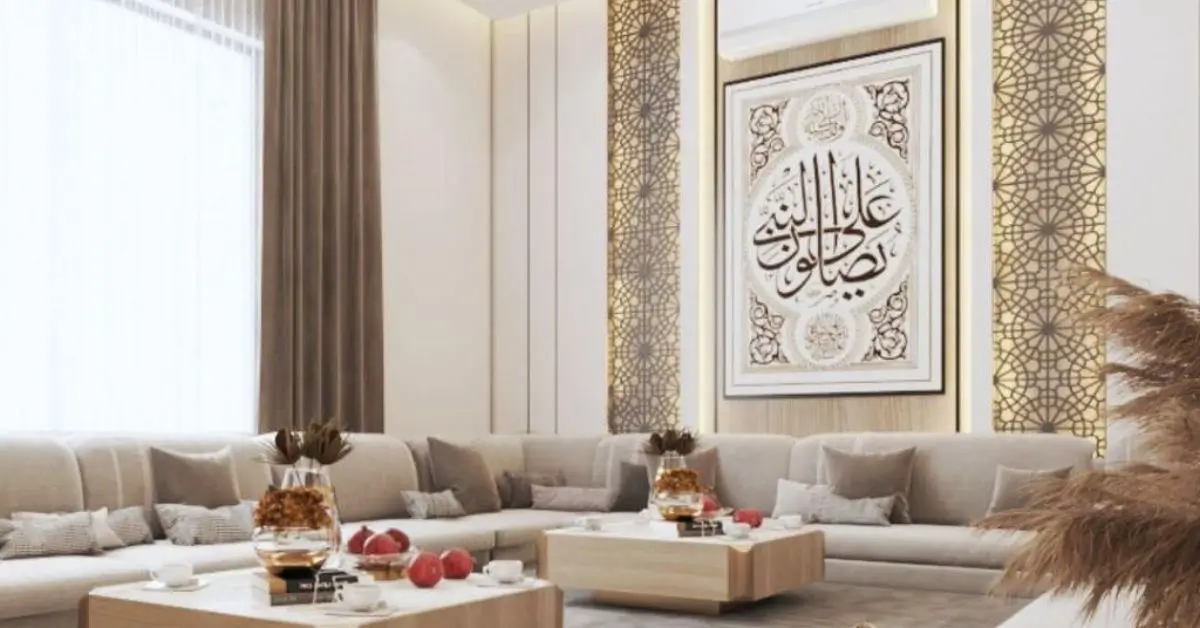
Islamic art has influenced architecture and interior decoration across many regions, from the intricate tilework of historic buildings to elegant Arabic calligraphy and repeating geometric designs. Today, these artistic elements can also be incorporated into modern homes through wall art, decorative panels, textiles, lighting and carefully selected furniture.
Islamic art in interior design is not limited to traditional rooms or historic buildings. Its patterns, materials and decorative details can complement contemporary spaces when they are used thoughtfully. Whether you prefer a minimalist living room or a more traditional interior, Islamic-inspired artwork can add visual character while maintaining a balanced design.
1. Understand the Main Elements of Islamic Interior Design
Islamic artistic traditions include several decorative elements that can work together or be used individually. Three particularly recognisable forms are calligraphy, geometric patterns and vegetal designs.
- Arabic calligraphy: Decorative Arabic lettering can appear in framed artwork, wall panels, inscriptions and other interior details. It may feature religious text, poetry or other Arabic writing.
- Geometric patterns: Repeating shapes, stars, circles and interlocking forms create structured decorative surfaces. These patterns can be used on walls, tiles, screens and textiles.
- Arabesque and floral designs: Flowing plant-inspired motifs add movement and detail to decorative surfaces, furniture and fabrics.
These elements have appeared in different combinations across Islamic art and architecture. The Metropolitan Museum of Art explains how geometric ornament, calligraphy and vegetal patterns have been used individually and together in decorative works. You can also explore Islamic geometric patterns to understand how symmetry and repetition influence these designs.
2. Use Arabic Calligraphy as a Decorative Feature
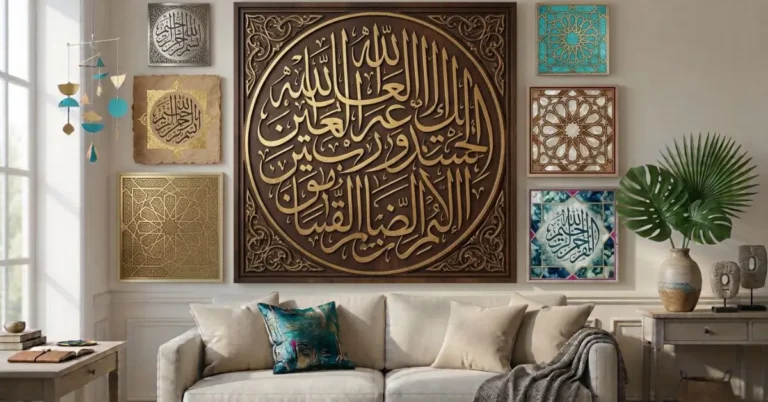
Arabic calligraphy can become a focal point in a modern interior without making the room feel overly traditional. A single framed artwork, a large statement piece or a carefully arranged set of prints can introduce an artistic detail to an otherwise simple space.
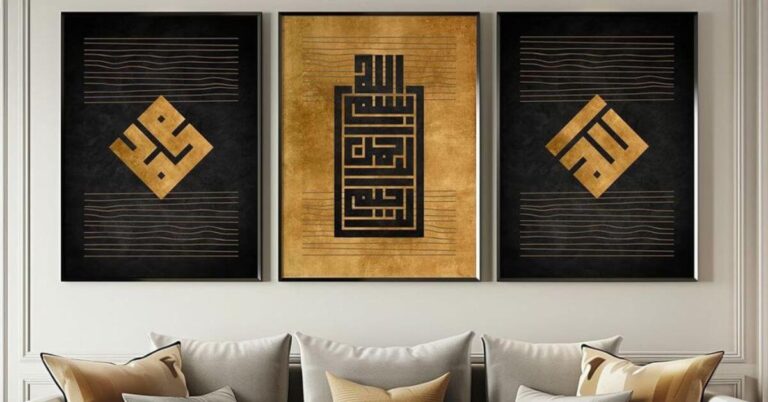
The style of lettering makes a difference. Kufic designs often have a structured, angular appearance, while Thuluth and Diwani can create more flowing compositions. Choose artwork according to the room’s proportions and the visual style you want to achieve.
For a contemporary look, consider:
- A single calligraphy print on a neutral wall
- Black lettering against a light background
- A framed composition with a simple border
- A carefully selected gold or metallic accent
- A calligraphy piece paired with understated furniture
If you are comparing lettering styles, read about the different types of Islamic calligraphy and explore Arabic calligraphy wall art for ideas on selecting artwork for your home.
When the artwork contains religious text, check its meaning and spelling and consider whether its placement and display are respectful.
3. Bring Geometric Patterns into Modern Spaces
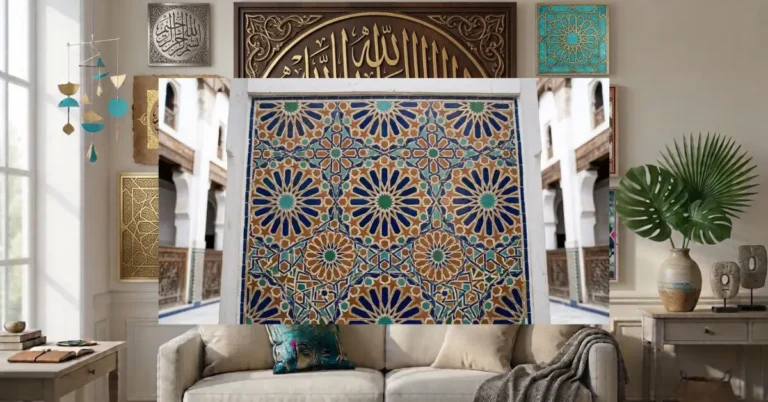
Geometric decoration is one of the most recognisable features associated with Islamic art. Repeated stars, polygons, interlaced shapes and symmetrical arrangements can create visual interest without relying on bold colours or complicated furniture.
In modern interiors, geometric patterns can be introduced through:
- Decorative wall panels
- Floor and wall tiles
- Cushions and rugs
- Screens and room dividers
- Framed geometric artwork
- Subtle wallpaper designs
You do not need to cover an entire room with patterns. A feature wall, a patterned rug or a small decorative panel can be enough to establish a visual connection with Islamic design.
For a balanced result, combine detailed patterns with plain surfaces and simple furniture. This allows the decorative elements to stand out without making the room feel crowded.
4. Choose a Colour Palette That Suits Your Home
Traditional Islamic art and architecture feature a wide range of colours, depending on the region, material and historical period. Blue, turquoise, green, white, earthy shades and metallic details are among the colours found in many decorative examples. Modern interiors can reinterpret these combinations in a more restrained way.
For a minimalist room, use neutral walls with one piece of artwork featuring blue, black or gold details. For a warmer interior, consider earthy colours and wooden finishes. If your furniture and flooring already have strong patterns, choose simpler artwork to maintain visual balance.
A useful approach is to select a main room colour, a supporting neutral and one accent colour. Repeat the accent in a small number of details, such as artwork, cushions or decorative accessories.
5. Combine Traditional Details with Contemporary Furniture
A modern Islamic interior does not need to reproduce a historic building. Instead, it can bring traditional artistic elements into a contemporary layout.
For example, a clean-lined sofa can be paired with geometric cushions and framed calligraphy. A simple wooden console can sit beneath a decorative artwork, while a patterned screen can introduce texture without dividing the room completely.
Consider these combinations:
- Modern and minimalist: Neutral furniture, simple calligraphy and one geometric accent.
- Warm and traditional: Wooden furniture, patterned textiles and detailed framed artwork.
- Contemporary luxury: Restrained metallic accents, carefully selected artwork and refined finishes.
- Natural and understated: Earthy colours, plant-inspired patterns and natural materials.
The aim is to create a connection between old and new rather than mixing every decorative style in one space.
6. Explore Islamic Interior Design Ideas for Different Rooms
Different rooms offer different opportunities to incorporate Islamic-inspired artwork and decoration.
Living room
The living room is a natural place for a statement artwork. A large calligraphy print above the sofa or a geometric composition on a feature wall can establish a focal point. Keep the surrounding furniture and accessories relatively simple.
For more display inspiration, explore Islamic wall art ideas and Islamic wall art display ideas.
Bedroom
Choose artwork with a calm composition and colours that complement the bedding and wall finish. A smaller framed piece or subtle geometric design can add interest without overwhelming the room.
Majlis or sitting area
A majlis can combine traditional and contemporary elements through decorative cushions, patterned rugs, calligraphy and carefully selected wall art. Choose a consistent colour palette so that the different details feel connected.
Entrance and hallway
A framed calligraphy piece or a geometric panel can create a distinctive first impression. Make sure the artwork is positioned securely and has enough surrounding space.
7. Consider Materials, Textures and Decorative Finishes
Materials play an important role in how Islamic-inspired interiors look and feel. Traditional architectural examples include carved wood, glazed tiles, stone, textiles and decorative screens. Modern homes can use contemporary alternatives that reflect some of these visual qualities.
A mashrabiya-inspired screen, for example, can introduce a repeating geometric pattern while also providing a degree of privacy and light control, depending on its design. Contemporary interpretations can use wood or other suitable materials to create a similar visual effect.
For wall artwork, consider the finish as well as the design:
- Canvas: A textured option for decorative artwork and feature walls.
- Acrylic: A smooth, contemporary finish that can suit modern interiors.
- Fine art paper: Useful for detailed prints and framed compositions.
You can compare canvas printing services in Dubai, acrylic printing services and fine art printing services when deciding how to display a selected design.
8. Explore Modern Islamic Home Decor in Dubai
When planning modern Islamic home decor in Dubai, consider the room’s size, lighting, furniture and existing finishes before choosing artwork. A design that looks attractive in a product photograph may need a different size or colour treatment to suit your actual wall.
ArtPlus offers an Islamic Art Collection for those looking to explore Islamic-inspired artwork for interior spaces. You can consider how calligraphy, geometric designs and different printing finishes might complement your home’s existing style.
For further inspiration, explore Islamic art in modern interior design through examples of traditional and contemporary combinations, and select artwork that feels appropriate for your space.
Create a Balanced Modern Islamic Interior
Islamic art can complement modern interiors through thoughtful use of calligraphy, geometric patterns, colour, materials and decorative details. You do not need to redesign an entire room to introduce these influences. A carefully selected artwork, patterned textile or decorative panel can create a meaningful connection between traditional artistic styles and contemporary living.
Explore the ArtPlus Islamic Art Collection for artwork inspiration, and choose a design that complements your home’s layout, colour palette and personal taste.
Looking for Islamic-inspired artwork for your interior? Contact ArtPlus to discuss your requirements.
Frequently Asked Questions
What are some examples of Islamic interior design?
Examples include Arabic calligraphy, geometric tile patterns, arabesque decoration, carved wooden screens, patterned textiles and decorative arches. These elements can be used in both traditional and contemporary interiors.
What are some examples of Islamic art in architecture?
Examples include geometric tilework, calligraphic inscriptions, carved wooden doors, decorative stonework, muqarnas and mashrabiya screens. These features appear in historic buildings across different regions and periods.
What are some examples of Islamic art?
Islamic art includes calligraphy, geometric patterns, vegetal or arabesque designs, ceramics, textiles, metalwork, manuscripts, architectural decoration and other forms of craftsmanship. Its styles vary across regions and historical periods.

Pingback: 9 Islamic Wall Art Display Ideas for Living Rooms and Offices
Pingback: Islamic Geometric Patterns: Meaning, Types & Design