Table of Contents
- Why Go Beyond Standard Business Cards?
- Custom Business Card Shapes
- Business Card Materials: From Paper to Metal
- Custom Business Card Finishes
- Popular Combination Finishes
- Custom Shapes and Sizes in Dubai
- How to Order Custom Business Cards
- Real‑World Example: A Dubai Photographer’s Die‑Cut Card
- Common Mistakes to Avoid
- Conclusion
- Frequently Asked Questions
- What is the standard business card size in Dubai?
- What are the most popular custom business card shapes?
- What material is best for premium business cards?
- What finishing options make business cards look luxurious?
- Can I combine multiple finishes on one business card?
- How do I choose the right customisation for my industry?
- Are custom‑shaped business cards more expensive?
- How long does it take to print custom business cards in Dubai?
Custom printed business cards let you move beyond the standard 90×50 mm rectangle, with die-cut shapes, premium materials like cotton or metal, and finishes like foil or spot UV. The result is a card that reflects your brand’s personality, feels memorable in hand, and stands out in any wallet. Whether you want a camera‑shaped card for a photography studio or a minimalist linen card for a law firm, customisation puts your brand identity at the center of every exchange.
I’ve helped businesses across Dubai create custom business cards that don’t just share contact details, they start conversations. The difference between a card that gets kept and one that gets tossed is often the thought behind its shape, material, and finish. This guide covers every customisation option: shapes, materials, finishing techniques, and how to choose the right combination for your brand.
Why Go Beyond Standard Business Cards?
Standard business cards work, but they rarely get remembered. Custom-printed business cards offer several advantages:
- Memorability: Unique shapes and materials make people stop and look.
- Brand alignment: Your card can mirror your brand’s personality.
- Perceived value: Premium materials and finishes signal quality.
- Conversation starter: A creative card invites comments and questions.
- Differentiation: Stand out from competitors who use generic templates.
In Dubai’s competitive business landscape, a custom card can be the edge you need. At ArtPlus, we specialise in producing custom printed business cards, from die-cut shapes to premium materials, helping businesses across the UAE leave a lasting impression. For a complete overview of paper types, finishes, and ordering, see our business card printing in Dubai guide.
Custom Business Card Shapes
The shape of your card is the first thing people notice. Moving beyond the standard rectangle can make your card instantly recognisable.
Standard Rectangular (90×50 mm)
The UAE standard. Fits every wallet and cardholder. Safe, professional, and widely accepted.
Square Business Cards
Square cards (50x50mm or 60x60mm) offer a modern, balanced look. They fit comfortably in most wallets and feel unconventional without being impractical.
Best for: Creative agencies, design studios, fashion brands, and tech startups.
Slim Business Cards
A narrower format (e.g., 85x40mm) that feels sleek and contemporary. Perfect for minimalist brands.
Best for: Luxury brands, architecture firms, and premium services.
Die‑Cut / Custom‑Shaped Cards
Die-cutting allows you to create any shape—a camera for a photographer, a wrench for a mechanic, or a leaf for a garden designer. These cards are truly unique and immediately memorable.
Best for: Creative industries, retail, hospitality, and personal branding.
Rounded Corners
A subtle but effective customisation. Rounded corners soften the card’s appearance and reduce wear in wallets.
Best for: Any brand wanting a modern, approachable feel.
Folded/Multi‑Panel Cards
Bi‑fold or tri‑fold cards offer extra space for portfolios, menus, or detailed information.
Best for: Real estate agents, photographers, interior designers, and restaurants.
Mini Cards
Smaller than standard cards (e.g., 70×45 mm). Novel and space‑saving—ideal for loyalty programs or event invites.
Ready to Create Business Cards That Stand Out?
Die‑cut shapes, premium materials, and luxury finishes — custom printed for your brand. Free design consultation and UAE delivery.
Get a Custom Business Card QuoteBusiness Card Materials: From Paper to Metal
The material you choose affects the card’s feel, durability, and perceived value.
Premium Cardstock (350–450 GSM)
The most common material for custom cards. Heavier cardstock feels more premium.
| GSM | Feel | Best For |
| 350 GSM | Standard premium | Most businesses |
| 400 GSM | Heavy, luxurious | Executive brands |
| 450+ GSM | Ultra‑premium | High‑end luxury |
“350gsm to 400gsm is the most commonly recommended range for a premium feel.” For a complete guide to paper weights, finishes, and recommendations, see our business card paper types guide.
Cotton Paper
Made from 100% cotton fibers. Soft, textured, and elegant. Often used for luxury brands and fine art businesses.
Best for: Law firms, financial advisors, luxury hotels, and creative agencies.
Linen Cardstock
A textured finish with a woven appearance. Feels sophisticated and timeless.
Best for: Corporate brands, architects, and consultants.
Recycled / Kraft Cardstock
Eco‑friendly options that appeal to sustainability‑conscious brands. Kraft has a natural brown colour and organic feel.
Best for: Organic brands, coffee shops, eco‑friendly businesses, and lifestyle brands.
Plastic / PVC Cards
Durable, waterproof, and long‑lasting. Ideal for membership cards, loyalty programs, and gyms.
Best for: Hotels, clubs, gyms, and membership organizations.
Metal Cards
Brass, stainless steel, or aluminum cards. Extremely premium and durable. Often laser-engraved.
Best for: Luxury brands, high‑net‑worth services, and exclusive memberships. For more high‑end options, explore our premium business cards in Dubai guide.
Wood Cards
Made from sustainable wood veneers. Warm, natural, and distinctive.
Best for: Eco‑brands, artisan businesses, creative studios.
Clear Plastic / Acrylic Cards
Transparent cards that look modern and innovative.
Best for: Tech startups, creative agencies, and luxury brands.
Custom Business Card Finishes
Finishes add texture, shine, and tactile appeal.
Matte Finish
Soft, non‑reflective, and elegant. Writable with pen. Resists fingerprints.
Best for: Corporate, professional services, and any brand wanting a clean look.
Glossy Finish
Shiny, reflective, and vibrant. Enhances colours and images.
Best for: Photography, creative agencies, retail, and fashion.
Spot UV
A high‑gloss coating applied only to specific areas (e.g., logos or key text). Creates contrast and draws attention.
Best for: Premium logos, luxury branding, and any card wanting a subtle highlight.
Foil Stamping
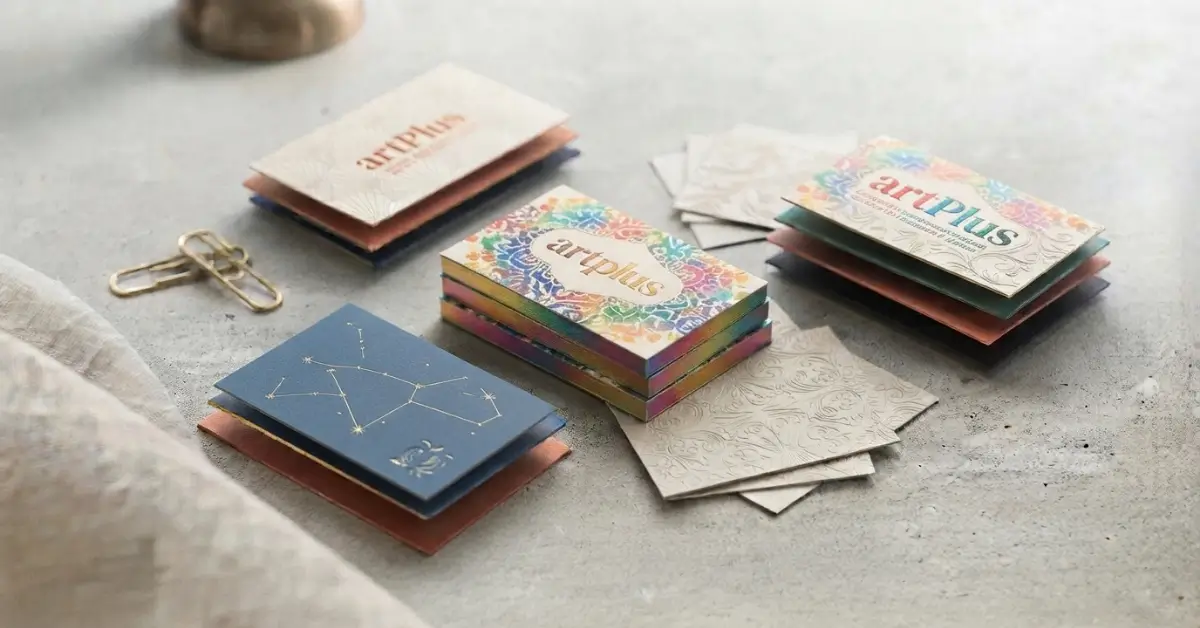
Metallic foil (gold, silver, rose gold, copper, or holographic) applied to text or logos. Adds a premium, elegant feel.
Best for: Luxury brands, high‑end services, real estate, and finance.
Embossing / Debossing
Embossing raises the design above the surface. Debossing presses it in. Both add tactile depth.
Best for: Logos, initials, premium branding, and corporate cards.
Edge Painting
Colour applied to the card’s edges. A subtle but premium detail.
Best for: Luxury brands, creative agencies, and high‑end cards.
Soft‑Touch Laminate
A velvety, silky texture that feels luxurious in hand.
Best for: Luxury brands, spas, hotels, and premium services.
Silk Lamination
A smooth, professional finish between matte and gloss. Durable and elegant.
Best for: Executive cards, corporate brands.
Popular Combination Finishes
| Combination | Effect | Best For |
| Matte + Spot UV | Elegant with glossy highlights | Luxury brands |
| Matte + Gold Foil | Premium contrast | Finance, real estate |
| Soft Touch + Spot UV | Velvet feel, glossy logo | High‑end services |
| Gloss + Spot UV | Extra shine where it matters | Creative agencies |
| Foil + Embossing | Raised metallic design | Ultra‑premium cards |
For a detailed guide to all finishing techniques – from spot UV to foil and embossing – see our business card finishing options guide.
Custom Shapes and Sizes in Dubai
Dubai printers offer a wide range of custom options:
- Die‑cut shapes: Any shape you can design.
- Rounded corners: Soft, modern finish.
- Custom sizes: Non‑standard dimensions.
- Folded cards: Bi‑fold or tri‑fold for extra space.
“If you require a non‑standard size or unique shape, we offer custom sizing and layout options on request.”
How to Order Custom Business Cards
Step 1: Define Your Brand Identity
What message do you want to convey? Professional? Creative? Luxury? Eco-friendly? Your card should reflect this.
Step 2: Choose Your Shape
Standard rectangle, square, slim, die-cut, or folded. Consider how the shape reflects your brand.
Step 3: Select Your Material
Cardstock, cotton, linen, recycled, plastic, metal, or wood. Match the material to your brand’s personality.
Step 4: Pick Your Finish
Matte, gloss, soft touch, spot UV, foil, embossing, or edge painting. Think about texture, shine, and durability.
Step 5: Design Your Card
Work with a designer or use your own artwork. Ensure print‑ready specifications (300 DPI, CMYK, 3 mm bleed).
Step 6: Request a Proof
Always review a digital or physical proof before full production.
Step 7: Approve and Print
Once approved, your custom business cards are printed and delivered.
A Dubai‑based photographer wanted business cards that reflected her creative eye. We designed a die-cut card shaped like a vintage camera lens—printed on 400 GSM matte cardstock with a spot UV logo. The card was unique, tactile, and immediately memorable.
She reported that clients often commented on the card before discussing photography—it became a conversation starter and a reflection of her attention to detail.
Common Mistakes to Avoid
| Mistake | Consequence | Solution |
| Choosing style over practicality | Cards don’t fit wallets. | Ensure custom shapes fit standard cardholders. |
| Ignoring brand consistency | The card doesn’t match other materials. | Match colours, fonts, and finishes. |
| Overcomplicating the design | Cluttered, hard to read | Keep it clean and focused. |
| Skipping a proof | Errors in final print | Always request proof. |
| Wrong material for industry | Mismatched perception | Match material to industry expectations. |
| Using low‑resolution artwork | Blurry, pixelated | Use 300 DPI minimum. |
“A custom business card isn’t just a piece of paper—it’s a handshake, a conversation starter, and a memory all in one.”
“In Dubai’s competitive market, a standard card is forgettable. A custom card is unforgettable.”
“The best business cards don’t just share contact details—they share your brand’s story.”
Conclusion
Custom printed business cards offer endless possibilities—from die‑cut shapes and premium materials to luxurious finishes like foil and spot UV. The right combination reflects your brand, starts conversations, and leaves a lasting impression. Whether you choose a simple square card or a metal‑engraved piece, customisation puts your brand’s personality at the center of every exchange. Refer to our complete business card printing guide for expert tips on design, paper, and finishing.
Ready to create business cards that truly represent your brand? Explore our custom business card printing services for premium quality and expert finishing.
Ready to Create Business Cards That Stand Out?
Die‑cut shapes, premium materials, and luxury finishes — custom printed for your brand. Free design consultation and UAE delivery.
Get a Custom Business Card QuoteFrequently Asked Questions
What is the standard business card size in Dubai?
The standard size is 90 mm x 50 mm (9 cm x 5 cm). Custom sizes are also available.
What are the most popular custom business card shapes?
Square cards, slim cards, die‑cut shapes, rounded corners, and folded cards are the most popular custom options.
What material is best for premium business cards?
Cotton paper, linen cardstock, and 400 GSM cardstock are popular premium choices. For ultra‑premium, metal or plastic cards offer exceptional durability.
What finishing options make business cards look luxurious?
Foil stamping, spot UV, soft‑touch laminate, embossing, and edge painting all add a premium feel.
Can I combine multiple finishes on one business card?
Yes. Popular combinations include matte + spot UV, matte + gold foil, and soft touch + spot UV.
How do I choose the right customisation for my industry?
Consider your brand identity. Corporate brands often choose matte cardstock with subtle embossing. Creative agencies may prefer die-cut shapes and bold colours.
Are custom‑shaped business cards more expensive?
Yes, die‑cutting and custom shapes typically cost more than standard rectangular cards due to the additional setup and production steps.
How long does it take to print custom business cards in Dubai?
Production times vary. Contact your printer for an estimate based on your customisation requirements.