Giclée printing is a high‑resolution inkjet process that sprays archival pigment inks onto quality surfaces like cotton canvas. It produces gallery‑quality prints that can last over 100 years without fading.
I’ve watched too many artists and photographers waste money on cheap prints that fade within a year. Then they discover giclée and never look back. This guide explains exactly what giclée printing is, why it beats standard printing, and how to care for your prints.
What Does “Giclée” Mean?
The word “giclée” (pronounced “zhee‑CLAY”) comes from French, meaning “to spray.” That’s the core of the process. Instead of pressing ink onto paper like a traditional press, a large‑format inkjet printer sprays microscopic droplets of pigment ink onto the surface.
The result? Smooth gradients, incredible detail, and colors that look almost identical to the original artwork.
Giclée pronunciation: Say “zhee‑CLAY”—soft ‘zh’ like in “vision,” then “clay.”
Giclée vs. Standard Print: What’s the Real Difference?
What is the difference between a giclée and a standard print? Standard prints use dye‑based inks and mechanical transfer. Giclée uses archival pigment inks sprayed through high‑resolution inkjet printers. The difference is huge: dye fades in 10–25 years; pigment lasts 80–100+ years.
Here’s a quick comparison:
| Feature | Standard Print | Giclée Print |
| Ink type | Dye‑based | Archival pigment |
| Printing method | Mechanical transfer | Sprayed via high‑resolution inkjet |
| Longevity | 10–25 years | 80–100+ years |
| Detail level | Moderate | Extremely high |
| Typical use | Posters, magazines | Gallery art, limited editions |
What is giclée printing used for? Fine art reproductions, limited edition art prints, professional photography prints, and high‑end canvas for hotels and collectors.
What Is the Process of Giclée Printing?
The process is methodical. Here’s what happens in a professional studio:
- Digital capture: The original artwork is scanned or photographed at extremely high resolution.
- Color correction: Technicians adjust colors to match the original perfectly.
- Printing: A large‑format inkjet printer sprays millions of tiny pigment ink droplets onto cotton canvas or fine art paper.
- Drying & coating: The print is dried, and often a UV‑protective coating is added.
- Stretching or framing: Canvas prints are stretched over wooden bars; paper prints are matted and framed.
What’s the difference between giclee & inkjet? All giclée is inkjet, but not all inkjet is giclée. Giclée specifically refers to high‑end inkjet printing using archival pigment inks and quality substrates. Your office printer? Not giclée.
3 Benefits of Giclée Printing (Why It’s Worth the Cost)
Artists and collectors choose giclée for three main reasons.
1. Unmatched Color Accuracy
Archival pigment inks reproduce millions of color shades. Skin tones look natural. Skies stay blue. Whites stay clean. This precision is essential for fine art photography printing. Pairing giclée with the right material is critical – see our guide on the best canvas for photo printing for different use cases.
What is a giclee print vs art print? An art print is a broad term that includes posters and dye‑based prints. A giclée print is a specific type of art print made with archival inks and high‑resolution printers. It’s the premium tier.
2. Lifelong Longevity (80–100+ Years)
Dye‑based prints fade noticeably within a decade. Giclée prints with UV‑resistant inks can last a century or more without fading. That’s why museums and collectors value them as limited edition art prints.
Giclee print cost is higher upfront (typically 2–3x standard prints), but you won’t need to replace them. That’s real savings.
3. Museum‑Quality Texture
Do giclee prints have texture? Yes, especially on cotton canvas. The natural weave of the fabric captures brushstrokes and fine details. The result feels almost identical to the original painting.
How to Care for Giclée Prints
Proper care keeps your investment beautiful for decades.
Framing: Use acid‑free mats and UV‑protective glass. This blocks dust and harmful light.
Display location: Avoid direct sunlight. Even UV‑resistant inks degrade after years of intense sun.
Cleaning: Dust gently with a soft, dry microfiber cloth. Never use water or sprays.
Do giclee prints have texture that attracts dust? Cotton canvas can collect dust, but regular light dusting keeps it clean.
Giclée Print on Canvas: Why It’s the Top Choice
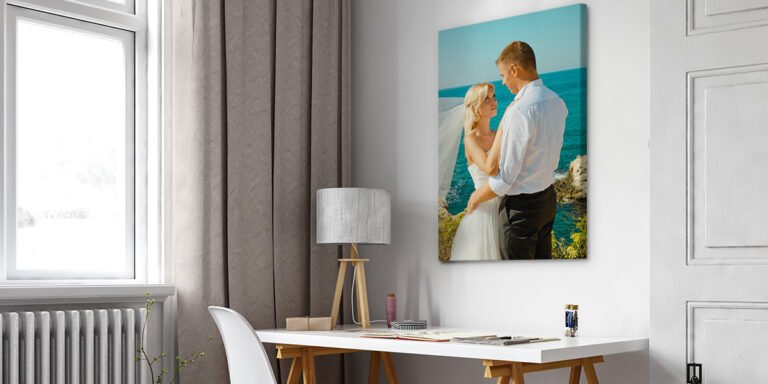
Giclée print on canvas is the most popular format for fine art reproduction. Cotton canvas has a natural, artist‑grade texture. For a full overview of all canvas materials, techniques, and finishing options, read our complete guide to canvas printing. It’s also lightweight, durable, and doesn’t require glass. Many artists prefer it for limited edition art prints because it looks and feels authentic.
Pro tip: Always ask for a UV‑protective laminate on your canvas giclée. In sunny climates like the UAE, that coating is non‑negotiable.
Is a Giclée Print an Original?
Is a giclée print an original? No, but it’s a high‑quality reproduction. The original is the source artwork (painting, drawing, or digital file). A giclée print is a faithful copy. However, if the artist signs and numbers a limited run, those prints become collectible and valuable.
Finding Giclée Printing Near Me
Searching for giclée printing near me in the UAE? Look for studios that use:
- High‑resolution inkjet printers (at least 1200 DPI)
- Archival pigment inks (not dye)
- Cotton canvas or fine art paper
- UV coating options
“For giclee printing in Dubai, ArtPlus offers all of the above with hand‑stretching and fast turnaround.”
Why ArtPlus Is a Trusted Giclée Studio in the UAE
ArtPlus follows the authentic giclée process with the following:
- State‑of‑the‑art inkjet printers
- Eco‑friendly archival pigment inks
- Premium cotton canvas
- Professional stretching and framing
- UV‑protective coating available
“Giclée printing isn’t expensive. Cheap printing that fades in two years is expensive. Pay once for pigment inks, and your art outlasts your sofa.”
“If a print shop can’t tell you whether they use dye or pigment inks, walk away. That’s the single most important question.”
Conclusion
Giclée printing is the gold standard for fine art reproduction. It uses archival pigment inks, high‑resolution inkjet printers, and quality surfaces like cotton canvas to create prints that last over a century. The colors are accurate. The texture is authentic. And the value holds for generations. Whether you’re an artist selling limited editions or a homeowner wanting one beautiful piece, giclée is worth every dirham.
FAQ
What is the difference between giclee and standard print?
Giclée uses archival pigment inks and high‑resolution inkjet printers. Standard prints use dye inks and mechanical transfer. Giclée lasts 80–100+ years; standard lasts 10–25 years.
What is the process of giclée printing?
Scan the original, color‑correct, print with pigment inks onto quality canvas or paper, dry, and optionally coat or stretch.
What’s the difference between giclee & inkjet?
All giclée is inkjet, but not all inkjet is giclée. “Giclée” specifically means high‑end inkjet with archival inks and fine art substrates.
Is a giclée print an original?
No, it’s a high‑quality reproduction. But if signed and numbered by the artist, it becomes a valuable limited edition.
Do giclee prints have texture?
Yes, especially on cotton canvas. The fabric weave adds depth and an authentic painted feel.
What is giclée printing used for?
Fine art reproductions, limited edition prints, professional photography, and luxury canvas for homes, hotels, and galleries.
How much does a giclée print cost?
In the UAE, a 16″x20″ giclée on cotton canvas typically costs 150–350 AED. That’s 2–3x a standard print, but it lasts 10x longer.