Table of Contents
- What Is Sublimation Metal Printing?
- How Sublimation Printing on Metal Works (Step-by-Step)
- How Long Do You Sublimate on Metal? (Timing & Temperature)
- Key Benefits of Sublimation Metal Printing
- Common Challenges (And How Professionals Solve Them)
- What Metal Is Used for Sublimation?
- Can Sublimation Print on Metal? (Yes – With Coating)
- Creative Applications for Custom Metal Print Applications
- Sublimation Metal Printing vs Other Methods
- How to Choose the Right Finish
- Why Sublimation Metal Printing Is Growing Fast
- Premium Sublimation Metal Printing with ArtPlus
- Conclusion
- FAQ
Sublimation metal printing infuses dye into a coated aluminum sheet using heat and pressure. The ink turns into gas and bonds permanently beneath the surface—creating a scratch-resistant, fade-proof, and brilliantly vibrant print that becomes part of the metal itself.
I’ve printed hundreds of metal pieces for clients—from gallery‑ready photographs to outdoor signage. Sublimation consistently delivers the sharpest detail and richest colour of any metal printing method. This guide explains exactly how it works, why it outperforms other processes, and where you can use it.
What Is Sublimation Metal Printing?
Sublimation metal printing is a heat‑transfer process that embeds dye directly into a specially polymer‑coated aluminum sheet. Unlike UV printing (where ink sits on the surface), sublimation makes the image part of the metal.
The result? A print that won’t scratch, peel, or fade for decades. It’s waterproof, lightweight, and visually stunning—the top choice for photographers, interior designers, and luxury brands. For professional metal photo printing in Dubai using sublimation or UV methods, choose a studio with colour‑managed workflows.
How Sublimation Printing on Metal Works (Step‑by‑Step)
Many people ask how to sublimate on metal at home, but the process requires professional equipment. Here’s how it’s done in a professional studio.
Step 1: Prepare your design
Use a high‑resolution file (150–300 DPI, CMYK). Because metal reflects light, contrast and sharpness are critical.
Step 2: Print onto transfer paper
The design is printed in reverse onto special sublimation transfer paper using sublimation inks. These inks turn from solid to gas when heated – they don’t become liquid.
Step 3: Align on coated aluminum
The transfer paper is placed face down onto a polymer‑coated aluminum panel. Heat‑resistant tape prevents movement (which causes ghosting).
Step 4: Apply heat and pressure
The assembly goes into a heat press at approximately 200°C (400°F) for 1–2 minutes. High pressure ensures full contact.
Step 5: Infusion and cooling
Under heat, the sublimation ink turns into a gas and permanently bonds to the polymer coating. When cooled, the image is inside the metal—not on top.
Step 6: Finishing
Edges are trimmed, mounting holes drilled, and protective film removed. The print is ready to hang.
A photographer in Alserkal Avenue needed archival‑grade prints for a gallery exhibition. We produced 1m x 1m sublimation metal prints of his desert nightscapes. The blacks were deeper than paper, the stars looked like they were glowing – and after six months on a sun‑facing wall, there was zero fading. He now exclusively prints on metal.
How Long Do You Sublimate on Metal? (Timing & Temperature)
How long do you sublimate on metal? Typically 1–2 minutes at 190–200°C (375–400°F). Exact time depends on the heat press and panel size. Professional studios run test strips to calibrate.
Can you sublimate on metal at home? You can – but you need a heat press (not an iron), sublimation paper, sublimation inks, and coated aluminum blanks. Small home setups work for coasters, keychains, and small art pieces. For large wall art (over 30cm), professional equipment is recommended.
Key Benefits of Sublimation Metal Printing
Exceptional colour accuracy:
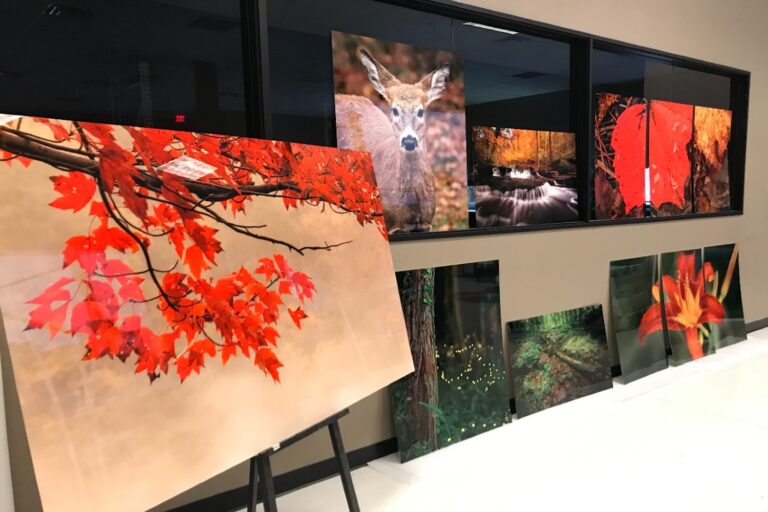
Metal reflects light differently from paper, giving stronger contrast, richer blacks, and brighter highlights. Photography looks almost three‑dimensional.
Long‑term durability:
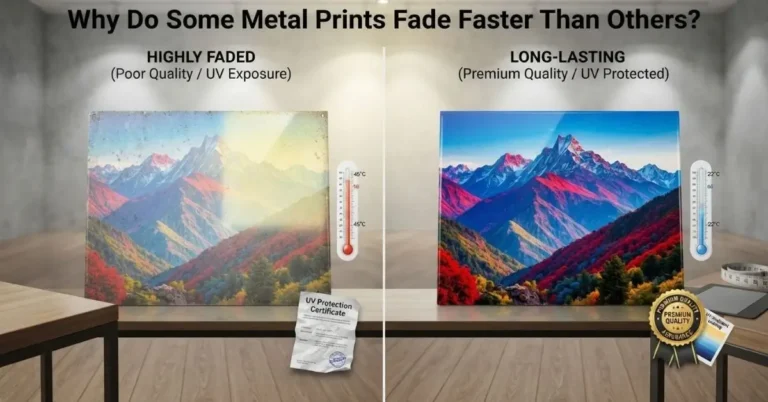
Unlike paper that yellows or canvas that sags, sublimation metal prints resist UV fading, moisture, scratches, and heat. Indoors, they last 50+ years.
Modern premium finish:
The frameless, sleek surface adds instant architectural elegance. Choose glossy (dramatic depth), matte (subtle, fingerprint‑resistant), or satin (balanced).
Easy maintenance:
Wipe with a soft microfiber cloth. For high‑traffic areas, a matte finish hides smudges.
Common Challenges (And How Professionals Solve Them)
| Problem | Cause | Solution |
| Colour shifts | Incorrect temperature/time | Use a high‑quality heat press with an even platen |
| Ghosting (blurry double image) | Use heat‑resistant tape to secure the paper | Calibrate the heat press; use a colour profile |
| Uneven colour | Inconsistent pressure | Use a high‑quality heat press with even platen |
| Faded edges | Paper too small | Use transfer paper larger than the panel |
What Metal Is Used for Sublimation?
What metal is used for sublimation? Almost exclusively coated aluminum. It’s lightweight, corrosion‑resistant, and transfers heat evenly. Raw or uncoated metal will not accept sublimation ink—the polymer coating is essential.
Create Stunning, Long‑Lasting Metal Prints
Sublimation printed on premium coated aluminum – waterproof, scratch‑proof, and fade‑resistant. Free colour proof and fast UAE delivery.
Order a Metal PrintCan Sublimation Print on Metal? (Yes – With Coating)
Can sublimation print on metal? Yes, but only on metal with a special polymer coating. The coating bonds with the sublimation ink when heated. Without it, the ink won’t adhere. Always order “sublimation‑ready” aluminum panels from a reputable supplier.
Creative Applications for Custom Metal Print Applications
Custom metal print applications span residential and commercial projects.
Wall art and interior décor:
Living room statement pieces, bedroom installations, office reception displays, and gallery presentations. To see how metal is shaping contemporary interiors, explore the latest metal wall art trends for homes and offices. Metal’s frameless floating appearance is far more modern than canvas.
Corporate branding:
Reception signage, brand storytelling walls, directional signs, office graphics. The sharpness gives branding a professional, high‑end finish.
Hospitality spaces:
Hotels, restaurants, and lounges need décor that withstands constant use. Metal prints offer durability without sacrificing elegance.
Personalized gifts:
Custom family portraits, travel photography, anniversary artwork, and commemorative prints. Metal feels far more premium than traditional framed prints.
Outdoor displays:
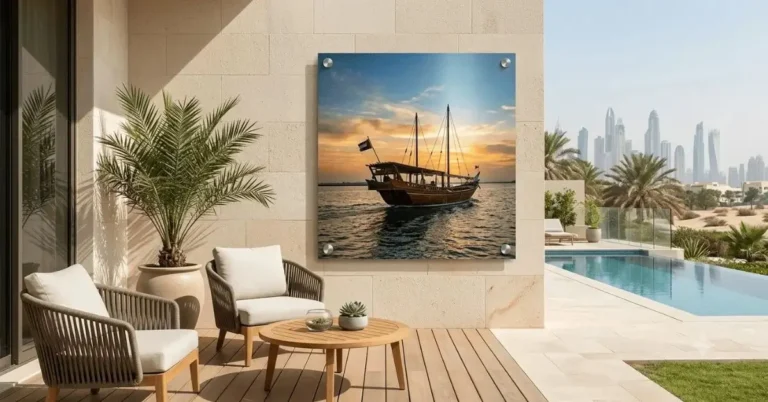
With UV‑protective coatings, sublimation metal prints can be used in covered patios or even direct sun (though aluminium gets hot—consider shade). Discover why weather resistant metal art is the top choice for Dubai’s harsh climate.
Sublimation Metal Printing vs Other Methods
| Feature | Sublimation Metal | UV Direct Print | Canvas/Paper |
| Image quality | Photo-realistic, embedded | Very good | Good |
| Scratch resistance | Excellent (ink inside) | Good (surface coat) | Poor |
| Fade resistance | 50+ years indoors | 20–30 years | 5–10 years |
| Water resistance | Yes | Yes | No |
| Suitable for outdoor | With UV coating | Yes (UV inks) | No |
For a broader overview of all modern metal printing processes, including UV direct printing, see our guide on how metal printing works.
How to Choose the Right Finish
- Glossy: Best for photography and vivid artwork. Adds drama and depth.
- Matte: Ideal for professional interiors with soft lighting. Reduces fingerprints.
- Satin: Balance between richness and subtle reflection. Most versatile.
A useful design rule: If the print will face direct lighting, matte generally performs better.
Why Sublimation Metal Printing Is Growing Fast
Design preferences are shifting. People want décor that feels cleaner, sharper, and longer lasting. Sublimation metal printing answers all three needs. It combines visual sophistication, structural durability, and custom design freedom. That’s why it’s the top choice for photographers, interior designers, and luxury brands.
Premium Sublimation Metal Printing with ArtPlus
At ArtPlus, we use advanced heat transfer technology, premium coated aluminum panels, and precision colour management. Every project – from custom wall art to corporate branding – is produced with attention to detail and durability. Free design proof and fast UAE delivery.
Conclusion
Sublimation metal printing is the gold standard for durable, high‑impact wall art and signage. It infuses colour into the metal itself – so it won’t scratch, fade, or peel. Perfect for photography, luxury interiors, and commercial branding. Choose glossy for depth, matte for professional calm, or satin for balance. Always work with a professional printer for large panels. Your walls will thank you. Explore custom metal printing in Dubai to turn your photography or designs into stunning, long‑lasting wall art.
Create Stunning, Long‑Lasting Metal Prints
Sublimation printed on premium coated aluminum – waterproof, scratch‑proof, and fade‑resistant. Free colour proof and fast UAE delivery.
Order a Metal PrintFAQ
Can sublimation print on metal?
Yes, but only on specially coated aluminum panels. The polymer coating bonds with sublimation ink when heated.
What is metal sublimation?
A heat‑transfer process that infuses dye into a coated metal sheet. The image becomes part of the surface—scratchproof and fade-resistant.
How long do you sublimate on metal?
Typically 1–2 minutes at 190–200°C (375–400°F). Exact time depends on panel size and heat press.
How to sublimate on metal at home?
You need a heat press, sublimation ink, transfer paper, and coated aluminum blanks. Small projects like coasters are DIY‑friendly; large wall art is best done professionally.
Are sublimation metal prints waterproof?
Yes. They are highly moisture‑resistant and suitable for kitchens, bathrooms, and covered outdoor areas.
What metal is best for sublimation printing?
Coated aluminum – lightweight, corrosion‑resistant, and excellent for heat transfer.