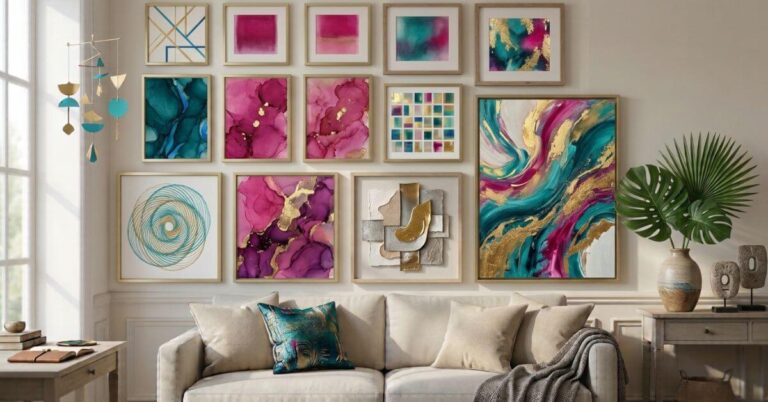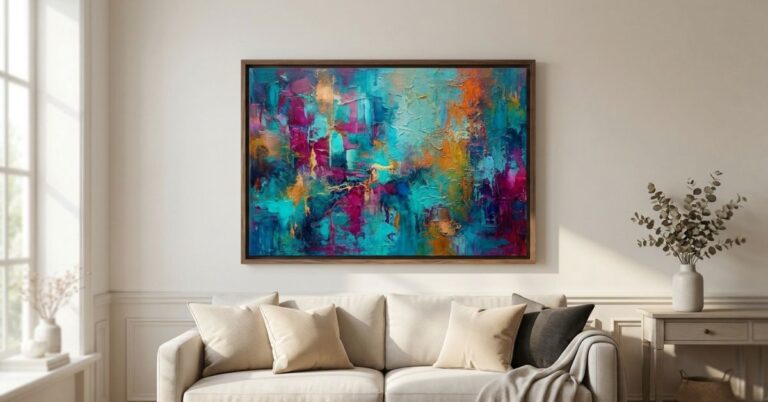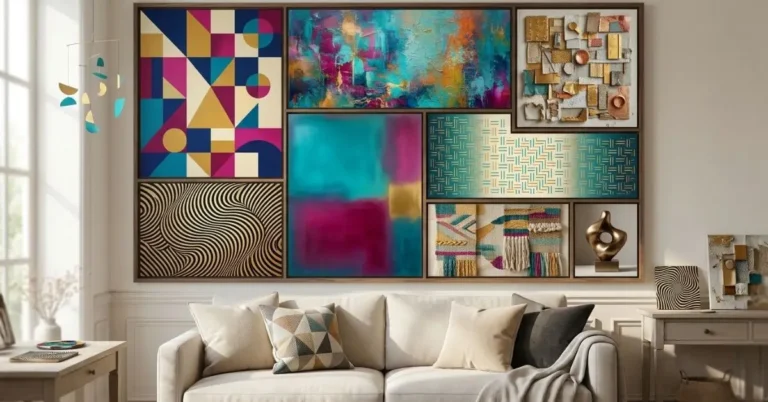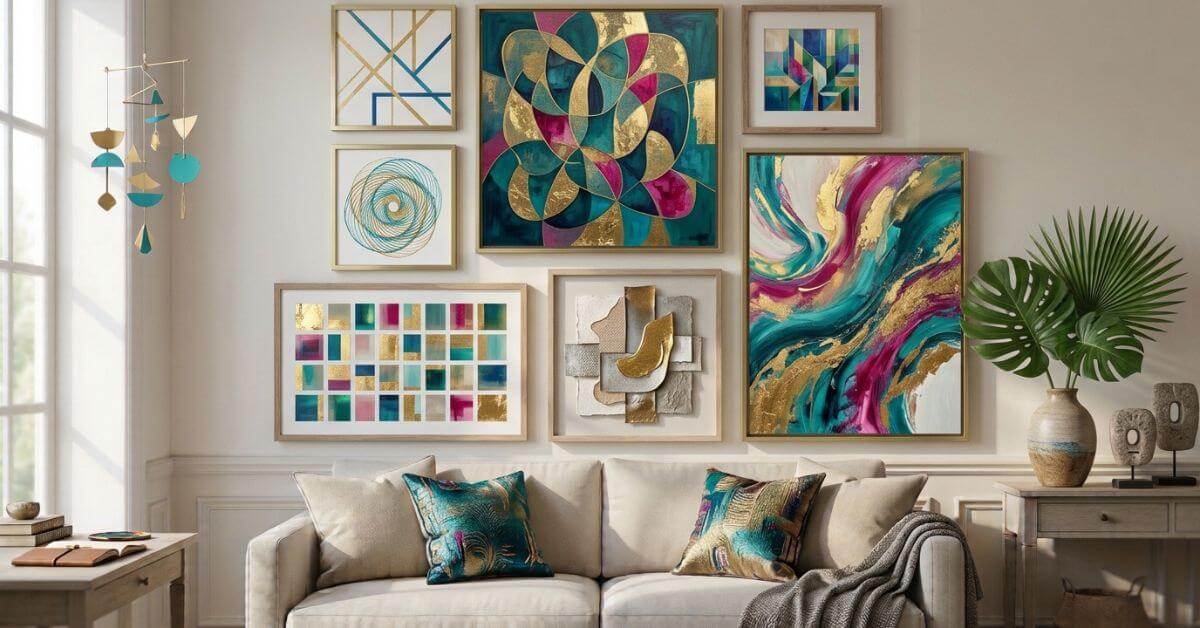
An abstract art gallery wall is a creative way to display multiple artworks while giving an empty wall more personality and visual interest. Instead of relying on one large painting, you can combine different abstract prints, colours, shapes and frame styles to create a display that feels personal and well planned.
The key to a successful gallery wall is balance. Your artworks do not need to match perfectly, but they should share something that connects them, such as a colour palette, artistic style, subject or framing approach. A thoughtful arrangement helps each piece stand out while making the entire collection feel like one composition.
Whether you prefer minimalist prints, colourful abstract paintings or geometric designs, the right combination can work in living rooms, bedrooms, hallways, offices and creative spaces. This guide explains how to select artwork, plan your layout, coordinate colours and choose frames for a balanced abstract art gallery wall.
1. Choose a Theme for Your Abstract Art Gallery Wall
Before selecting individual pieces, decide what you want your gallery wall to communicate. A clear theme makes it easier to combine different artworks without creating a disconnected appearance.
You can build your collection around:
- Geometric abstract art: Artwork featuring shapes, lines, patterns and structured compositions.
- Minimalist abstract art: Simple designs with limited colours, clean forms and plenty of negative space.
- Colourful abstract paintings: Expressive artwork featuring vibrant colours, layered shapes and contrasting tones.
- Textured abstract artwork: Pieces that use visible brushwork, layered effects or textured surfaces.
- Neutral abstract art: Subtle combinations of beige, cream, grey, brown and other understated shades.
You can also explore different types of abstract art before choosing your theme. Understanding the characteristics of different styles will help you select pieces that complement one another.
A consistent theme does not mean every artwork must look identical. Combining a large expressive painting with smaller geometric or minimalist pieces can create an interesting display, provided there is a visual connection between them.
2. Select the Right Number and Size of Artworks
The number and size of artworks should suit the available wall space. A gallery wall that contains too many small pieces may look crowded, while a few tiny prints on a large wall can appear disconnected.
Start by measuring the wall and identifying the area you want the collection to occupy. Consider nearby furniture, doors, windows and architectural features before deciding on the arrangement.
Here are three useful approaches:
- Small gallery wall: Choose three to five artworks for a narrow wall, hallway or compact area.
- Medium gallery wall: Combine five to seven pieces in different sizes for a more detailed arrangement.
- Large gallery wall: Use seven or more artworks, including one or two larger pieces, to create a stronger focal point.
These are flexible starting points rather than strict rules. The right number depends on the size of each artwork and the space available.
Try including one larger abstract artwork as the main focal point. Smaller pieces can then support it and create visual movement around the wall.
3. Choose a Gallery Wall Layout
Your layout determines how the artworks relate to each other. Even attractive prints can look unbalanced if they are placed without considering spacing, alignment and proportion.
Consider these popular abstract gallery wall ideas:
Symmetrical Grid Layout
A grid layout uses artworks of similar dimensions arranged in straight rows and columns. It creates a clean, organised appearance and works particularly well when displaying a collection with a consistent theme.
Choose matching frame sizes and maintain equal spacing between pieces for a structured result.
Asymmetrical Gallery Wall
An asymmetrical arrangement combines artworks of different sizes and orientations. You can position a larger painting near the centre and place smaller pieces around it.
This approach feels more relaxed and allows you to combine different abstract styles without making the wall look overly formal.
Linear Layout
A linear arrangement places artworks in a horizontal or vertical line. It is useful for long walls, hallways and spaces above furniture.
For a balanced result, align the centre points or edges of the frames and maintain consistent gaps.
Salon-Style Layout
A salon-style gallery wall brings several artworks together in a closer, more layered arrangement. It can include different frame sizes, colours and artwork formats.
To avoid visual clutter, keep a shared colour palette or another consistent design element throughout the collection.
4. Coordinate Colours Across Your Artwork
Colour coordination is one of the most important parts of creating a balanced gallery wall. You can select artwork with different compositions and styles, but a shared colour palette helps connect the collection.
Start by identifying the dominant colours in your room. Look at the wall paint, furniture, cushions, rugs and other decorative elements.
Then choose one of these approaches:
- Neutral palette: Combine beige, white, grey and soft earthy shades for a calm appearance.
- Monochromatic palette: Use different tones of one colour, such as blue, to create consistency.
- Complementary colours: Combine colours that create contrast while maintaining visual harmony.
- Accent colour approach: Select mostly neutral artwork and introduce one or two pieces with stronger colours.
You do not need every artwork to contain exactly the same colours. Repeating one or two shades across different pieces is often enough to make the collection feel connected.
For more inspiration, explore modern abstract art ideas and consider how different compositions and colour combinations can work together.
5. Select Frames That Complement the Artwork
Frames influence how your gallery wall looks as a complete display. The right frame can connect different artworks, while inconsistent choices may make the arrangement feel less organised.
Consider these framing options:
- Black frames: Create a strong outline and work well with monochrome, geometric and colourful artwork.
- White frames: Offer a light, clean appearance that suits minimalist interiors.
- Natural wood frames: Add warmth and complement earthy colours and organic abstract designs.
- Metallic frames: Introduce a decorative finish that can suit selected modern or elegant interiors.
- Frameless display: Some canvas artworks can be displayed without traditional frames for a simpler look.
You can use different frame styles, but try to maintain one connecting feature. For example, combine black and natural wood frames while keeping the artwork colours consistent.
If you want a more coordinated finish, consider custom framing to select frame dimensions and styles that suit the individual artwork and the overall arrangement.
6. Plan the Spacing and Placement Before Hanging
One common mistake is hanging each artwork separately without planning how the complete arrangement will look.
Before making holes in the wall, place all your selected artworks on the floor. Move them around until you find a layout that feels balanced. You can also cut paper templates matching the frame dimensions and temporarily attach them to the wall.
Keep these practical points in mind:
- Maintain reasonably consistent spacing between neighbouring frames.
- Treat the complete gallery wall as one visual arrangement.
- Position the collection in relation to nearby furniture and architectural features.
- Avoid placing every large artwork on one side.
- Check the arrangement from different viewing positions.
For general guidance, the McMaster Museum of Art recommends planning grouped artworks on the floor before hanging them. Its gallery preparation tips also discuss placement, height and spacing.
Use a measuring tape and spirit level during installation. For heavier artwork, select suitable hanging hardware for the frame weight and wall type.
7. Select the Right Printing Material and Finish
The printing material can influence the appearance of your gallery wall. Consider the artwork style, desired finish and location before choosing a material.
Canvas printing is a popular option for abstract artwork because it provides a traditional art-like appearance and can suit both large statement pieces and smaller collections.
Acrylic printing can create a smooth, modern finish with a polished appearance. It may suit colourful abstract compositions and contemporary interiors.
Other options may include fine art paper or framed print formats, depending on the artwork and the desired presentation.
Try to maintain a consistent finish across the collection. Mixing several materials can work, but it should be an intentional design decision rather than an accidental combination.
8. Get Inspiration from Abstract Art Collections
If you are unsure which artworks to combine, start by exploring existing collections. Looking at different compositions, colours and artistic approaches can help you identify a theme for your wall.
Browse the ArtPlus Abstract Art Collection for inspiration and explore different abstract compositions that could work together.
You can also visit the ArtPlus Artworks Collection to discover other artwork styles and find pieces that complement your chosen theme.
If you are planning a collection for a particular interior, consider the wall dimensions, colour scheme and overall atmosphere before selecting the final prints.
Frequently Asked Questions
How many pieces should an abstract art gallery wall have?
There is no fixed number. A small arrangement may contain three to five pieces, while a larger wall can accommodate seven or more. Choose the number according to the available wall space and artwork dimensions.
Should all gallery wall frames match?
No. Matching frames create a consistent and structured look, but different frame styles can also work. Use a shared colour, material or design feature to connect them.
What is the best layout for an abstract art gallery wall?
A symmetrical grid is suitable for a clean, organised appearance. An asymmetrical or salon-style layout offers more flexibility when combining artworks of different sizes and styles.
Can I mix different abstract art styles?
Yes. You can combine geometric, minimalist, expressive and colourful abstract pieces. A shared colour palette or visual theme will help the collection feel cohesive.
How do I avoid making a gallery wall look cluttered?
Plan the arrangement before hanging the pieces, maintain balanced spacing and avoid placing too many visually strong artworks together. Leave enough space around the overall arrangement.
Conclusion
Creating a balanced abstract art gallery wall is about combining artwork, colour, size, framing and placement in a thoughtful way. Start with a clear theme, select a suitable mix of artwork sizes, and plan the layout before hanging anything.
You do not need identical prints to create a cohesive display. A shared colour palette, complementary frames and carefully planned spacing can bring different abstract artworks together.
Explore the ArtPlus collections to find abstract artwork inspiration and create a gallery wall that reflects your interior style.