Your living room is one of the most important spaces in your home. It is where you welcome guests, spend time with family, and relax after a busy day. While furniture, lighting, and decorative accessories help create a comfortable environment, the right wall artwork can bring everything together. Choosing abstract wall art for living room interiors is an effective way to introduce colour, personality, movement, and visual interest without making the space feel overcrowded.
However, selecting the right artwork involves more than choosing a painting that looks attractive. You need to consider your wall dimensions, furniture arrangement, existing colour scheme, interior style, and the atmosphere you want to create. From large abstract wall art for living room interiors to subtle minimalist compositions, the right choice can complement your surroundings and make an ordinary wall more visually engaging.
Whether you prefer colourful abstract paintings, neutral compositions, geometric patterns, or modern abstract wall art, this guide will help you choose artwork that suits your living room and creates a balanced interior.
1. Consider Your Living Room Wall Size
The size of your artwork is one of the first things to consider. A painting that is too small may look disconnected from the surrounding furniture, while an oversized piece can make a smaller room feel crowded.
Before selecting artwork, measure the available wall space and consider the furniture underneath it.
Here are some practical guidelines:
- Large walls: Choose oversized abstract paintings or a collection of coordinated artworks to create a strong focal point.
- Medium-sized walls: A single medium-sized canvas or two complementary abstract prints can create a balanced appearance.
- Small walls: Consider compact artwork with simple compositions and limited visual detail.
If you are placing artwork above a sofa, a useful starting point is to choose a piece approximately two-thirds the width of the furniture. This creates visual balance without making the artwork appear disconnected.
For particularly large walls, consider a panoramic abstract composition or a carefully arranged group of paintings.
2. Choose Colours That Complement Your Interior
Colour plays an important role when selecting abstract wall art for your living room. Your artwork should complement the existing interior rather than compete with every other decorative element.
Start by identifying the dominant colours in your furniture, curtains, rugs, cushions, and walls.
Consider these combinations:
- Neutral interiors: Beige, cream, white, and grey spaces work well with abstract artwork featuring earthy tones, black, white, or subtle gold details.
- Modern interiors: Navy, charcoal, muted green, and contrasting geometric colours can introduce a contemporary appearance.
- Warm interiors: Terracotta, rust, brown, ochre, and warm orange artwork can complement wooden furniture and warm lighting.
- Minimalist interiors: Soft grey, white, beige, and simple monochromatic compositions help maintain a clean atmosphere.
You do not need to match every colour in your painting with your furniture. Instead, select one or two existing colours and repeat them in the artwork to create a visual connection.
For example, if your living room has a beige sofa and wooden furniture, an abstract painting with cream, brown, and muted terracotta tones can complement the overall design.
3. Select an Abstract Art Style That Matches Your Living Room
Abstract artwork comes in different styles, each creating a different visual effect. Understanding these styles can help you select a piece that suits your interior preferences.
Minimalist Abstract Art
Minimalist artwork uses simple shapes, subtle colours, and clean compositions. It works particularly well in modern living rooms where simplicity and open space are important.
Geometric Abstract Art
Geometric compositions feature structured lines, circles, rectangles, and other shapes. They can introduce visual order and work well with contemporary furniture and modern interior designs.
Colourful Abstract Art
If your living room has neutral furniture and plain walls, colourful abstract paintings can introduce energy and personality. Look for artwork with a balanced combination of complementary or contrasting colours.
Textured and Expressive Abstract Art
Expressive compositions use visible brushstrokes, layered colours, and dynamic patterns. They are suitable for interiors where you want the artwork to become a noticeable focal point.
Your choice should reflect the overall atmosphere you want to create rather than simply following a particular design trend.
4. Think About Artwork Placement
Even beautiful artwork can look out of place when it is positioned incorrectly. Proper placement helps connect the painting with your furniture and the rest of the room.
Here are some placement ideas:
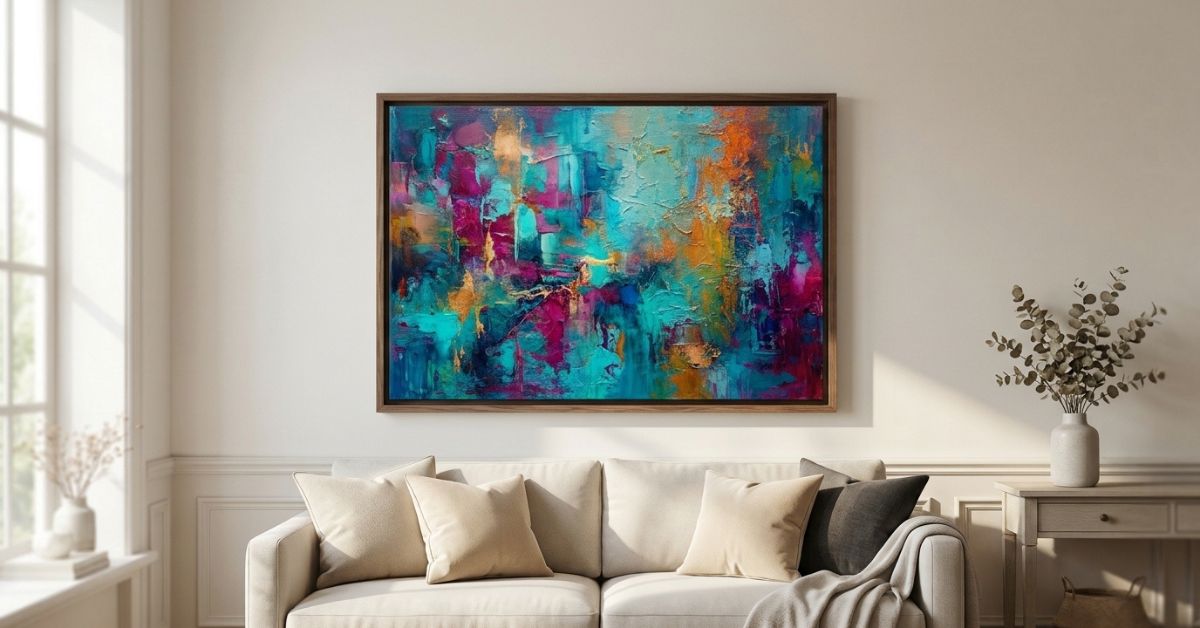
- Above the sofa: Position a large abstract painting centrally above the sofa to create a natural focal point.
- Behind the television: Choose a balanced, less distracting composition that complements the entertainment area.
- Above a console table: Use medium-sized artwork or a coordinated pair of abstract prints.
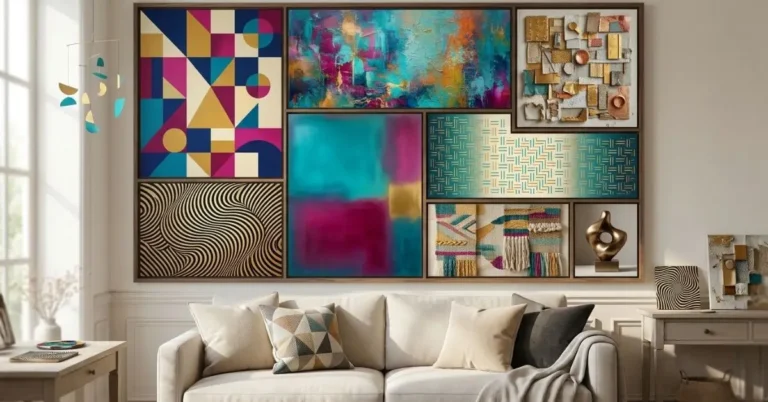
- On an empty feature wall: Consider an oversized canvas or a gallery arrangement to fill the available space.
For artwork displayed above furniture, leave approximately 15–25 cm between the furniture and the bottom edge of the frame as a starting point. Adjust the distance according to the furniture height and overall composition.
Also, consider viewing distance and lighting. Artwork should be visible and comfortable to appreciate without creating unwanted glare.
5. Decide Between One Large Painting and Multiple Artworks
One of the common decisions homeowners face is whether to choose a single large painting or several smaller pieces.
Both options can work well, depending on your wall dimensions and interior arrangement.
One large abstract painting
A large artwork creates a clear focal point and works particularly well above a sofa or on an open feature wall. It can also make a simple interior feel more complete without requiring several decorative elements.
Multiple abstract paintings
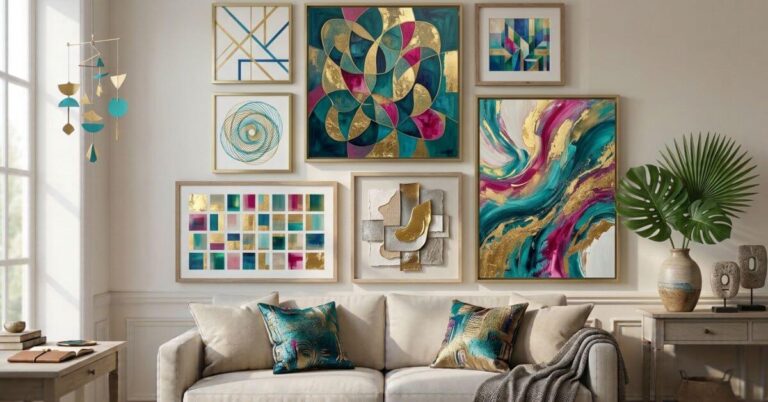
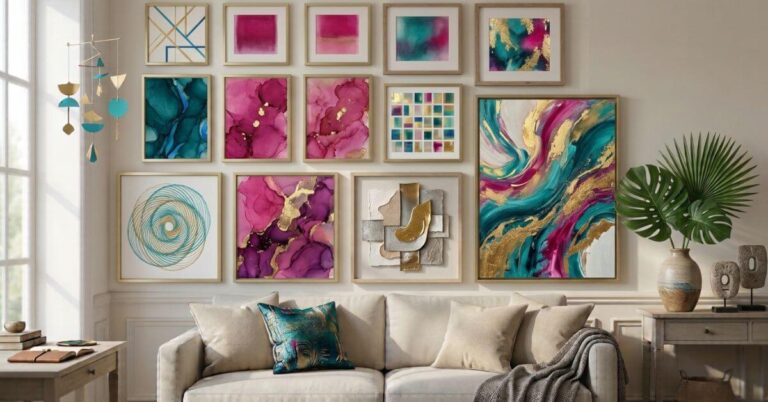
A group of smaller paintings can create a personalised gallery wall. You can combine different compositions while maintaining consistency through similar colours, frames, or artistic styles.
Before hanging multiple pieces, arrange them on the floor to experiment with spacing and positioning. Keeping a consistent gap between frames helps create a more organised appearance.
6. Consider the Artwork Material and Finish
The material and finish of your artwork can influence how it looks within your living room.
Canvas artwork offers a classic appearance and works well with many interior styles. Framed prints provide a more defined finish, while acrylic artwork can introduce a sleek, contemporary look.
When selecting artwork, consider:
- Canvas: Suitable for traditional, modern, and contemporary interiors.
- Framed prints: Useful for creating a clean and organised gallery wall.
- Acrylic prints: A contemporary option for interiors where a smooth, polished finish is preferred.
- Fine art prints: A good choice when detail, colour reproduction, and presentation are important.
Choose a material that complements your furniture, lighting, and overall decorative style. Also consider the intended display location and the care requirements of the finished artwork.
7. What Is the Golden Rule of Abstract Art?
There is no single universal rule for appreciating or displaying abstract art. However, a useful design principle is to maintain visual balance between the artwork and its surroundings.
Consider three important elements:
- Colour balance: Make sure the artwork’s colours complement the room rather than overwhelming it.
- Composition: Choose a painting with a visual arrangement that works with the proportions of your wall and furniture.
- Personal connection: Select something that you genuinely enjoy looking at and that reflects your taste.
Abstract artwork does not need to represent a recognisable object or scene. Its shapes, colours, lines, and textures can communicate different ideas and emotions, allowing viewers to interpret it in their own way.
8. Explore Modern Abstract Wall Art Ideas for Your Living Room
If you are looking for inspiration, consider how different abstract compositions can complement your interior.
For a contemporary living room, geometric abstract paintings can introduce structure and contrast. For a softer atmosphere, choose organic shapes and muted colours. If you prefer a bold decorative statement, consider oversized abstract canvas artwork featuring expressive brushstrokes and vibrant colours.
You can also explore coordinated abstract artwork to create a consistent theme across adjoining spaces.
The key is to select artwork that works with your furniture, wall dimensions, and personal preferences rather than filling every available wall.
Frequently Asked Questions
What are some good abstract art paintings for my living room?
Good choices include minimalist compositions, geometric paintings, colourful abstract artwork, and textured designs. The best option depends on your interior style, available wall space, and preferred colour palette.
What kind of wall art is best for a living room?
The best wall art is artwork that complements your furniture, wall colours, and room proportions. Abstract paintings, canvas prints, framed artwork, and contemporary compositions are all suitable options.
What will abstract art look like in 2026?
In 2026, contemporary interiors continue to offer room for expressive compositions, organic shapes, textured finishes, earthy colour palettes, and bold artistic contrasts. Rather than following a trend blindly, choose artwork that suits your space and personal taste.
How large should abstract wall art be above a sofa?
A useful starting point is artwork approximately two-thirds the width of your sofa. This proportion generally creates a balanced arrangement, although the ideal dimensions depend on the available wall space and surrounding furniture.
Should abstract wall art match my living room furniture?
It does not need to match exactly. Instead, choose artwork that complements one or two colours already present in your furniture, rugs, cushions, or decorative accessories.
Final Thoughts
Choosing the right abstract wall art for your living room is about finding a balance between colour, size, composition, and personal style. The right artwork can introduce character, complement your furniture, and transform an empty wall into an attractive feature of your home.
Take time to measure your wall, explore different artistic styles, and consider how each piece will work with your existing interior. Whether you prefer minimalist compositions, geometric designs, or large expressive paintings, choose artwork that makes your living room feel complete and reflects your personality.