Pure cotton for portraits and fine art. Polyester for bathrooms and commercial use. Cotton-poly blend for everything else. Your choice comes down to where the print hangs and what’s on it.
Most people assume one canvas works for every wall. That’s like wearing the same shoes to a beach and a boardroom. I’ve seen gorgeous family photos ruined by humidity and cheap polyester prints that somehow look worse than the original file. Let me walk you through exactly which canvas fits your real situation—no guesswork.
Three Canvas Types at a Glance (No Fluff)
| Canvas Type | Key Strength | Best For |
| Pure Cotton | Rich texture, deep color | Fine art, portraits, gallery displays |
| Polyester | Moisture-proof, tough | Bathrooms, kitchens, commercial signage |
| Cotton-Poly Blend | Balanced softness + strength | Large wall art, everyday home decor |
Family Portraits & Fine Art: Go Pure Cotton
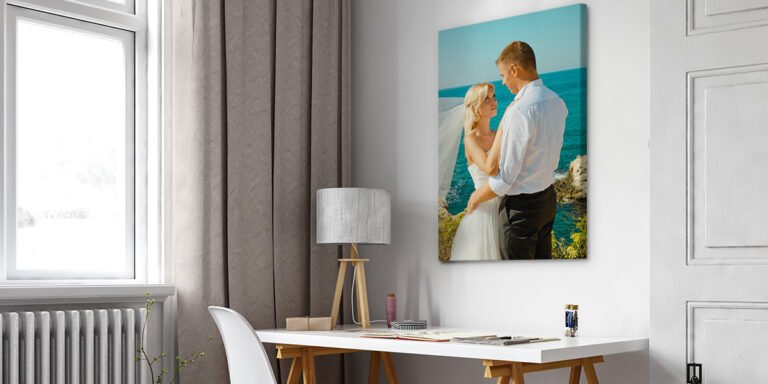
You want your child’s smile or a wedding moment to feel warm and timeless. Pure cotton delivers that.
The weave is slightly irregular, like a traditional artist’s canvas. It absorbs pigment ink beautifully. Blacks stay deep. Skin tones look natural, not plasticky.
Why it works:
- Soft, non-glare texture (no annoying reflections)
- Excellent color depth and sharpness
- Lightweight and breathable
Real example: A client printed the same portrait on cotton and polyester. Side by side, the polyester looked like a shower curtain. The cotton looked like a painting. She nearly cried—happy tears. Get your family portrait printed on premium cotton with custom canvas printing in Dubai that captures every detail.
When to avoid: Bathrooms, kitchens, or any humid spot. Cotton absorbs moisture and can sag within a year.
Pro tip: For black-and-white portraits, cotton’s warm undertone adds a classic, artistic feel that polyester can’t copy.
Bathrooms, Kitchens & Covered Patios: Polyester Is Your Friend
High humidity and temperature swings destroy natural fibers. Polyester laughs at them.
It’s synthetic, waterproof, and resists warping or mildew. You can hang it near a steamy shower or above a sink without worry.
Why it works:
- Excellent moisture resistance
- Holds tension well on stretcher bars
- Affordable for experimental prints
When to avoid: Fine art galleries or anywhere a slight plasticky sheen would look cheap.
Pro tip: Even with polyester, add a UV-protective coating if the print gets indirect sunlight. Fading still happens—just slower.
Large Wall Art & Everyday Home Decor: Cotton-Poly Blend Is the Sweet Spot
Most living rooms and bedrooms need a balance. You want the soft look of cotton but the durability of polyester. That’s exactly what a blend gives you—typically 65% polyester / 35% cotton.
It resists sagging better than pure cotton. It looks more natural than pure polyester. And it costs less than either premium option.
Why it works:
- Good color reproduction and texture
- More affordable than pure cotton
- Widely available from professional print shops
When to avoid: If you’re a professional artist selling limited-edition prints. Collectors expect archival cotton.
Pro tip: For canvas sizes larger than 24″ x 36″, a blend holds its shape better over time. Cotton alone can droop at the center.
Commercial Displays, Retail & Offices: Polyester or Blend
Businesses need toughness. A restaurant menu board, a lobby piece, or a retail sign gets cleaned weekly, bumped occasionally, and lit constantly. Polyester wins on durability. A high-quality blend is a close second.
Why polyester works for commercial use:
- Tear-resistant and easy to wipe down
- Won’t absorb dust or grease
- Lower cost for bulk orders (think 20+ prints)
When to avoid: Upselling fine art in a gallery. Customers there expect cotton, period.
Pro tip: For corporate offices with modern interiors, a smooth polyester canvas with a matte finish looks clean, professional, and easy to maintain.
Outdoor or Semi-Outdoor Displays: Polyester + UV Coating (Non-Negotiable)
Covered patios, balcony railings, or seasonal outdoor signs need maximum protection. Polyester resists moisture and UV degradation better than cotton. But the coating matters even more.
Why this combination:
- Polyester won’t absorb rain or humidity
- UV coating prevents fading and yellowing
- Synthetic fibers hold tension in heat
When to avoid: Direct, unprotected outdoor exposure. No canvas is fully weatherproof. For that, switch to metal or acrylic.
Pro tip: Ask for “UV-laminated” polyester canvas. The clear layer also makes cleaning easy—just a damp cloth.
Layout & Size: How Your Wall Changes the Choice
Your canvas material interacts with the layout more than you’d think.
| Layout | Best Material | Why |
| Single large canvas (statement piece) | Cotton or blend | Soft texture draws attention without glare |
| Multi-panel (triptych) | Blend or polyester | Panels need consistent tension across frames |
| Small mini canvases (clusters) | Any | Small size reduces material stress |
| Deep edge (1.5″+ thick) | Blend | Extra frame weight needs durable fabric |
Once you’ve chosen the right canvas, follow our guide on how to transform photos into canvas art for perfect results.
3 Universal Factors That Make or Break Any Canvas Print
No matter which material you pick, these three things decide the final result.
1. Image resolution: Always start with 300 DPI at your final print size. A low-res photo will look blurry on any canvas—cotton won’t save it.
2. UV protection: Even the best cotton will fade within 2–3 years without a UV-protective varnish or laminate. That’s not a sales pitch. That’s physics.
3. Stretching quality: Look for kiln-dried stretcher bars with corner wedges (keys). They let you retighten the canvas if it loosens over time. No wedges? No thanks. Before ordering, learn exactly how to evaluate canvas print quality to spot red flags in materials and craftsmanship.
“The canvas material is only half the equation. The other half is how it’s stretched and coated. I’ve seen perfect cotton ruined by cheap frames, and cheap polyester saved by good lamination.”
“If a print shop can’t tell you whether they use cotton or polyester, assume it’s the cheapest option. Move on.”
Conclusion
The best canvas for photo printing depends entirely on where you hang it and what you print. Pure cotton delivers warmth and depth for portraits and fine art. Polyester handles moisture and heavy use like a workhorse. Cotton-poly blend gives you the best of both worlds for most home and office applications. Match your material to your environment, and your canvas print will look stunning for decades.
FAQ
What’s the best canvas for photo printing in a living room?
A cotton-poly blend. It balances texture and durability, won’t sag on larger sizes, and looks natural under normal lighting.
Can I use pure cotton canvas in a bathroom?
Not recommended. Cotton absorbs moisture and can warp or mildew within months. Stick with polyester for high-humidity areas.
Is polyester canvas cheaper than cotton?
Usually yes, by 20–40%. But the real saving is longevity—polyester won’t absorb moisture or degrade as fast in tough environments.
How do I know if a canvas has UV protection?
“Do you apply a UV laminate or varnish?” If they hesitate or say it’s “not necessary,” assume no protection.
What canvas do professional photo labs use for gallery prints?
Almost always 100% cotton with pigment inks and a UV coating. That’s the archival standard.
Can I mix different canvas types in a multi-panel print?
Avoid it. Different materials stretch and age differently. One panel might sag while another stays tight. Use the same type across all panels.