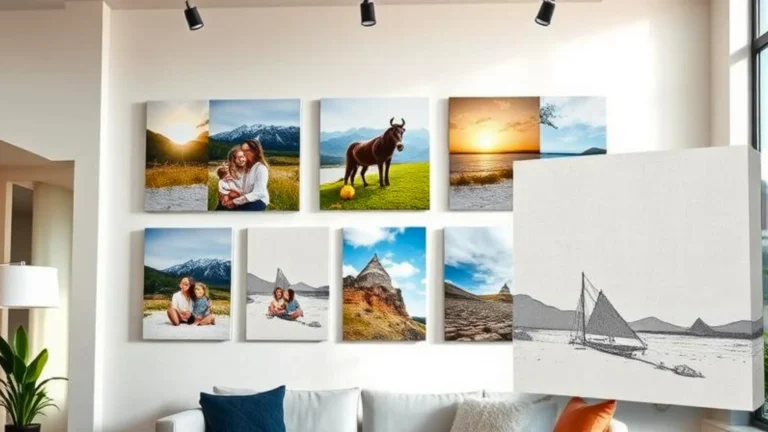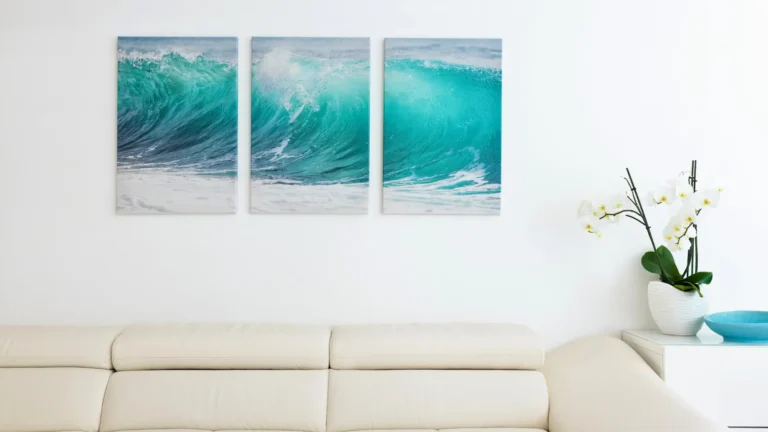
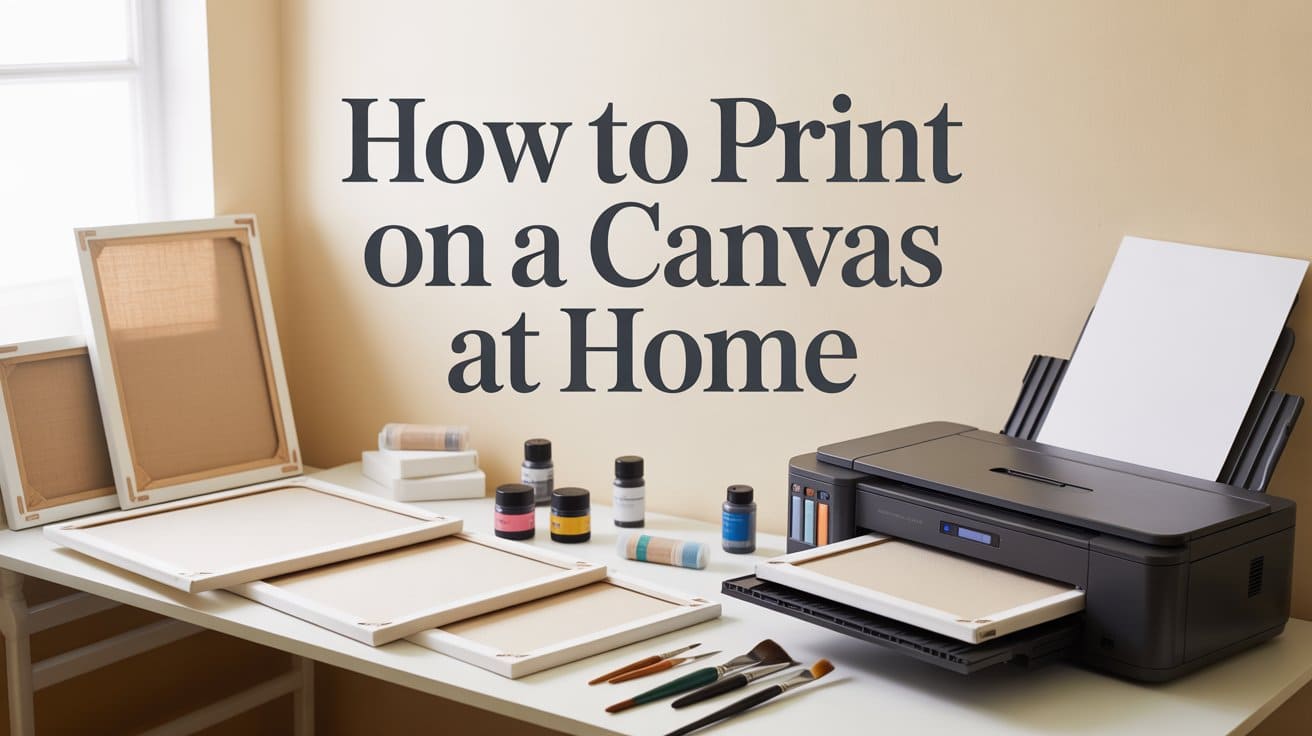
Custom printing your own art at home is simpler, more intelligent, and more innovative than it has ever been. Have you ever asked yourself how to get professional like the ones you see on gallery walls the same way. The way to create rich textures and professional quality art, is through canvas printing. Print on a Canvas can offer more character and dimension then printing on regular paper. You can take both personal photographs and contemporary art pieces and print them out on canvas. Today, more people explore print on a canvas at home to create décor, gifts, and small business products without relying on studios.
A canvas print allows you to take full advantage of your creativity. When you learn about how to make a canvas print yourself or with a reputable home canvas printing instructions, you will have experience and knowledge of your canvas print process. Therefore, you can produce clean-looking products that last for years. These canvas prints can beautify any space by putting them on your wall.
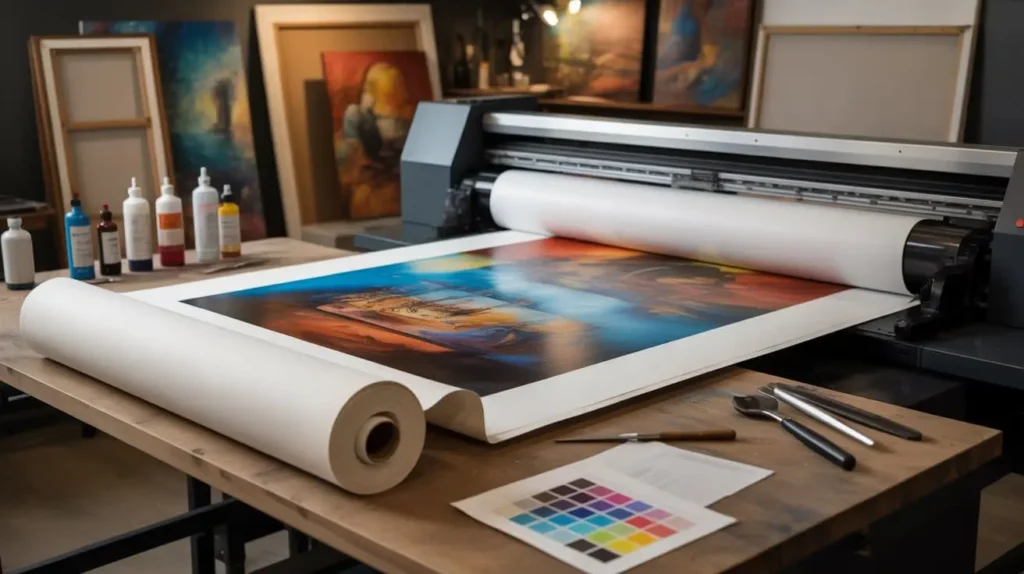
What Is Canvas Printing and How Does It Work?
Canvas printing transfers images onto woven fabric for décor and gifting. The canvas printing process applies inks directly to fabric so colors bond with fibers. Modern UV canvas printing uses UV cured ink for instant ink curing, improving ink adhesion on canvas and durability. This makes canvas wall art printing reliable for bright UAE interiors and long-term display.
What You Need Before Print on a Canvas at Home
You need a compatible printer, compatible ink and prepared material in order to print on canvas at home. Most creators of printed canvas rely on a home canvas printing guide which provides the best balance between space, air flow, and light. The best results for a DIY (do-it-yourself) canvas printing project will occur when the equipment used is calibrated properly and used on a clean surface to ensure the proper alignment of printed graphics with the surface of the canvas so that the results are consistent with each other when producing your own canvas print.
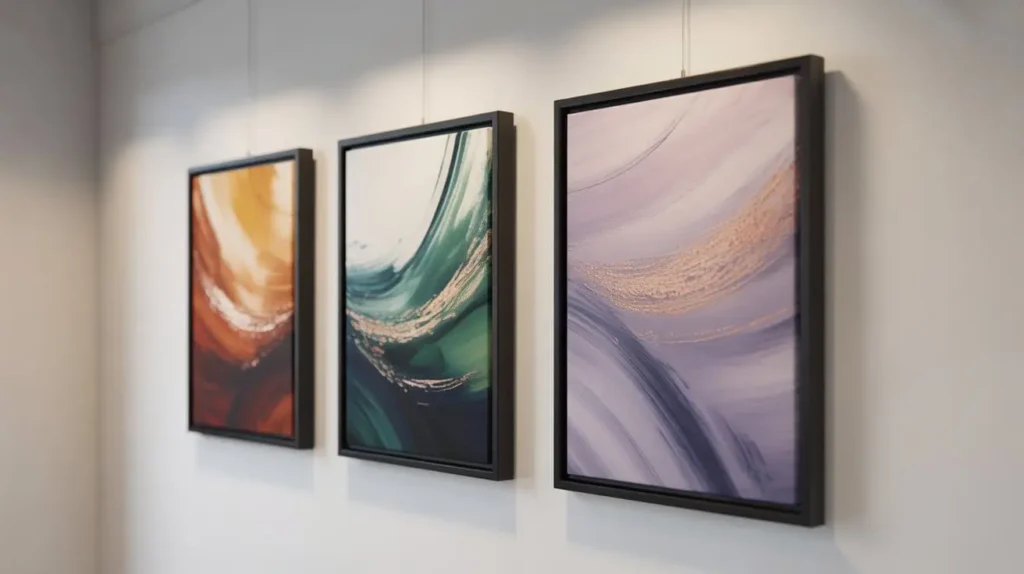
Step 1: How to Prepare Your Image for Canvas Printing
Your original high-quality image (300 DPI) will not become blurry. Correctly expose your photograph for color; always create an inner margin around your central focal point to ensure no elements are cut off at either edge when wrapping around the edges of a gallery wrap. Save your file with precaution, and always check your print preview before printing. The preparation phase will allow for an efficient workflow for a reliable canvas print and a clean photo print on canvas.
Step 2: Choosing the Right Canvas for Home Printing
Different types of canvas produce different types of colors and feelings. There are two kinds of materials that work best for printing on canvas: Cotton and Polyester. Cotton is great for a classical look, but Polyester gives you brighter colours. Both materials will work well when properly coated and inked. You can use a pre-stretched or a flat sheet. The climate of the UAE will also influence your selection, so you should look for Durable materials.
Step 3: How to Prepare the Canvas for Printing
Clean the surface and secure placement. On a flatbed UV printer, confirm print bed alignment and correct material settings. Activate white ink underlay for dark canvases When you properly position the image it eliminates edge loss. The smooth feeding to and from the printer is achieved by preparing your printer before printing to maintain your ink adhesion when printing on canvas.
Step 4: How to Print on a Canvas Using a Home Printer
When your printer is set up and the print alignment has been confirmed, all you have to do is print; it is easy. When using a UV printer, you can instantly cure the ink so that it dries right away. Inkjet printers most often use pigment-based inks because they are more durable than dye-based inks. This controlled procedure is how you will be able to efficiently produce artwork on your canvas from home without having to redo it.
Step 5: Post-Printing Finishing and Protection
Inspect coverage and seal gently. Canvas print finishing improves resilience using UV protective varnish for fade resistance. Finishing protects surfaces touched often and preserves tones. Proper curing and sealing transform fresh output into long-lasting prints suited for bright rooms and frequent handling.
Step 6: How to Stretch and Display Your Canvas Print
Stretching shapes the final look. Use wooden stretcher bars to build a firm stretched canvas frame. Apply even tension during canvas stretching after printing so edges stay straight. This step elevates presentation and keeps artwork flat on walls across changing temperatures.
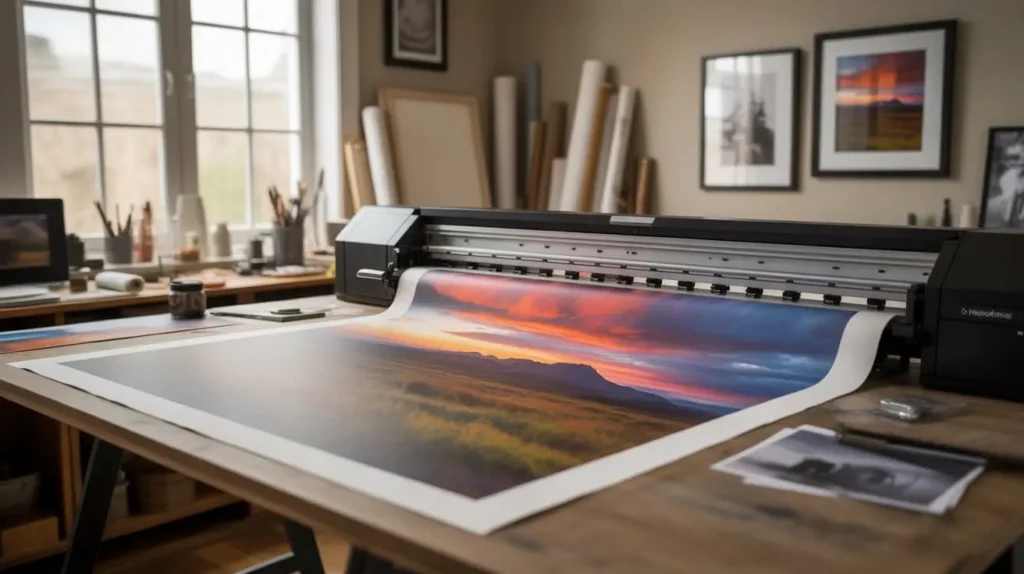
Other Methods to Print on a Canvas at Home
Several canvas printing methods exist beyond UV. Inkjet supports coated sheets. Giclée refines inkjet for archival quality. Sublimation works on polyester coatings. Heat transfer suits crafts. Each method impacts photo printing on canvas differently, balancing cost, color depth, and longevity for DIY canvas printing.
| Method | Best Use | Durability | Notes |
| UV | Home studios | High | UV cured ink, sharp detail |
| Inkjet | Beginners | Medium | Uses pigment-based inks |
| Giclée | Artists | Very high | Archival output |
| Sublimation | Polyester | High | Vivid transfer |
How to Transfer an Image Onto Canvas Without a Printer
If you don’t own a printer, you can still move an image onto canvas using a simple transfer method. Print your image on regular paper, preferably with a laser printer. Apply a gel medium to the canvas, place the image face down, and let it dry overnight. Once dry, gently rub away the paper with water. The image remains on the canvas, creating a handmade, artistic look.
Best Canvas Printing Machines for Home Use
Choose machines that fit space and goals. UV models provide precision, stability, and instant ink curing. Inkjet units offer accessibility. Consider maintenance, noise, and consumables. Reliable devices streamline how to print on canvas at home and maintain consistent quality over time.
| Feature | UV Printer | Inkjet Printer |
| Ink | UV cured ink | pigment-based inks |
| Dry Time | Immediate | Minutes |
| Finish | Durable | Good |
| Learning Curve | Moderate | Easy |
Home Canvas Printing vs Professional Canvas Printing
Home canvas printing gives you creative control, faster turnaround, and lower cost for small projects. You can experiment freely and print whenever you want. Professional canvas printing, however, offers higher consistency, advanced machines, and premium finishes. Studios are better for bulk orders or exhibition-quality work. In the UAE, there are many individuals, as well as professional artists and printers, who create their own artwork and/or print it significantly.
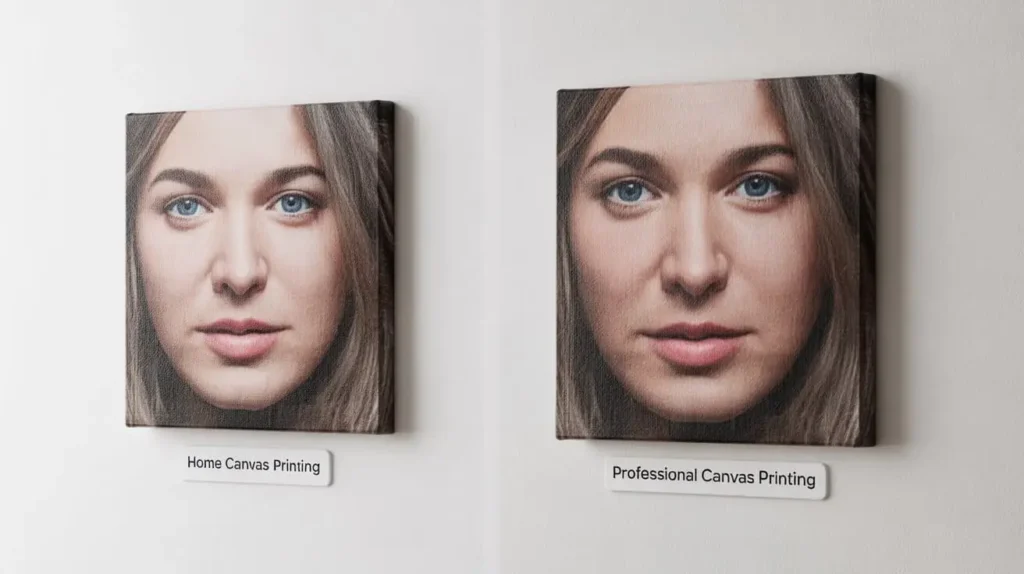
Common Canvas Printing Mistakes and How to Avoid Them
Many newbies experience the problem of blurry pictures on the canvas due to low-quality photos. Another mistake people make is using the wrong type of canvas, which can lead to poor color fidelity or poor ink adhesion. Also, many people skip over printing their test prints, and then they experience problems with alignment, color balance, and margins. Cleaning the canvas surface and choosing the proper printer settings will help avoid many of these issues and also save time and supplies.
Final Tips for High-Quality Canvas Prints at Home
Before making a print, always begin with a good, clear, edited picture; experiment with small sample prints before preparing your larger prints. Make sure to maintain a clean workspace, free of dust. Ensure that prints are completely dry before stretching or sealing. If your canvas will be exposed to light or receive heavy use, consider applying a protective coating. With time and dedication, professional-quality canvas prints can be produced at home and can beautify your home or work environment.
“Canvas rewards patience. Prepare well, print carefully, and protect the finish.”
FAQs
For best results, use a high-quality print at 300 DPI or above (dots per inch) on a compatible printer such as an inkjet or UV Canvas Printer. To protect your printed image, add a finish such as a coating or frame it.
The average home print of this size will range between 50-150 AED. The cost of professionally made prints of larger sizes can range from around 500 AED upwards depending upon the size and types of material used.
Standard printers can be used to make a print using a thin or coated sheet by standard, however, to obtain the best quality print from your printer, it is recommended to use a UV canvas printer or an inkjet printer that uses pigment-based inks.
A canvas print refers to either a calico print made specifically for canvas wall art or a canvas print that has been created using professional giclee printing methods.
A lack of clarity on a printed canvas usually comes from a low-resolution printed image, using the incorrect canvas material, or from poor ink coverage of the printed sheet, and making sure you use the correct materials and settings will ensure you obtain a quality print.