Modern abstract art brings creativity, colour, and personality into contemporary interiors. Unlike traditional artwork that focuses on realistic subjects, modern abstract compositions use shapes, lines, textures, and colour combinations to create visual interest. They can make a simple room feel more expressive, complement minimalist furniture, or introduce a striking focal point into an otherwise neutral space.
From oversized abstract paintings and geometric compositions to subtle minimalist designs, there are many ways to incorporate modern abstract art into your home or workplace. The right artwork depends on your interior style, available wall space, preferred colours, and the atmosphere you want to create.
Whether you are decorating a modern apartment, a luxury villa, an office, or a creative workspace, exploring different abstract art styles can help you find artwork that complements your surroundings. Here are some ideas and practical ways to use contemporary abstract art in modern interiors.
1. Choose Minimalist Abstract Art for Simple Interiors
Minimalist abstract art is an excellent option for interiors where simplicity, balance, and open space are important. These compositions often feature limited colours, clean shapes, subtle lines, and carefully arranged elements.
Neutral shades such as white, beige, grey, and black can complement minimalist furniture without making the room feel visually crowded.
For example, a simple abstract composition with soft grey shapes and beige tones can work well above a neutral sofa or against a light-coloured wall.
Design tip: Choose artwork with a limited colour palette and enough negative space to complement the simplicity of your interior.
2. Introduce Bold Colours with Contemporary Abstract Art
If your interior features neutral walls and understated furniture, bold abstract artwork can introduce colour and visual energy.
Contemporary abstract art often combines contrasting shades, expressive brushstrokes, geometric patterns, and layered colours. These elements can make artwork a central feature of a room.
Consider these combinations:
- Navy blue and gold for a sophisticated appearance.
- Terracotta and beige for a warm, natural atmosphere.
- Black and white for a strong visual contrast.
- Green and muted blue for a softer contemporary look.
- Orange and red for an energetic decorative statement.
The goal is not to match every colour in your painting with your furniture. Instead, select a few colours that connect the artwork with existing interior elements such as cushions, rugs, curtains, or decorative accessories.
3. Use Geometric Abstract Artwork for Modern Spaces
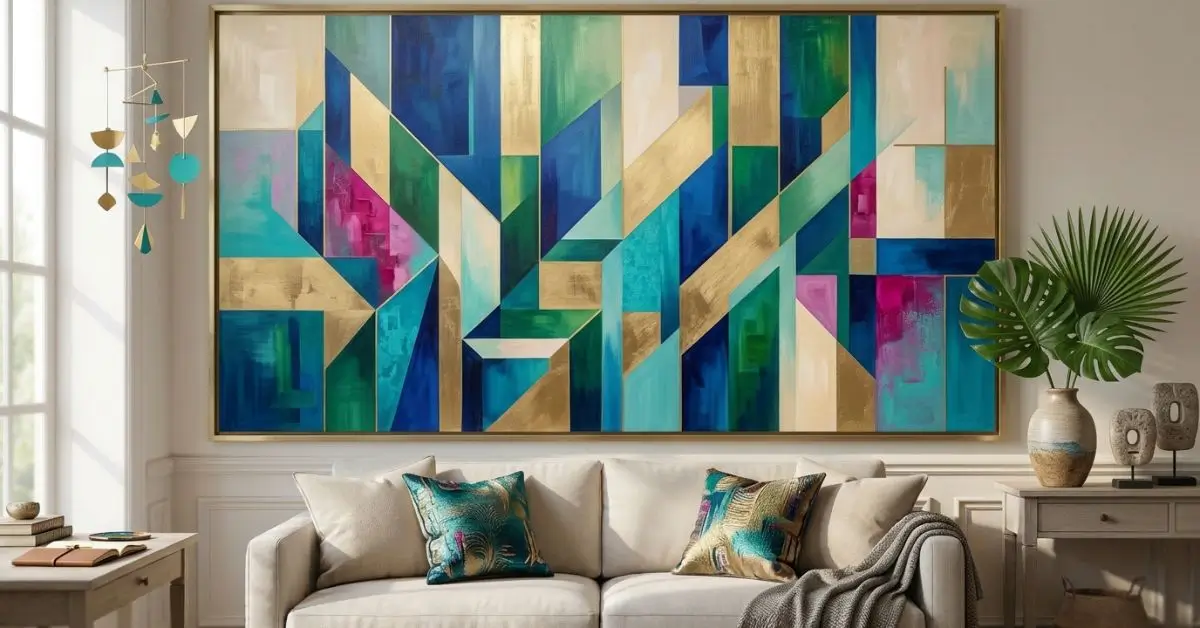
Geometric abstract artwork uses circles, squares, rectangles, lines, and other shapes to create structured compositions.
This style is particularly suitable for contemporary interiors with clean architectural lines, modern furniture, and organised layouts.
You can choose artwork featuring symmetrical patterns for a balanced appearance or asymmetrical arrangements for a more creative effect.
Geometric compositions also work well in offices, reception areas, and meeting rooms where you want decoration that feels modern without becoming overly distracting.
4. Make a Statement with Large Abstract Paintings
Large abstract paintings can transform an empty wall into a focal point. They are especially effective in spacious living rooms, dining areas, hotel interiors, and open-plan environments.
Instead of filling a large wall with several small decorative pieces, one oversized composition can create a more unified appearance.
When choosing large artwork, consider:
- The width and height of the available wall.
- The dimensions of the sofa or furniture underneath.
- The colours used throughout the room.
- The viewing distance and lighting conditions.
For example, a large abstract composition featuring navy, cream, and muted gold can complement a contemporary living room with neutral furniture.
If you are exploring abstract wall art for living room spaces, consider how the artwork’s proportions relate to the furniture and the available wall area.
5. Explore Textured and Expressive Abstract Artwork
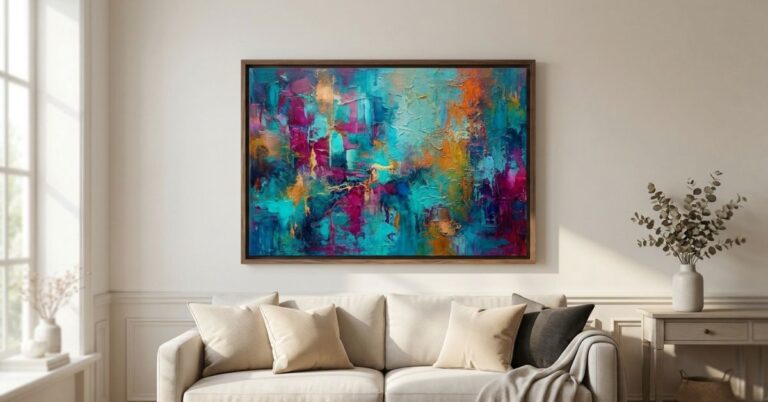
Not all modern abstract artwork relies on smooth shapes and clean geometric arrangements. Some compositions use visible brushstrokes, layered paint, irregular patterns, and textured surfaces.
These elements create depth and movement, making the artwork more visually engaging.
Textured abstract paintings can work particularly well in interiors with natural materials such as wood, stone, linen, and neutral fabrics.
You can also combine expressive artwork with simple furniture to create contrast between the decorative elements and the surrounding space.
6. Create a Modern Gallery Wall
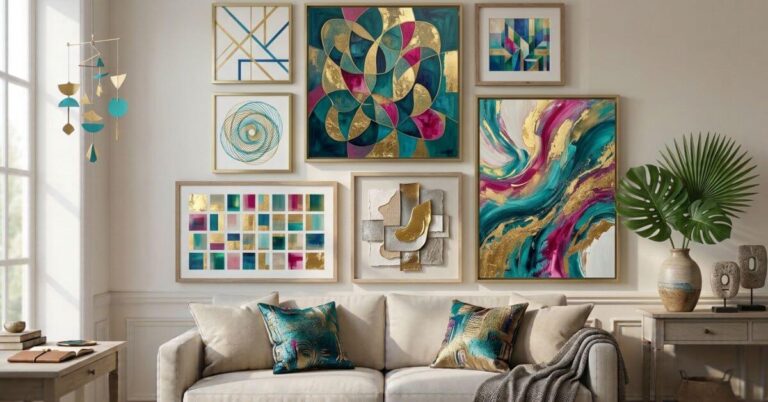
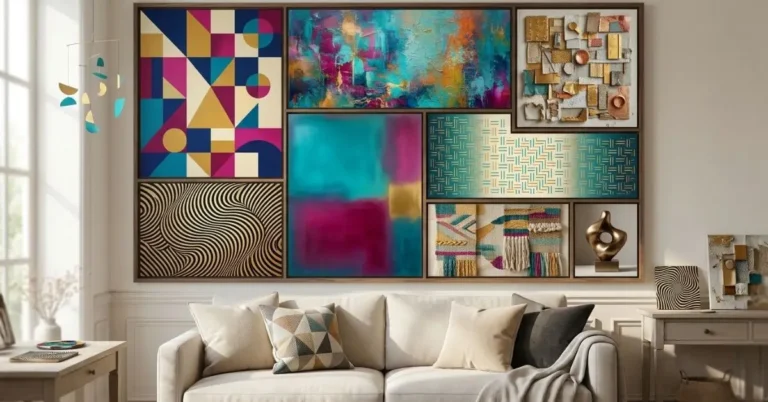
A gallery wall is a practical way to display multiple abstract compositions within one arrangement. Instead of choosing a single large painting, you can combine several smaller pieces to create a personalised decorative feature.
For a balanced gallery wall, consider the following:
- Choose artwork with a consistent colour palette.
- Combine different shapes and compositions carefully.
- Maintain similar spacing between frames.
- Arrange the artwork before hanging it.
- Consider the wall dimensions and surrounding furniture.
You can use geometric compositions, minimalist designs, and expressive abstract paintings together, provided they share a visual connection.
For more inspiration about selecting artwork for residential spaces, explore different abstract wall art ideas and consider how individual pieces work together.
7. Select the Right Artwork Material and Finish
The material used to display modern abstract artwork can influence its appearance and how it complements your interior.
Three popular options include:
Canvas prints: Canvas offers a classic artistic appearance with a textured finish. It works well with contemporary, minimalist, and traditional interiors.
Acrylic prints: Acrylic provides a smooth, glossy finish with vibrant colour presentation. It is suitable for spaces where a polished and contemporary appearance is preferred.
Framed artwork: Framing creates a defined border around the artwork and can help establish a more organised gallery-style arrangement.
When selecting a material, consider your interior design, lighting conditions, display location, and preferred finish.
For customised artwork displays, professional canvas printing and acrylic printing can help turn selected digital designs or images into finished decorative pieces.
8. Take Inspiration from Famous Modern Abstract Artists
Exploring influential artists can help you understand the different approaches used in modern abstract compositions.
Some notable artists include:
- Wassily Kandinsky: Known for expressive compositions involving colour, shapes, and movement.
- Piet Mondrian: Recognised for geometric arrangements and primary colours.
- Jackson Pollock: Famous for energetic drip-painting techniques and spontaneous compositions.
- Mark Rothko: Known for large areas of layered colour and atmospheric compositions.
- Joan Miró: Recognised for imaginative shapes, symbols, and playful visual elements.
These artists demonstrate that modern abstract art can take many forms, from highly structured geometric arrangements to expressive and spontaneous paintings.
Their work can provide inspiration when exploring contemporary artwork for residential and commercial interiors.
9. How to Choose Modern Abstract Art for Your Space
Before selecting artwork, consider how it will work with your existing interior.
Start by identifying the room’s dominant colours, furniture style, and available wall space. Then decide whether you want the artwork to blend with the surroundings or create a noticeable contrast.
For minimalist interiors, subtle compositions may be more suitable. For larger contemporary spaces, oversized paintings and expressive colours can create a stronger focal point.
Also consider the material, framing, and lighting. These details influence how the artwork appears once installed.
The best choice is artwork that complements your surroundings while reflecting your personal taste.
10. Discover Modern Abstract Artwork at ArtPlus
Modern abstract art offers many possibilities for decorating contemporary homes, offices, and creative environments. From geometric designs and minimalist compositions to bold colours and expressive paintings, different styles can help create a distinctive interior.
Explore the ArtPlus Abstract Art Collection to discover contemporary compositions and artistic designs for different spaces. You can also browse the ArtPlus Artworks Collection for additional inspiration across abstract, fine art, nature, and other artistic themes.
Frequently Asked Questions
What are some modern abstract art ideas?
Popular ideas include minimalist compositions, geometric paintings, oversized abstract canvases, expressive brushwork, colourful artwork, and coordinated gallery walls.
What is modern abstract art?
Modern abstract art uses colours, shapes, lines, textures, and patterns to create compositions that do not necessarily represent recognisable real-world subjects.
Who are some famous modern abstract artists?
Influential artists include Wassily Kandinsky, Piet Mondrian, Jackson Pollock, Mark Rothko, and Joan Miró. Their different approaches helped shape the development of abstract art.
Are modern abstract art prints suitable for contemporary interiors?
Yes. Modern abstract art prints can complement contemporary interiors through coordinated colours, geometric designs, minimalist compositions, and expressive visual elements.
Where can modern abstract art be displayed?
Abstract artwork can be displayed in living rooms, bedrooms, dining areas, offices, reception spaces, hotels, and creative environments. The artwork’s size, colour, and material should suit the intended location.
Final Thoughts
Modern abstract art provides an opportunity to introduce creativity, colour, and individuality into contemporary interiors. Whether you prefer minimalist designs, geometric compositions, expressive paintings, or bold colour combinations, the right artwork can complement your space and create a distinctive visual atmosphere.
Consider your interior style, available wall space, preferred colours, and display materials before making a selection. With the right combination, abstract artwork can become an important part of your overall interior design.